A 2 minute assessment to get a personalized mental health or alcohol recovery plan.

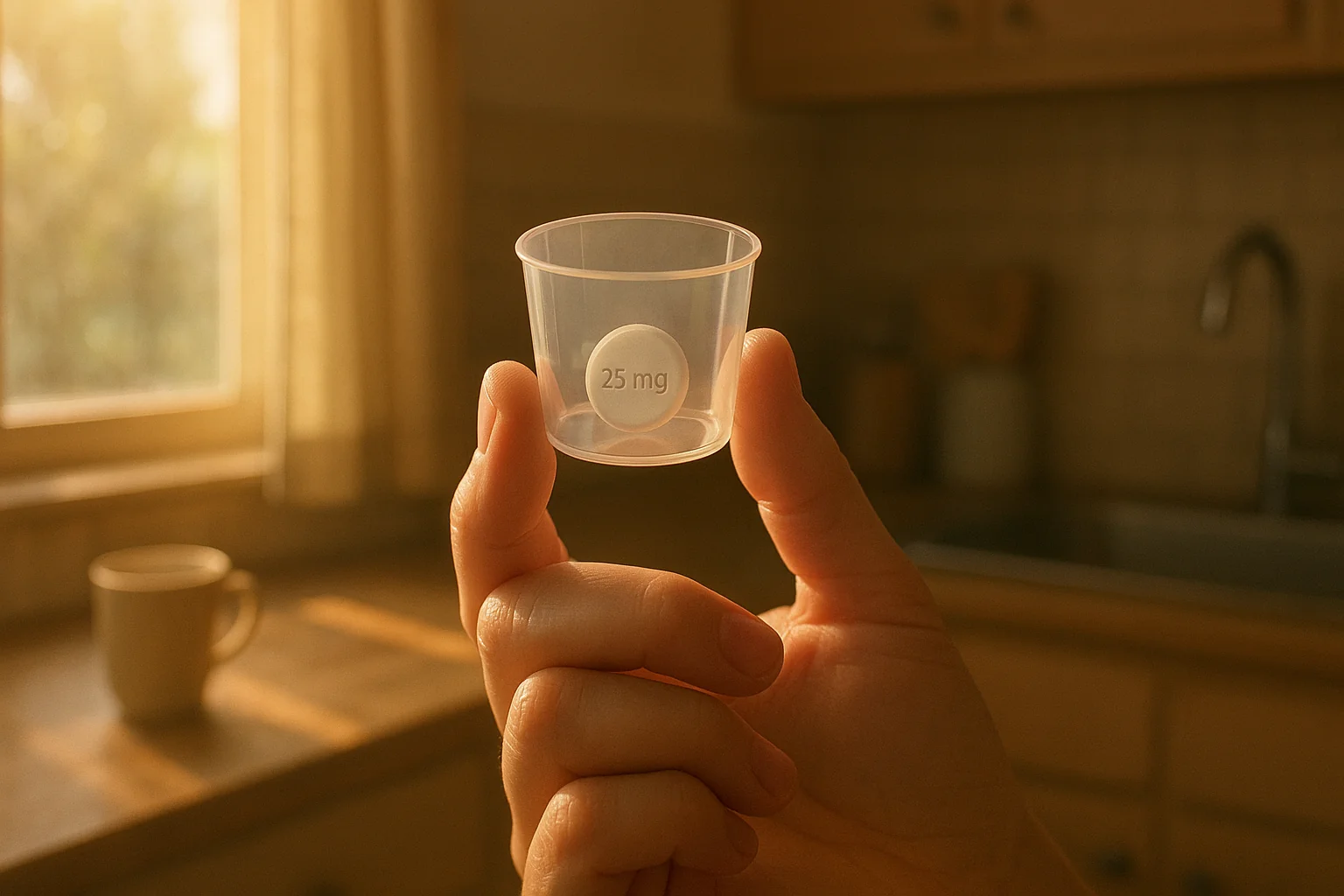
Naltrexone at 25 mg is not a half-measure. It is a deliberate, FDA-supported starting strategy that helps more people stick with treatment.
What You'll Learn:
• Why the FDA recommends starting naltrexone at 25 mg
• Who benefits most from the lower dose
• Whether 25 mg is effective on its own or just a stepping stone
• The typical schedule for increasing to 50 mg
• How 25 mg fits into the Sinclair Method
• When to talk to your doctor about adjusting your dose
If your doctor has suggested starting naltrexone at 25 mg instead of the standard 50 mg tablet, you might wonder whether that lower dose is actually enough to help. Most articles focus on 50 mg, which can leave you unsure where 25 mg fits in.
Here is the reassuring truth. Starting at 25 mg is a deliberate, medically supported strategy that the FDA prescribing guidelines themselves recommend. Many people begin at 25 mg to give their body time to adjust. Some stay at that dose long-term with excellent results.
This article covers everything you need to know about 25 mg naltrexone for alcohol. You will learn why providers recommend it, who benefits most, whether it works on its own, and how to know if and when to increase your dose.
This is educational information, not medical advice. Always talk with a qualified healthcare provider before starting or changing any medication.
Why 25 mg: Understanding the Lower Starting Dose
Naltrexone is FDA-approved at 50 mg daily for alcohol use disorder. That remains the standard therapeutic dose used in most clinical trials. But the official prescribing information also recommends that patients begin with 25 mg for their first dose to reduce the risk of early side effects, particularly nausea.
This is not unusual in medicine. Many medications are started at a lower dose and gradually increased. The goal is to let your body acclimate so that mild, temporary side effects do not discourage you from continuing treatment.
With naltrexone, the most common first-week side effects include nausea, mild headache, and occasionally dizziness. Starting at 25 mg significantly reduces the likelihood and intensity of these reactions.
A physician who starts you at 25 mg is not giving you less treatment. They are giving you a smoother on-ramp to the full therapeutic dose.
In clinical settings, this approach leads to better medication adherence. Patients who feel sick in the first few days are more likely to stop taking the medication altogether, which means they never get the benefits.
Who Benefits Most From Starting at 25 mg
Any first-time naltrexone user can benefit from a 25 mg starting dose. But certain groups have particularly good reasons to begin there.
People who are sensitive to medication side effects. If you have a history of reacting strongly to new medications, starting at 25 mg gives your system a gentler introduction. Our guide on minimizing and avoiding naltrexone nausea covers additional strategies like taking the medication with food and staying hydrated during the first week.
Individuals with a smaller body weight. Body weight influences how medications are distributed and metabolized. A person weighing 120 pounds processes naltrexone differently than someone weighing 200 pounds.
While the 50 mg dose is effective across a wide range of body sizes, smaller individuals may experience more pronounced side effects at the full dose right away.
Older adults. Age-related changes in liver and kidney function can affect how quickly naltrexone is metabolized. Older adults may benefit from a more gradual titration to monitor how their body responds before moving to the full dose.
First-time users who are nervous about medication. This one does not get discussed enough. If taking a new medication feels like a big step, starting with a half tablet can reduce anxiety about the process.
There is genuine psychological value in easing into treatment. That emotional comfort supports long-term adherence just as much as minimizing physical side effects does.
Is 25 mg Effective on Its Own, or Just a Stepping Stone
This is one of the most important questions people have about the lower dose. The answer is more nuanced than a simple yes or no.
The majority of clinical trials that established naltrexone's efficacy for alcohol use disorder used the 50 mg dose. That is the dose with the deepest evidence base, and it is the dose most prescribers aim for. At 50 mg, studies show that naltrexone achieves high levels of opioid receptor occupancy, meaning it effectively blocks the receptors responsible for alcohol's rewarding effects.
At 25 mg, receptor occupancy is lower but still meaningful. Research on naltrexone's pharmacology indicates that even at half the standard dose, a substantial proportion of mu-opioid receptors are blocked. This means that 25 mg does have a real pharmacological effect. It is not a placebo dose.
For most people, 25 mg is designed as a starting dose for the first three to seven days before titrating up to 50 mg. However, a subset of patients find that 25 mg provides sufficient craving reduction and choose to remain at that dose long-term.
This is especially common among people who respond well to naltrexone but experience persistent side effects at 50 mg, even after the initial adjustment period.
If you are taking 25 mg and noticing that your cravings have decreased, your drinking has dropped, and you feel good, that is valuable clinical information. Your prescriber may decide that staying at 25 mg makes sense for you rather than pushing to 50 mg.
The goal of treatment is the best outcome with the fewest side effects. For some people, 25 mg achieves exactly that.
The Typical Titration Schedule: 25 mg to 50 mg
For the majority of patients, the recommended path looks like this.
Days 1 through 3 (or up to day 7): Take 25 mg once daily. This is the adjustment window. Your body is getting used to the medication.
Any first-dose side effects, such as nausea, headache, or light fatigue, are most likely to occur here. Most side effects are mild and resolve within two to three days.
Day 4 onward (or day 8 for slower titrations): Increase to 50 mg once daily. Once your body has adjusted to the 25 mg dose, moving to 50 mg is usually seamless. Many people notice no new side effects at all during this step up.
Some prescribers use an intermediate step of 37.5 mg (three-quarters of a 50 mg tablet) for patients who are especially cautious. This is less common but entirely reasonable.
How to Split a 50 mg Tablet
Since naltrexone 25 mg tablets are not widely manufactured, most pharmacies carry the 50 mg tablet. You will likely need to split a tablet in half.
Most naltrexone 50 mg tablets have a score line down the middle, specifically designed for splitting. Place the tablet on a flat surface with the score line facing up.
Press down firmly with your thumb on each side of the line, or use a pill splitter from any pharmacy for a few dollars. A pill splitter gives you the cleanest, most even break.
Store the unused half in a clean, dry container, not loose in a bag or pocket. Naltrexone should be kept at room temperature away from moisture. As we explain in our overview of the best naltrexone dose for alcohol, getting the dose right is a key part of making treatment work for you.
25 mg Naltrexone and the Sinclair Method
The Sinclair Method is an approach to naltrexone treatment where you take the medication one to two hours before drinking, rather than every day. Over time, the brain gradually unlearns the association between alcohol and pleasure through a process called pharmacological extinction.
This method has reported success rates of approximately 78% in clinical studies.
A common question is whether the Sinclair Method works at 25 mg. Pharmacological extinction depends on having sufficient opioid receptor blockade during the drinking session.
While 50 mg provides the most robust blockade, 25 mg still blocks a meaningful percentage of receptors and can support the extinction process, particularly for people who are drinking less or who are early in treatment.
That said, most Sinclair Method practitioners recommend working up to 50 mg for targeted dosing sessions. The goal is to maximize receptor blockade during the specific window when you are drinking.
The stronger the blockade, the more effectively the brain disconnects alcohol from reward.
If you are using the Sinclair Method and starting at 25 mg, a reasonable approach is to take 25 mg before drinking for the first week, then move to 50 mg before drinking sessions once your body has adjusted.
Our article on naltrexone dosing, daily vs. as-needed explores the differences between these two approaches in more detail.
When to Talk to Your Doctor About Your Dose
Naltrexone dosing is not a set-it-and-forget-it decision. Your prescriber should be a partner in this process. Open communication about how you are feeling makes a real difference in outcomes.
Signs That 25 mg May Be Enough
You have noticed a clear reduction in cravings or drinking since starting treatment. You are tolerating the medication well with no significant side effects.
Your personal drinking goals are being met, whether that is abstinence, moderation, or fewer heavy drinking days. If all of these are true at 25 mg, there may be no clinical reason to increase.
Signs You Should Consider Moving to 50 mg
Your cravings have decreased somewhat but are still stronger than you would like. You are still having more heavy drinking days than your goal allows. You have been at 25 mg for more than a week and feel comfortable with the medication. In these situations, stepping up to the standard 50 mg dose may provide the additional receptor blockade needed for a stronger effect.
Signs to Revisit Your Treatment Plan
You have been taking naltrexone consistently for several weeks at 50 mg and are not seeing meaningful changes. You are experiencing side effects that are not improving with time or dose adjustments. Your drinking patterns have shifted in a way that makes your current approach feel less effective.
None of these scenarios mean that treatment has failed. They mean it is time for a conversation with your prescriber about adjustments, whether that means a different timing strategy, adding behavioral support, or exploring other aspects of your treatment plan.
According to the National Institute on Alcohol Abuse and Alcoholism, the most effective approaches to alcohol use disorder combine medication with some form of behavioral support.
If you are taking naltrexone but have not yet connected with a coach, therapist, or support program, adding that layer can significantly improve your results regardless of dose.
Starting Low Is Starting Smart
There is a misconception that taking a lower dose of medication means you are not fully committed to treatment. Nothing could be further from the truth.
Starting at 25 mg is the approach recommended by the FDA prescribing guidelines. It is the approach used by experienced prescribers who specialize in alcohol use disorder. And it is the approach that leads to better adherence, which, as the CDC's alcohol and health resources emphasize, is one of the most important predictors of positive treatment outcomes.
Starting at the dose that feels right for your body is not a compromise. It is good medicine.
If you are curious about whether naltrexone might be a good fit for your situation, you can take a free, private online Alcohol Use Assessment to get started. It takes just a few minutes, and there is no obligation.