A 2 minute assessment to get a personalized mental health or alcohol recovery plan.

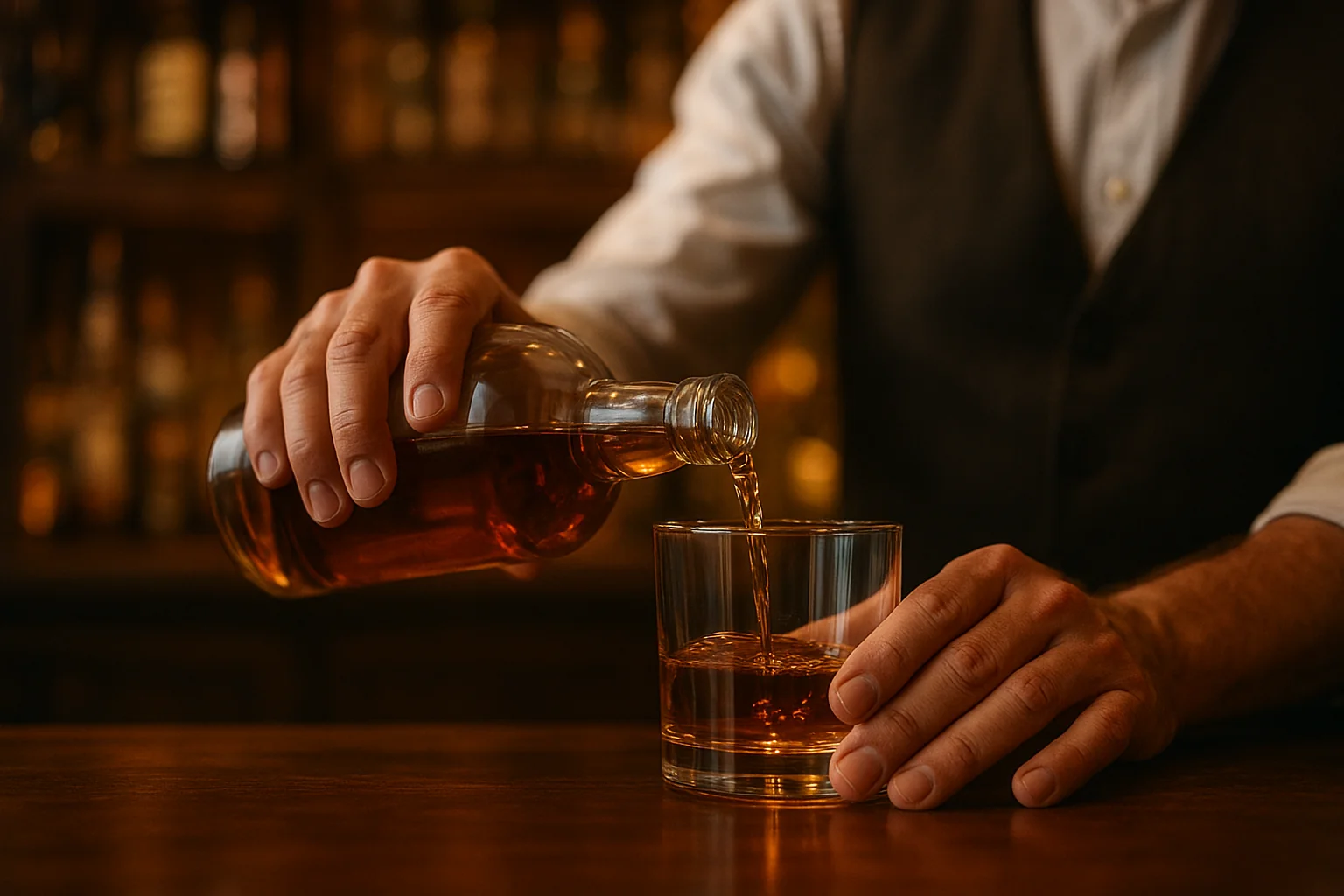
When someone orders whiskey by "fingers," they're using an old bartending measurement. Here's what that means and how it affects your actual alcohol consumption.
What You'll Learn:
• What the 3-finger rule actually measures.
• How many ounces are in a one, two, or three-finger pour.
• Why finger measurements vary and can mislead you.
• How to account for these pours when tracking drinks.
If you've ever ordered whiskey "neat" at a bar or watched a bartender pour without using a measuring tool, you may have heard the term "fingers" used to describe the amount. "Give me two fingers of bourbon" or "three fingers of scotch" are classic bar orders.
But what does this actually mean? And if you're trying to monitor your drinking, how do you translate finger pours into standard drinks?
What the 3-Finger Rule Means
The finger rule is a bartending tradition for measuring spirits poured into a glass without a jigger or other measuring device.
Here's how it works: hold your fingers horizontally against the side of a rocks glass. The height of the liquid should match the width of your fingers.
= liquid up to the width of one finger (about 3/4 inch)
= liquid up to the width of two fingers (about 1.5 inches)
In a standard rocks glass, one finger equals roughly one ounce of liquid. Two fingers is about two ounces. Three fingers is approximately three ounces.
This measurement emerged when precision wasn't a priority. Whiskey was whiskey, and you got what looked like the right amount. The tradition persists today, especially for neat pours of spirits in certain bars and settings.
How Finger Pours Translate to Standard Drinks
Understanding what a finger pour means in terms of standard drinks helps you track actual consumption.
According to the National Institute on Alcohol Abuse and Alcoholism, a standard drink contains about 14 grams of pure alcohol. For distilled spirits at 40% alcohol (80 proof), this equals 1.5 ounces.
Using the finger rule:
• One finger (about 1 oz) = approximately 0.67 standard drinks
• Two fingers (about 2 oz) = approximately 1.33 standard drinks
• Three fingers (about 3 oz) = approximately 2 standard drinks
This means when you order "three fingers of whiskey," you're getting roughly two standard drinks in one glass. If you think of it as a single drink, you're significantly underestimating your consumption.
The 1-2-3 rule for drinking recommends no more than two drinks per day. A three-finger pour of whiskey hits that limit in one glass.
Why Finger Measurements Are Imprecise
Several factors make finger pours unreliable as a standard measurement.
Glass shape matters. A rocks glass and a Collins glass have different diameters. One finger of liquid in a wide, squat rocks glass is more volume than one finger in a tall, narrow glass. The same finger measurement yields different amounts depending on the vessel.
Finger sizes vary. Someone with large hands will pour more per "finger" than someone with small hands. The variation can be 25% or more between individuals.
Pour technique differs. Some bartenders pour to the top of the finger measurement, others to the bottom. The speed and angle of the pour affects how the liquid settles.
No legal standard exists. Unlike a jigger, which holds a specific volume, "fingers" has no regulatory definition. It's purely traditional and approximate.
For these reasons, relying on finger pours for accurate tracking is risky. A "two-finger" pour from different bartenders in different glasses could range from 1.5 to 2.5 ounces or more.
The History of Finger Measurements
The finger rule dates to a time before standardized bar measurements became common. In early American bars and saloons, whiskey was often poured straight from the bottle into whatever glass was available. Fingers provided a rough way to communicate quantity.
The measurement survived because it feels natural and looks right. When you order whiskey neat, you expect a certain visual amount in the glass. Fingers deliver that aesthetic while maintaining a connection to bartending tradition.
Some craft cocktail bars have attempted to standardize the finger pour at exactly 3/4 inch per finger in a standard old-fashioned glass. This would make each finger equal to about one ounce. But this standardization hasn't been widely adopted, and variations remain the norm.
How This Affects Your Drinking Calculations
If you're trying to moderate your drinking using guidelines like the various drinking rules, finger pours can throw off your count.
The undercounting problem: Someone who has "two whiskeys" might assume they've had two standard drinks. But if both were three-finger pours, they've actually consumed four standard drinks, double what they thought.
Comparing different drinks: A 12-ounce beer at 5% alcohol is one standard drink. A three-finger pour of 80-proof whiskey is two standard drinks. These feel similar, sitting in comparable-sized vessels, but carry very different alcohol loads.
Home pours tend to be generous. When you pour your own whiskey at home without measuring, studies show most people pour significantly more than a standard drink. Without the finger reference or a jigger, pours often creep toward 2-3 ounces without awareness.
Tips for More Accurate Tracking
If you drink spirits neat and want to track accurately:
Ask for a measured pour. Request that the bartender use a jigger. This may seem fussy, but it gives you actual information about what you're consuming.
Use a jigger at home. A standard jigger measures 1.5 ounces on one end and 0.75 ounces on the other. Using it takes the guesswork out of home pours.
Assume conservatively. If you're estimating a finger pour, assume each finger is at least one ounce. Three fingers equals three ounces, which is two standard drinks. Better to overestimate than underestimate.
Consider switching to measured drinks. Canned cocktails, single-serve bottles, or drinks mixed with measured spirits give you exact information about alcohol content.
Why This Matters for Moderation
Accurate drink counting is fundamental to any moderation strategy. If you're following a rule like limiting yourself to two drinks per day, you need to know what counts as a drink.
Underestimating consumption is one of the most common ways moderation efforts fail. You follow the rules as you understand them, but you're actually consuming more than you think. The results don't match your expectations, which can be discouraging and confusing.
Understanding the 3-finger rule helps you avoid this trap when drinking spirits. It's a small piece of bar literacy that has practical implications for anyone trying to be intentional about their alcohol intake.
When Moderation Strategies Need More Support
Even with accurate counting and careful attention to guidelines, some people find that moderation doesn't work for them. This isn't a failure of effort or intelligence. It often reflects changes in how the brain responds to alcohol.
If you've tried various moderation approaches and consistently found yourself exceeding your limits despite genuine intention, the issue may be neurological rather than behavioral.
Naltrexone is an FDA-approved medication that can help by reducing cravings and blocking some of alcohol's rewarding effects. It addresses the brain chemistry that makes moderation difficult, rather than relying purely on willpower and tracking.
Summary
The 3-finger rule is a traditional bartending measurement where finger widths against a rocks glass indicate pour size.
• One finger equals approximately 1 ounce
• Two fingers equals approximately 2 ounces
• Three fingers equals approximately 3 ounces
In terms of standard drinks, a three-finger pour of 80-proof spirits equals about two standard drinks.
The measurement is imprecise because glass shape, finger size, and pour technique all vary. Relying on finger pours for accurate tracking can lead to significant undercounting.
For better accuracy, use a jigger, ask for measured pours, or assume conservatively when estimating.
If moderation strategies aren't working despite accurate tracking, medication-assisted treatment may help address the underlying neurology. Take an Alcohol Use Assessment to explore whether naltrexone could support your goals.