A 2 minute assessment to get a personalized mental health or alcohol recovery plan.


You reach for a drink to stop feeling something. It works for an hour, then the feeling comes back a little louder. Here is why, and what actually helps.
What You'll Discover:
• Why drinking to not-feel is so common, and so human.
• What negative reinforcement is and how it wires the habit in.
• Why avoidance tends to keep a feeling around longer.
• Gentler, doable ways to face stress, grief, boredom, and conflict.
• How naltrexone lowers the automatic pull toward a drink.
Most people who drink a little too much are not chasing a party. They are trying to turn something down. The volume of a hard day. A grief that will not lift. A boredom that itches. An argument still ringing in their ears.
A drink offers a small mercy. For an hour or two, you stop feeling the thing. And that mercy is real, because alcohol genuinely quiets the nervous system for a while.
The catch is what comes next. The feeling you pushed under does not leave. It waits, and it usually comes back with company.
None of this is a character flaw or a lack of willpower. It is a pattern with a name. Once you can see it clearly, you can start to loosen its grip.
What "Drinking to Not Feel" Actually Is
Psychologists call it drinking to cope. It means using alcohol to escape, dull, or manage an unpleasant emotion, rather than to celebrate or connect.
It rarely looks dramatic. It looks like a glass of wine the second the laptop closes. A few beers because the evening feels flat. A pour after a fight, so you can finally stop replaying it.
The specific feeling changes from person to person. Stress and anxiety are the most common triggers. For others it is grief, loneliness, boredom, anger, or the low gray hum of a mood that will not lift.
What ties them together is the motive. You are not drinking for the taste or the buzz. You are drinking to feel less of something. That is the pattern worth understanding, because it responds to different tools than ordinary habit-breaking does.
The Four Feelings People Drink to Avoid
Coping-drinking gets easier to change once you can see which feeling is steering it. Four of them show up again and again.
Stress is the big one. After a demanding day the body stays keyed up, and alcohol offers a fast off-switch. The trouble is that the switch is temporary, and the tension comes back before morning.
Grief sends many people to a drink because sorrow can feel bottomless, and numbing seems safer than sinking into it. But grief is not a problem to solve.
It is a feeling that needs room. Alcohol tends to freeze it in place rather than let it move through.
Boredom is quieter, and just as powerful. An empty evening can feel unbearable in a low-grade way, and a drink turns flat time into something. What it delivers is a few dull hours and the same restlessness tomorrow.
Conflict leaves the nervous system buzzing after an argument, replaying every line. A drink promises to stop the tape. More often it raises the anxiety and makes the repair harder, because nothing got resolved, only postponed.
You might recognize one of these, or all four on different nights. Naming the driver is not about blame. It is the first move toward meeting the real need instead of drowning it.
The Relief Is Real, and That Is the Problem
Here is the honest part. When you drink to escape a feeling and the feeling fades, your brain files that away as a win.
Scientists call this negative reinforcement. It is learning that is driven by the removal of something unpleasant. Whatever made the bad feeling disappear gets stamped in as worth repeating.
This is different from drinking for pleasure, and the difference matters. Researchers have found that as drinking gets heavier, the main driver often shifts from chasing a good feeling to escaping a bad one. Relief, not fun, becomes the point.
The National Institute on Alcohol Abuse and Alcoholism describes the same trap. Drinking to cope with stress brings short relief.
But over time it tends to deepen the negative emotions that surface between drinks. The nervous system rebounds, and the baseline you started from quietly drops.
So the relief is not a lie. It is a loan. You get calm now and pay it back later, usually with interest, in the form of a worse mood, thinner sleep, and a stronger urge to reach for the same fix tomorrow.
Why Avoidance Keeps the Feeling Around Longer
There is a second, quieter cost. Avoiding a feeling does not just delay it. It can keep the feeling around longer than it would have lasted on its own.
Emotions are built to move through us. Most feelings, even intense ones, crest and settle within minutes when we let them. Feeling a thing all the way is often how it finishes.
When you numb a feeling instead, you never give it the chance to complete. Psychologists call this experiential avoidance, and the research is fairly blunt about where it leads.
Steady avoidance of uncomfortable inner experiences is tied to the onset and maintenance of anxiety and low mood. The short-term relief is genuine.
But it quietly teaches your brain that the feeling is unbearable, which only makes it louder the next time it shows up.
So the pattern behaves like a loop. The drink lowers today's discomfort and raises tomorrow's, so the reasons to drink keep multiplying. That is the machinery underneath, and it is worth saying plainly that it is machinery, not a moral failing.
None of this means you have been doing it wrong. It means the tool you were handed for hard feelings came with a hidden bill. There are gentler tools, and they get easier with practice.
Gentler Ways to Face What You Are Avoiding
Facing a feeling does not mean drowning in it. It means letting it exist long enough to pass, and meeting the real need sitting underneath it. These approaches work with your nervous system instead of against it.
Name it before you pour it. When the urge shows up, pause and ask what feeling is actually here. Stress. Loneliness. Grief.
Naming an emotion lowers its intensity. It moves the feeling out of your alarm system and into your thinking brain, where it loses some of its charge.
Ride the wave for ten minutes. Most urges peak and fall within about ten to twenty minutes. Set a timer, keep your feet on the floor, breathe slowly, and watch the urge soften. You are proving to your brain that the feeling is survivable.
Match the tool to the emotion. Boredom needs stimulation, not sedation, so a walk or a phone call does more than a drink. Grief needs expression, so writing or talking helps.
Learning to soothe hard feelings without reaching for alcohol is a skill, not a personality trait. And skills grow with reps.
Tend the aftermath, not just the moment. A lot of coping-drinking is aimed at anxiety that alcohol itself created the night before. If your mornings arrive with dread, our guide to post-alcohol anxiety explains that loop and how to calm it.
Get support for what is driving it. When the feeling underneath is a persistent low mood, that deserves care of its own.
The link between drinking and mood runs both ways, as we cover in alcohol and depression. Often, treating the mood is what loosens the drinking.
One more move that helps is to delay rather than forbid. Telling yourself a drink is banned tends to backfire.
Telling yourself you will wait twenty minutes and have a glass of water first is far easier to keep. The wait alone thins out a surprising number of urges.
You will not do any of these perfectly, and you do not need to. Picking one, even half the time, starts to rewire the pattern. Progress here is measured in slightly-more-often, not never-again.
How Naltrexone Lowers the Pull
Sometimes the urge is stronger than any in-the-moment skill can meet, especially early on. That is where a medication can quietly change the odds.
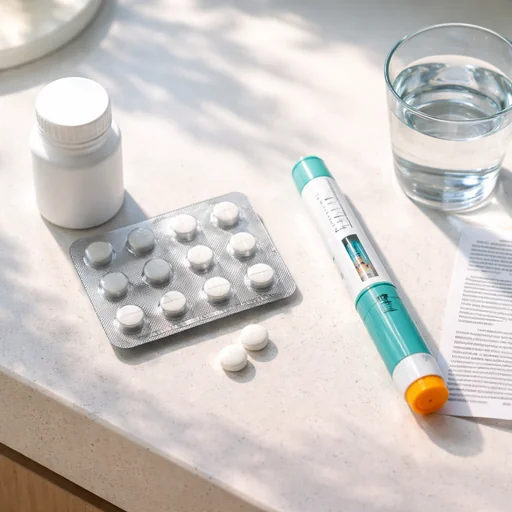
Naltrexone is an oral tablet, usually 50mg, and it has been approved for alcohol use since 1994. It is not a sedative, and it is not habit-forming. It works on the reward side of the loop.
When you drink, alcohol triggers a release of feel-good chemicals that your brain reads as a payoff. Naltrexone blocks the opioid receptors that carry that reward signal. The drink still happens, but the payoff is muted.
Over time, that muted payoff matters a great deal. Each drink reinforces the habit a little less, so the automatic reach loosens on its own. The pull you have been white-knuckling gets softer, which frees up energy for the gentler skills above.
Naltrexone does not erase stress or grief, and it is not meant to. It turns down the volume of the craving, so that facing a feeling stops competing with a chemical urge.
For a lot of people, that turned-down volume is the difference that makes everything else possible.
This is why an integrated solution tends to outperform any single fix. Medication turns down the pull, new skills give the feeling somewhere to go, and steady support keeps you upright while the pattern rewires.
Choose Your Horizon combines those pieces, grounded in clinical, neurological, and behavioral science.
The Bigger Picture
It helps to zoom out. The goal is not to become someone who never feels stressed, bored, or sad. Those feelings are part of any full life.
They are not the enemy, and they are not proof that something is wrong with you. They are closer to weather, and weather moves on when you let it.
The goal is to stop paying tomorrow's peace for an hour of quiet tonight. As you drink less, the rebounds ease and sleep steadies.
Your baseline mood climbs too, which is one of the everyday benefits of drinking less alcohol that people tend to notice first.
You are allowed to want relief. Wanting to feel better is not weakness. It is the most human thing there is. The work is simply finding relief that does not bill you twice.
Frequently Asked Questions
Is drinking to cope with stress a sign of a drinking problem?
Not on its own, but it is worth watching. Using alcohol as your main way to handle emotions raises the odds of drinking more over time. If it has become automatic, that is a good reason to try other tools or reach out for support.
Why do I feel more anxious the day after drinking to relax?
Alcohol calms your nervous system in the moment, then your body overcorrects as it wears off. That rebound often shows up as next-day anxiety or a flat mood. It is very common, and it tends to ease as you drink less.
What can I do in the moment instead of pouring a drink?
Pause and name the feeling, then set a ten-minute timer and let the urge crest and fall. Match the real need, so movement for boredom, connection for loneliness, and rest for exhaustion. The urge almost always softens when you give it a little time.
Does naltrexone stop you from feeling emotions?
No. Naltrexone works on the reward you get from alcohol, not on your ability to feel. It lowers the craving to drink, so that facing an emotion no longer has to compete with a chemical pull.
Can I drink less without quitting completely?
Yes. Many people use skills and medication to cut back rather than stop entirely, and drinking less still lowers the health and mood costs. The right goal is the one you can actually keep.
How is drinking to cope different from just enjoying a drink?
Enjoying a drink adds something to a good moment. Drinking to cope subtracts something from a bad one. If most of your drinking is aimed at making a feeling disappear, that is the pattern worth gently changing.
Take the Next Step
Drinking to not-feel is one of the most understandable habits there is, and one of the most changeable. The feeling you have been avoiding is not too big for you. It just needs a place to go that does not cost you tomorrow.
If the pull toward a drink has been stronger than your best intentions, you do not have to out-muscle it alone. Take a quick, discreet online Alcohol Use Assessment to see if naltrexone could be a good fit for you.