A 2 minute assessment to get a personalized mental health or alcohol recovery plan.

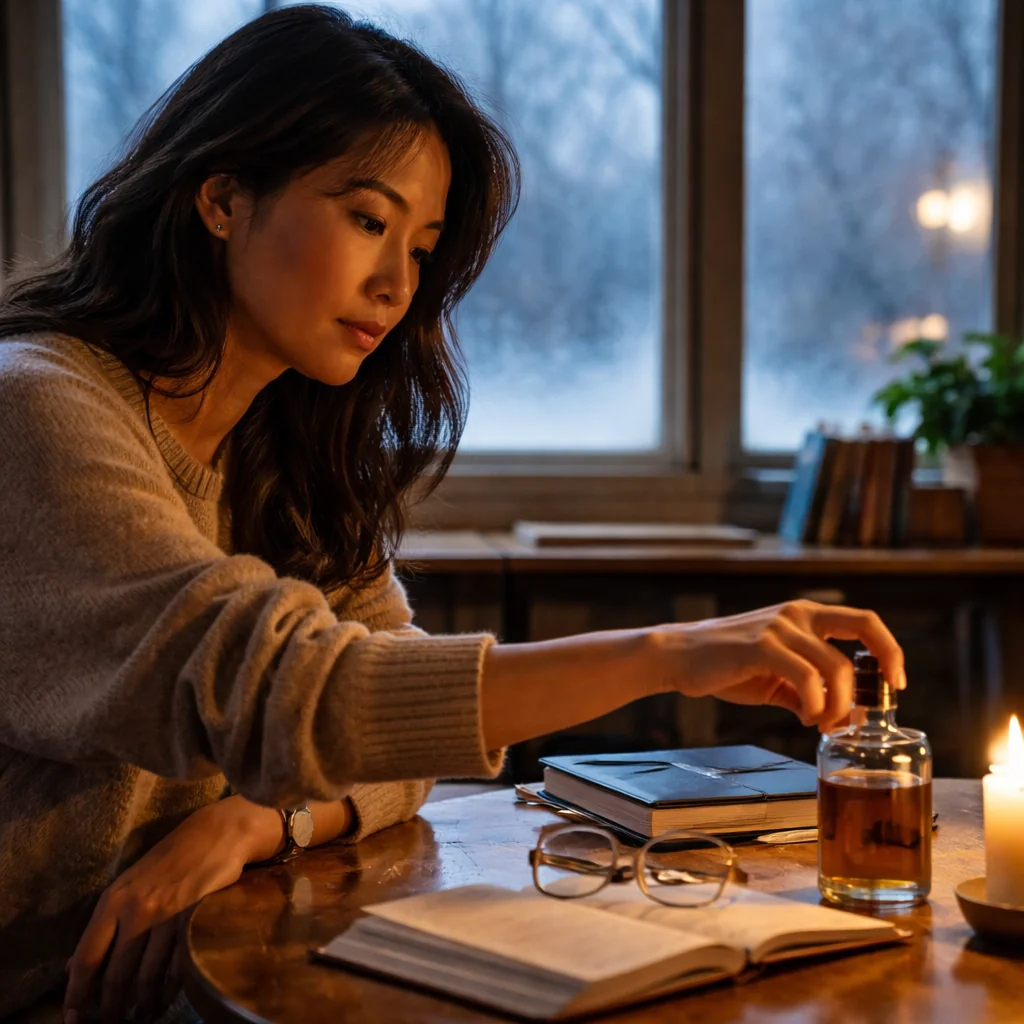
When the light goes, mood drops and drinking often rises to meet it. The trouble is that alcohol works on the exact system that would have helped.
What You'll Discover:
• What seasonal affective disorder is clinically, and how it differs from an ordinary winter slump.
• Why drinking tends to climb during the same months that mood drops.
• What alcohol actually does to the restorative sleep that winter mood depends on.
• Why the morning after tends to feel worse in December than it does in June.
• What genuinely helps, and when it makes sense to talk with a professional.
The winter low and the winter drinking increase usually get told as two separate stories. For a lot of people they are one story.
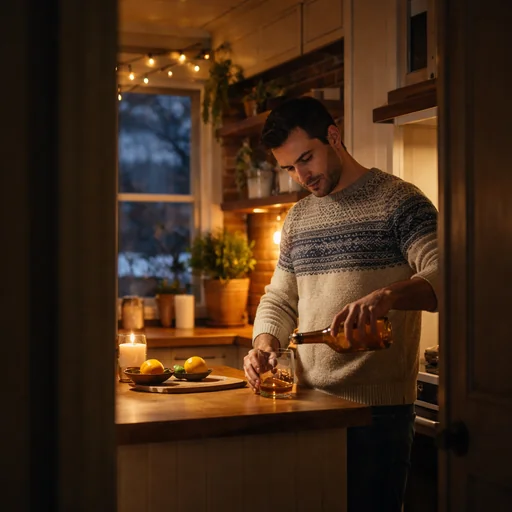
The light goes early. Mood follows it down. A drink in the evening takes the edge off, and it works, immediately and reliably.
The trouble is what happens over the following eight hours.
This is not a willpower problem and it is not a character problem. It is a loop with a real mechanism behind it, and mechanisms can be interrupted at more than one point.
One note before anything else. This article is educational, and nothing in it can tell you what is going on with you. If your mood has been low for weeks, that is a conversation to have with a doctor or a mental health professional.
What Seasonal Affective Disorder Actually Is
Seasonal affective disorder is not a separate illness from depression. It is a pattern of major depressive episodes that recur at the same time each year, most often beginning in late fall and lifting in spring.
The National Institute of Mental Health describes seasonal affective disorder as a form of depression tied to seasonal change, identified when the pattern repeats across years rather than showing up once.
The winter presentation has a specific shape to it. Low energy, oversleeping rather than undersleeping, cravings for carbohydrates, weight gain, pulling back from people, and trouble holding concentration.
That profile is different from the standard picture of depression, which is one reason it goes unrecognized for so long. People assume real depression means not sleeping, so sleeping ten hours and still feeling flat never registers as a symptom.
The leading explanation involves reduced daylight shifting circadian rhythm and disrupting serotonin and melatonin signaling. Less morning light means the internal clock drifts, and mood regulation drifts along with it.
There is also a much larger group of people who do not meet the clinical threshold and still feel meaningfully worse every winter. That experience is real, and most of what follows applies to it too.
Why Drinking Climbs When the Light Drops
Several forces push in the same direction at once during winter, and they reinforce each other.
Low mood makes short-term relief more valuable. When the baseline is flat, anything that lifts it even slightly is worth more than the same thing would be worth in July.
Alcohol delivers that lift fast. Within about twenty minutes there is a real change in how the evening feels, which is quicker than anything else available in a dark kitchen at six o'clock.
Winter also strips away the alternatives. Exercise gets harder, outdoor plans disappear, daylight is gone before dinner, and socializing moves indoors to places where drinks are already on the table.
And the drinking is easy to justify, because it looks like everybody else's drinking. The holiday calendar provides cover from late October straight through January 1.
None of that makes someone a heavy drinker by choice. It makes drinking the path of least resistance during the exact months when resistance is already running low.
What the Drink Seems to Offer Versus What It Actually Does
Alcohol Is a Depressant, and Winter Makes That Matter More
Alcohol is a central nervous system depressant. That is a pharmacological description rather than a figure of speech.
It slows neural activity, which is why the first drink feels loosening and the fourth feels heavy. The lift at the start comes from a dopamine and endorphin release, and that part fades long before the sedative part does.
The NIAAA notes that alcohol use disorder and depressive disorders co-occur far more often than chance would predict, and that when they show up together, both tend to be more severe.
The relationship runs in both directions. Low mood increases drinking, and drinking deepens low mood, which is exactly what makes the winter version so stubborn.
For the fuller picture of that two-way relationship, our article on alcohol and depression covers what happens across weeks rather than across a single evening.
The Sleep Problem Sitting at the Center of the Loop
This is the part that does the most damage, and it is the part almost nobody accounts for.
Alcohol is sedating, so it genuinely does shorten the time it takes to fall asleep. That effect is real, and it is why so many people quietly use it as a sleep aid.
What happens next is a different story. Research on the acute effects of alcohol on sleep architecture shows increased slow-wave sleep and suppressed REM sleep in the first half of the night.
The second half of the night is where it falls apart, with REM rebound and repeated fragmentation.
The back half of the night is where emotional processing happens. Losing it means waking up unrested even after a full eight hours in bed.
Over time the pattern digs in. Reviews of sleep disturbance in alcohol use disorder describe a self-reinforcing cycle in which poor sleep drives more drinking and more drinking further degrades sleep.
Now set that against seasonal low mood, which already involves sleeping longer and waking unrefreshed. The drink is subtracting from the one resource that was already short.
Our guide to sleeping and alcohol goes further into the mechanics, including how long it usually takes for sleep to recover once the nightly drink comes out.
Why the Morning Feels Worse Than the Night Felt Good
As alcohol clears, the nervous system rebounds in the opposite direction. Sedation lifts and is replaced by a stretch of heightened arousal.
That rebound tends to peak in the early morning hours, which is why people wake at 3am with a racing heart and a mind that refuses to settle.
In June that feeling gets diluted by a 5:30am sunrise and a long day ahead of it. In December you wake into total darkness, with no morning light to reset the clock, and the anxiety has nowhere to go.
Our piece on post-alcohol anxiety covers what is happening physiologically and roughly how long it lasts.
The Whole Loop, Start to Finish
Laid out end to end, the winter pattern runs like this.
Daylight drops, and mood and energy drop with it. Evenings turn long and shapeless, and a drink becomes the fastest way to change how the evening feels.
The drink works for about ninety minutes. Then it degrades sleep, so the next morning starts flatter and more anxious than it otherwise would have.
A flatter morning makes the following evening harder, which makes the next drink more appealing than the last one. Multiply that by roughly one hundred and twenty days.
Nothing in that loop requires heavy drinking to get started. It only requires a nightly drink and a dark season.
What Genuinely Helps
The encouraging part is that the loop has several weak points, and hitting any one of them tends to loosen the rest.
Light, Early and Daily
Light exposure is the most direct intervention available for seasonal low mood. Clinical reviews of assessment and treatment approaches for seasonal affective disorder identify bright light therapy as a first-line treatment.
Response rates are meaningful, and improvement often shows up within the first week or two.
Timing matters more than duration here. Morning light is what anchors the circadian clock, so getting outside within an hour or two of waking does real work even on a gray, overcast day.
Light boxes are widely used for this, and a clinician can advise on intensity, timing, and whether one is appropriate for you.
A Routine That Does Not Depend on Motivation
Seasonal low mood attacks motivation first, which means any plan that requires wanting to do it will quietly collapse in January.
Fixed times work better than good intentions. A consistent wake time, meals at roughly the same hours, and one scheduled thing per week that involves other people.
The point is not productivity. It is giving the internal clock external anchors during the months when daylight stops providing them.
Movement, Even a Small Amount
Exercise has consistent antidepressant effects, and it does not require intensity to produce them.
A fifteen minute walk outdoors in the morning stacks two interventions on top of each other, which is why it often outperforms a longer indoor workout for this particular problem.
Professional Support
If the pattern repeats every year, or if it is interfering with work, relationships, or getting through an ordinary day, that is a reason to talk with a doctor or a mental health professional.
Talk therapy adapted for seasonal depression has real evidence behind it, and there are treatment options that only a clinician can evaluate you for. Nothing in this article is a substitute for that conversation.
If drinking has become the main tool for managing mood, that is worth saying out loud to a professional. Our guide on how to stop using alcohol as self-medication covers how people usually start unwinding it.
When to Reach Out
A few things warrant a conversation sooner rather than later.
If low mood persists for most of the day, nearly every day, for two weeks or longer, that deserves professional evaluation. The same applies if you cannot function at work or at home.
If you are having thoughts of harming yourself, contact a professional right away. In the US, the 988 Suicide and Crisis Lifeline is available by call or text, twenty four hours a day.
And if you drink daily and heavily, do not stop abruptly on your own. Withdrawal from physical dependence can be medically serious and should be managed with a clinician.
Where Changing Your Drinking Fits
Reducing alcohol will not treat seasonal depression by itself. It will stop one of the things making it worse, which is a different outcome and still a valuable one.
Most people notice sleep quality improving within one to two weeks of cutting back. Morning mood usually follows, lagging a little behind the sleep.
The goal does not have to be zero. Moderation and quitting are both legitimate, and for plenty of people the honest first step is fewer nights rather than no nights.
Naltrexone is one option that supports either direction. It is a non-addictive prescription tablet, usually 50mg, that blocks the endorphin release alcohol produces, which lowers the pull toward the second and third drink.
It is not an antidepressant and it does not treat seasonal depression. What it does is make the drinking part easier to change while you work on the mood part with people qualified to help with it.
Naltrexone also requires a prescription and a medical review, particularly if you take other medications. That review is a feature rather than an obstacle.
Winter Is Hard. It Does Not Have to Be This Hard.
Drinking more when the light disappears is a deeply human response to a real physiological change. It deserves an explanation rather than a verdict.
The explanation is that alcohol borrows against the exact resource that seasonal low mood is already depleting. It trades ninety minutes of relief for a night of restorative sleep, and in December that is a bad trade.
Breaking the loop anywhere helps. Morning light, a fixed routine, a little movement, fewer nights with a drink in them, and a real conversation with a professional if the pattern keeps repeating year after year.
You do not need to be in crisis to deserve support. You also do not need to have settled on a final goal before you ask for it.
Frequently Asked Questions
Does alcohol make seasonal depression worse?
Alcohol is a central nervous system depressant and it disrupts restorative sleep, both of which work against seasonal low mood. Relief in the evening tends to get paid back with a flatter, more anxious morning.
Is drinking more in winter a sign of a drinking problem?
Not on its own. Drinking rises broadly in winter for reasons tied to daylight, indoor socializing, and the holiday calendar, though a pattern that keeps running past February is worth a closer look.
Can cutting back on alcohol improve seasonal depression?
It can improve sleep quality and morning mood, which are two significant contributors. It is not a treatment for seasonal depression, and professional care is still the right path if the pattern repeats each year.
What actually helps seasonal affective disorder?
Bright light therapy in the morning, a consistent daily routine, regular movement, and professional treatment including talk therapy. A doctor or mental health professional can determine which combination fits your situation.
Why do I wake up at 3am after drinking in winter?
As alcohol leaves your system the nervous system rebounds into heightened arousal, which commonly lands in the early morning hours. Dark winter mornings give that rebound nothing to push against.
Should I quit drinking completely if I get winter depression?
That depends on your history and your health, and it is a good question for a clinician. Cutting back and quitting are both legitimate goals, and neither one is the higher-status answer.
Winter does not have to run on this loop. Take the online Alcohol Use Assessment to find out whether naltrexone from Choose Your Horizon fits your goal, whether that is drinking less or not drinking at all.