A 2 minute assessment to get a personalized mental health or alcohol recovery plan.

You made it through the whole day. Then the evening hits and everything shifts.
What You'll Discover:
• Why alcohol cravings follow a nightly schedule and what drives that clock
• The brain chemistry behind the evening craving spike
• How the Sinclair Method targets your specific craving window
• Practical behavioral strategies to interrupt the pattern tonight
• When it makes sense to talk to a clinician about medical support
Most people who want to drink less notice the same thing. The daytime is manageable. Mornings are fine.
Then 6 p.m. arrives, or maybe 8, and the pull toward a drink becomes very hard to ignore.
This is not a willpower failure. It is a conditioned response, reinforced sometimes for years. The evening craving is the most predictable trigger pattern in alcohol use.
Understanding why it happens is the first step to interrupting it. According to the National Institute on Alcohol Abuse and Alcoholism, intense cravings are a recognized symptom of Alcohol Use Disorder.
Cravings cluster around learned cues. Time of day is one of the strongest cues that exists.
The Most Common Drinking Trigger Has a Time Stamp
The evening craving is not random. It follows a predictable schedule because your brain is wired to anticipate it.
Habit, brain chemistry, and emotion all converge at the same time each day. Once you understand the mechanics, the craving stops feeling mysterious and starts feeling solvable.
Why Cravings Peak at Night: The Biology
Cortisol Drops and Your Brain Looks for Relief
Cortisol is a stress hormone that peaks in the morning and falls through the day. By evening, levels are at their lowest point.
For many people, that drop feels like a restless, low-grade discomfort. The brain, especially one that has learned to associate alcohol with relief, reads that dip as a signal.
A drink, it has learned, restores a sense of calm. The craving is your brain sending a request based on that history.
Dopamine Dips at the End of the Day
Dopamine is the brain's reward and motivation chemical. During the day, tasks, activity, and social contact provide small dopamine hits.
As the day winds down, those inputs dry up. For someone who drinks regularly, the brain has learned a shortcut.
Alcohol triggers a dopamine release faster and more reliably than most other evening activities. The craving is partly the brain anticipating that reward and lobbying hard for it.
The Decompression Ritual
Beyond chemistry, there is the power of habit. Many people have poured a drink at the same time every evening for months or years.
That routine becomes deeply embedded. The time of day, the end of work, the sound of ice in a glass, all become triggers in their own right.
The craving can hit before you have even consciously thought about drinking.
Stress and Emotional Regulation
The evening is when the day's stressors land. Work pressure, relationship friction, financial worry, and fatigue all accumulate and surface at night.
Alcohol has short-term sedative effects that temporarily blunt emotional discomfort. The brain is very good at remembering this.
Over time, the evening becomes the craving window because it is when relief feels most needed.
Boredom and Unstructured Time
Unstructured evening hours remove the natural barriers that keep daytime drinking in check. There is no meeting to get to, no task due, no one watching.
That open space lowers inhibitions and amplifies cravings. Boredom also reduces the brain's baseline stimulation.
Alcohol fills that gap. The pattern becomes self-reinforcing every time it works.
Sleep Initiation Habit
Many people drink in the evening because it helps them fall asleep. Alcohol does reduce the time it takes to fall asleep initially.
But it disrupts sleep architecture significantly. Research is clear that alcohol suppresses REM sleep and causes fragmented sleep in the second half of the night.
We cover this in detail in our article on how alcohol affects sleep. The drinking meant to help you sleep actually makes sleep worse over time, increasing next-day fatigue and the next evening's craving.
Why Evening Cravings Are Harder to Resist Than Others
Evening cravings are not just common. They are structurally harder to resist than cravings at other times of day.
Decision fatigue is real. By evening, the brain has made hundreds of small choices and its self-regulatory capacity is genuinely depleted.
Saying no to a craving at 8 p.m. takes more effort than at 10 a.m. That is not a personal shortcoming. It is how the brain works.
Social and environmental cues are also stronger at night. Dinner settings, television, and social occasions all carry associations with drinking for many people.
And the absence of other obligations removes practical deterrents. In the morning you might resist a craving because you have to drive or work. At night, those guardrails are gone.
The evening craving is not a sign of weakness. It is a predictable neurological pattern that requires a targeted response.
The Sinclair Method: Timing Naltrexone to Your Craving Window
How Naltrexone Works
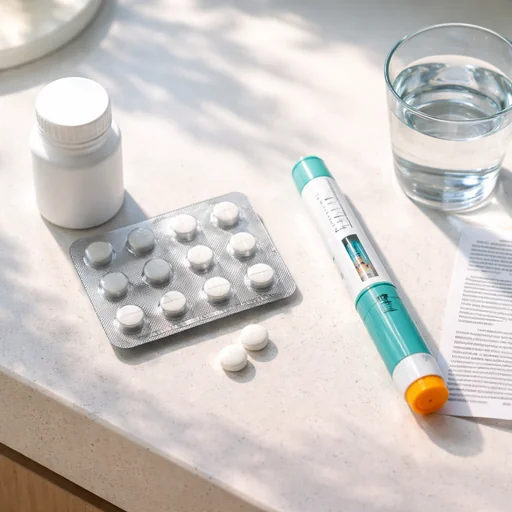
Naltrexone is an FDA-approved medication for Alcohol Use Disorder. It works by blocking opioid receptors in the brain.
When those receptors are blocked, alcohol does not produce the same dopamine surge it normally would. Without the reward, the brain's craving signal gradually weakens over time.
According to StatPearls at the National Library of Medicine, naltrexone reduces alcohol's reinforcing properties by blocking the mu-opioid receptor pathway.
A 2023 meta-analysis on PubMed covering 118 clinical trials and 20,976 participants found that oral naltrexone at 50mg daily significantly reduced rates of return to heavy drinking.
What Is the Sinclair Method
The Sinclair Method is a specific protocol for using naltrexone. Instead of taking it daily regardless of drinking, you take it one hour before you expect to drink.
The medication is active during the drinking episode, blocking the reward. Over time, the brain undergoes pharmacological extinction.
The learned association between the evening hour and the pleasurable reward weakens. Cravings decrease not just in the moment but structurally, over weeks and months.
For people whose drinking is concentrated in the evening, this timing is especially well-matched. You can read more in our guide on the Sinclair Method.
What the Research Shows
The landmark COMBINE study found naltrexone with medical management produced 80.6 percent days abstinent versus 75.1 percent in the placebo group. That is a statistically significant difference.
Naltrexone also substantially reduced the likelihood of heavy drinking episodes, with a hazard ratio of 0.72.
The NIH chapter on naltrexone treatment notes the medication "appears to be effective for attenuating craving in people who are alcohol dependent." That craving attenuation is exactly why it fits the evening window so well.
Who Should Know About This Option
Naltrexone is not appropriate for everyone. It is contraindicated for people currently using opioids and those with severe liver disease.
A prescribing physician will review your health history before recommending it. Naltrexone does not cause dependence or withdrawal.
It is not a sedative and does not alter your state on its own. It simply changes what happens when alcohol is consumed.
If you are curious whether your evening craving pattern could respond to this approach, our article on whether naltrexone stops alcohol cravings covers the mechanism in more detail.
Behavioral Strategies for Evening Cravings
Medication is one part of the picture. Behavioral strategies complement it and, for some people, are the primary tool.
These approaches work by interrupting the conditioned cue response before it takes hold.
Identify Your Specific Trigger Window
The first step is precision. Most people have a craving that starts at a fairly consistent time.
Pay attention to when yours begins, not when it peaks. Intervening early, when the craving is still building, is much easier than resisting it at full intensity.
Keep a simple note for a few days: when did the urge first appear, what were you doing, how strong was it on a scale of one to ten. This data makes the pattern visible and therefore workable.
Change the Environment Before the Craving Arrives
Environmental cue interruption is one of the most effective behavioral tools available. If you typically pour a drink while cooking dinner, change the physical setup of that time.
Put a non-alcoholic drink in your hand before the craving can anchor to the routine. Physical movement also helps. A 10 to 15 minute walk in the early evening can reduce craving intensity by shifting cortisol and releasing endorphins.
Create a Competing Ritual
The evening decompression ritual is deeply ingrained for many people. The goal is not to eliminate ritual but to replace the drink within it.
The brain needs something to mark the transition from work to rest. Options that work include a specific non-alcoholic drink prepared the same way every evening, a short walk, or a brief structured activity that signals the shift.
The key is consistency. The competing ritual needs to be repeated enough times to build its own conditioned response.
Address the Emotional Layer Directly
Evening cravings are often emotional. Stress, loneliness, boredom, and low-level anxiety all amplify the pull toward alcohol.
Addressing those states directly takes some fuel away from the craving. Even five minutes of slow breathing, or writing down three things that went well that day, can reduce craving intensity meaningfully.
The goal is to give the brain an alternative path to the state it is seeking.
Manage Sleep Differently
If your evening drinking is partly about sleep, addressing sleep quality directly removes a major driver. Avoiding screens for 30 to 60 minutes before bed and keeping a consistent sleep schedule can improve sleep onset without alcohol.
Sleep often gets worse before it gets better in the first weeks of reducing drinking. This is a withdrawal effect, not a permanent state.
Our article on insomnia after quitting alcohol explains what to expect and how to manage it during that transition.
Urge Surfing
Urge surfing is a mindfulness-based technique developed for craving management. The core idea is that cravings follow a wave: they rise, peak, and fall.
The peak rarely lasts more than 15 to 30 minutes. Instead of fighting the craving, you observe it neutrally.
Notice where you feel it in your body. Notice how it changes. Most people find that riding out the wave without acting on it becomes easier each time they do it.
What Not to Do During an Evening Craving
Some common responses to cravings backfire and make the pattern stronger over time.
Trying to white-knuckle through a strong craving without any strategy depletes willpower reserves. Resistance without tools is not sustainable and typically makes the next evening harder.
Negotiating with the craving is also counterproductive. "I'll just have one" activates the reward circuit and usually makes the craving stronger. The brain hears the negotiation as a near-win and escalates.
Skipping dinner or eating very little can lower blood sugar, which increases irritability and craving intensity. Eating a balanced evening meal before the craving window opens removes one physiological amplifier.
When to Consider Medical Support
Behavioral strategies work well for many people, especially those in the earlier stages of a problematic drinking pattern.
But if evening cravings are strong, consistent, and have resisted your own efforts, medical support can make a real difference.
Naltrexone is available by prescription through a telehealth provider without leaving home. The consultation is discreet. There is no requirement to have tried other treatments first.
You do not need to have hit any kind of bottom to qualify. The evidence base for naltrexone is substantial: FDA-approved for over 30 years, non-addictive, and it does not require you to stop drinking before starting.
For people whose drinking is concentrated in the evening, the Sinclair Method timing makes naltrexone a particularly well-suited option.
If you have been drinking heavily or daily for a long period, talk with a clinician before making significant changes. Alcohol withdrawal can be medically serious, and a doctor can help you do it safely.
Conclusion: The Evening Pattern Can Be Unlearned
Evening alcohol cravings are not a character flaw or a mystery. They are a predictable outcome of brain chemistry, learned associations, and the pressures that converge at the end of a day.
The brain that learned to crave a drink at 7 p.m. can learn something different. It takes the right combination of behavioral tools, environmental changes, and in many cases, targeted medical support.
Small, specific interventions at the right time of day can shift the trajectory meaningfully. And if you have tried on your own and need more support, that is not a failure. It is simply a signal to bring in more help.
Choose Your Horizon offers an online Alcohol Use Assessment that is quick, discreet, and available from home. Take the online Alcohol Use Assessment to see if Choose Your Horizon's naltrexone program makes sense for you.