A 2 minute assessment to get a personalized mental health or alcohol recovery plan.


If you want to cut back on your drinking rather than quitting completely, there are now options for your specific goal. The Iceberg Program was developed to provide structured support for people that aim to drink less, and medications can be used with or without the program to make cutting back easier to achieve.
What You’ll Learn:
• Why completely quitting alcohol doesn’t work for everyone.
• The important health benefits that come with drinking less.
• What makes alcohol reduction a more realistic goal for many people.
• How the Iceberg Program provides structured support for people who want to drink less.
• The two medication options that can help suppress alcohol cravings so it’s easier to reduce drinking.
For a long time, the message around alcohol has been all or nothing. Either you're fine or you have a problem and need to quit completely, forever. If you've ever thought, "I don't want to stop drinking forever. I just want to drink less," you might feel like there’s not much out there for you.
At Choose Your Horizon, we’ve closed the gap. Our programs support all alcohol reduction goals, whether that means simply cutting back or abstaining completely. Our medical team recognizes that alcohol reduction is what’s most important. The fewer drinks you have, the less health repercussions there are - period. We’d rather someone decide to reduce alcohol use by a handful of drinks every week rather than trying to quit completely, relapsing and then giving up altogether.
Why Just Quitting Doesn’t Work For Everyone
Sobriety is the right path for many people, and we fully support anyone who chooses it. But it isn't the only path, and for a lot of people it isn't the most realistic one.
Total abstinence is a real lifestyle choice. It can mean giving up social outings, work events, dinners with friends and the glass of wine that marks the end of a hard day, all at once and permanently. When the goal feels that extreme, many people never start.
Others start, slip once and decide they've "failed" which can send them right back to where they began or worse.
Many others aren’t in crisis, but they know their drinking has crept up. They're waking up groggy, feeling anxious or wondering why one drink turns into four. These are the people who may find it difficult to find the right fit with a traditional rehab program.
The Real Health Benefits of Drinking Less
Totally abstaining from alcohol isn’t necessary to experience real health benefits. Simply cutting back is enough to see biomarkers move within weeks. The gains often show up sooner than people expect.
Some of the positive changes you can expect to experience include:
• Better sleep. Alcohol disrupts sleep quality even when it helps you fall asleep.
• Improved mood and less anxiety. Many people notice fewer anxious mornings and more stable energy.
• Lower blood pressure. Heavy drinking is a well-established contributor to hypertension.
• A healthier liver. Less alcohol gives the liver a chance to recover, especially in the early stages of alcohol-related liver stress.
• Lower long-term risk. Alcohol is linked to several cancers, heart problems and other chronic conditions, and less drinking means less risk.
• Sharper focus and better relationships. A clearer head has an impact on every relationship in your life from romantic partners to co-workers.
Because these benefits build gradually, every step in the right direction counts. Going from heavy drinking to moderate drinking is a real win.
Alcohol Reduction is a Goal Many More People Can Stick To
The best plan is one you can follow. The best goals are measurable and attainable. Many people find that a "drink less" goal feels more achievable, more flexible and more in line with the life they want. It lets you keep the moments of drinking you enjoy while cutting the automatic, habitual drinking you don't like.
That sense of control often builds confidence, and confidence makes lasting change more likely.
If you decide down the road that you'd like to stop altogether, that's fine too. Starting with reduction doesn't lock you into anything. It can be a first step, or it can be where you land.
The Iceberg Program: Structured to Provide Support When the Goal is Drinking Less (or Stopping)
If you want a complete, guided approach, the Iceberg Program is designed for you. The name reflects our philosophy: drinking is often just the visible tip. Beneath the surface there can be stress, anxiety, trauma or habits that keep the cycle going.
We help you address the whole iceberg. The program is delivered entirely from home and includes:
• A same-day medical evaluation with a licensed psychiatric clinician, within the program led by Mayo Clinic-trained psychiatrist Dr. Daniel Montville.
• Prescription medication, if appropriate, such as naltrexone, with ongoing refills shipped discreetly to your door.
• At-home liver testing so you can track your health, not just your habits.
• 1:1 coaching with a dedicated addiction coach
• Weekly group meetings for community and accountability
• Digital tools to help you track progress and stay on course
The program unfolds in phases:
• First, we focus on managing your drinking with medication and baseline health monitoring.
• Next, we start building sustainable habits and keep an eye on your health markers.
• Once your alcohol use is under control, we help you build the life you envision, with coaching and lifestyle design that supports the changes you've made.
Everything is private and confidential. You can start with a short online assessment, with no need to label yourself, schedule an appointment or sit in a waiting room.
Want Medication Without the Structured Program? That’s Possible Too
If you'd rather start with medication alone, our team can evaluate you and prescribe it when medically appropriate. There are two possible options:
Naltrexone is a well-established medication for alcohol use. It works by blocking the brain's reward response to alcohol, which can dial down cravings and make it easier to stop after one or two drinks. It's non-addictive and taken as a simple oral medication. Many people describe it as making alcohol feel less compelling, so that cutting back doesn't feel like constant white-knuckling.
Keep exploring to learn how an online naltrexone prescription works.
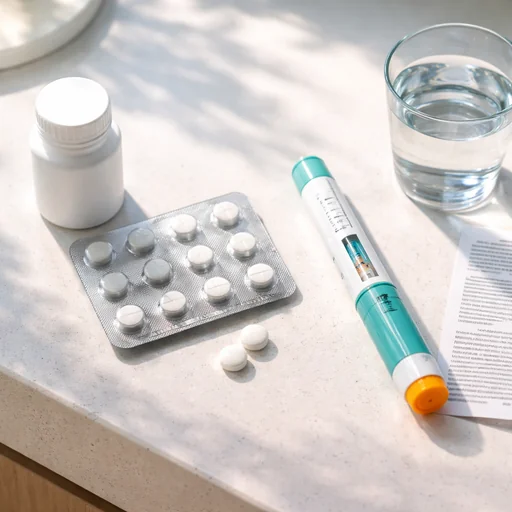
GLP-1 medications are an emerging option that has generated real excitement in regards to alcohol reduction. They were originally developed for diabetes and weight management, but GLP-1s have drawn attention because many people taking them report a reduced desire to drink, and researchers are actively studying the connection.
Naltrexone and GLP-1s can be taken together or on their own, with or without enrolling in the full Iceberg Program. A licensed clinician will review your health history and goals to determine whether either medication is appropriate and safe for you.
You don't have to hit rock bottom or adopt a label to get the support you need to live a healthier lifestyle. If your relationship with alcohol isn't where you want it to be, that's reason enough to get help.
Whether you want a full, structured program or simply a medication to help you regain control, Choose Your Horizon can help you find an approach that fits.
Ready to take the first step? Start with the online Alcohol Use Assessment to talk with a licensed clinician about your goals, whether that's drinking less, quitting or figuring out what's right for you.