A 2 minute assessment to get a personalized mental health or alcohol recovery plan.

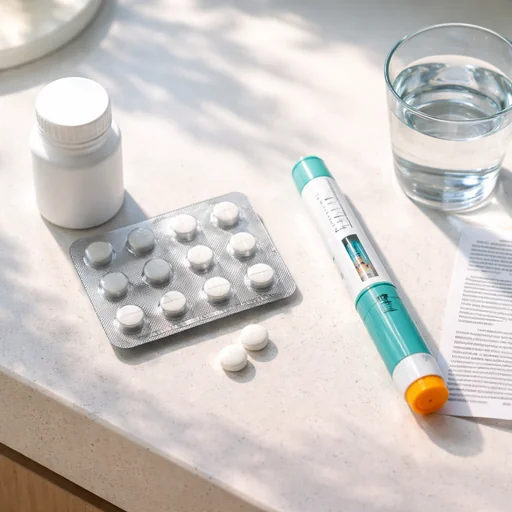
If a weekly GLP-1 shot quietly took the edge off your drinking, it is fair to wonder whether an alcohol-specific medication like naltrexone is still worth it. The answer comes down to what each one actually does.
What You'll Discover:
• What GLP-1 medications like Ozempic appear to do for alcohol, and why the science is still early.
• What GLP-1s do not do, including why they are not approved for alcohol use.
• Why naltrexone remains the established, alcohol-specific option.
• Whether you can use a GLP-1 and naltrexone at the same time.
• How to decide which approach actually fits your goals.
Plenty of people start a GLP-1 medication like Ozempic or Wegovy for weight or blood sugar, then notice something they never signed up for. The glass of wine on Friday loses its pull. The second and third drink stop sounding appealing.
If that is you, the next question makes sense. If a GLP-1 already curbed your drinking, it is reasonable to ask whether you still need naltrexone, the medication built specifically for alcohol.
The short answer is that it depends on three things: your goals, how steady that effect has been, and whether you plan to stay on the GLP-1 for the long haul. Here is what each medication really does, and where they part ways.
What GLP-1 Medications Actually Do for Alcohol
GLP-1 medications are the class that includes semaglutide, the active ingredient in Ozempic and Wegovy. They were designed for type 2 diabetes and weight management, and they copy a gut hormone that signals fullness and slows digestion.
That same hormone pathway reaches into the brain's reward system. That is the reason researchers started paying attention to alcohol in the first place.
Alcohol sets off a release of dopamine in the brain's reward circuitry, and that surge is a big part of why a drink feels good. GLP-1 signaling appears to soften that response, which may be why some people feel less drawn to alcohol without trying.
It is the same signal that makes a smaller plate feel like enough. When it reaches the reward system, the wanting eases across the board, and alcohol is often part of what quietly fades.
You may have heard people describe a drop in "food noise" on these medications, that constant background hum of wanting a snack. For a lot of people who drink, the pull toward alcohol quiets in the same way.
It is less a decision than a volume knob turning down on its own.
Early human research supports the stories. In an early randomized clinical trial, low-dose semaglutide reduced how much people drank in a lab setting and lowered their weekly alcohol cravings compared with a placebo.
That is genuinely promising. For someone who has fought to cut back for years, feeling the urge fade on its own can be a relief and a real head start. We go deeper on that effect in our guide on whether GLP-1 medications reduce alcohol cravings.
What GLP-1 Medications Do Not Do for Alcohol
Here is the part that gets lost in the excitement. GLP-1 medications are not approved to treat alcohol use, and the alcohol research is still in its early chapters.
The semaglutide trial above was small and short. Researchers reviewing the full body of evidence note that larger trials are still needed before there is a clear path to approval for alcohol use.
So a GLP-1 is not bad for your drinking. It is simply not a tool that was tested, dosed, or approved for that specific job.
A few practical limits are worth knowing before you lean on it:
• The effect is not universal. Some people notice a steep drop in drinking, others notice almost nothing.
• It is tied to the medication. If you stop the GLP-1, lower the dose, or gap between refills, the alcohol effect can fade with it.
• Body weight seems to matter. The clearest reductions in one review showed up in people with obesity, not across the board.
That point about stopping deserves more weight than it usually gets. Many people take a GLP-1 for a season, hit a weight goal, and taper off.
If the only thing holding your drinking down was the GLP-1, the cravings can creep back once it clears your system.
Access plays a role too. Supply gaps, insurance changes, and cost push a lot of people off these medications for stretches at a time. Whatever alcohol benefit came along for the ride tends to leave during those gaps.
There is also the matter of aim. A GLP-1 turns down appetite and reward in general, and alcohol happens to ride along. It is not built to lock onto the alcohol reward loop and stay there.
Why Naltrexone Is the Established Alcohol Tool
Naltrexone is the medication that was actually built for this. It has been approved for alcohol use since 1994, which is roughly three decades of clinical use and study behind it.
It works through a different door than a GLP-1. Alcohol prompts a release of endorphins that bind to opioid receptors, and that is part of what creates the pleasant buzz and the pull toward the next drink.
Naltrexone blocks those opioid receptors. With the receptors blocked, drinking stops delivering the same reward, and over time the craving loop starts to loosen. A person can have a drink and simply not get the same lift from it.
That mechanism is why timing matters. A standard 50mg tablet is often taken daily so the medication is always in place, and some people take it about an hour before they expect to drink. Either way, the point is to be covered when alcohol shows up.
The evidence base is deep. A large network meta-analysis of alcohol medications found oral naltrexone reduced the return to heavy drinking compared with placebo, and it remains one of the most studied options available.
Most people also start to notice a difference within a few weeks, not months. The cravings soften, the automatic second drink becomes a choice again, and alcohol slowly loses its grip.
That is the core difference. A GLP-1 might lower your interest in alcohol as a side effect. Naltrexone targets the alcohol reward loop on purpose, and it keeps doing that whether or not you are trying to lose weight.
We put the two side by side in our guide on naltrexone versus GLP-1 medications for alcohol use disorder.
GLP-1 vs Naltrexone for Alcohol: A Side-by-Side Look
Sometimes it helps to see the two lined up. This is the short version of everything above.
What Naltrexone Adds That a GLP-1 Cannot
The clearest way to think about it is coverage. A GLP-1 gives you a general dampening of reward that may or may not include alcohol, and that lasts as long as you stay on the medication for other reasons.
Naltrexone gives you something purpose-built and independent. It does not care whether you are losing weight, holding steady, or off a GLP-1 entirely.
It is also flexible. You can take it every day for steady coverage, or take it before the situations where drinking tends to get away from you, like a wedding or a long weekend.
And it can stay with you for as long as the goal matters. There is no weight target attached to it, so it does not expire when a different chapter of your health does.
Using a GLP-1 and Naltrexone Together
For a lot of people, this is not an either-or decision at all. Because the two medications work through different systems, a clinician can prescribe them together when it makes sense.
A GLP-1 keeps doing its job for weight or blood sugar. Naltrexone adds a dedicated layer of protection for the alcohol reward loop, one that does not depend on your GLP-1 dose or how long you stay on it.
This kind of combination should always be managed by a clinician who knows your full history and current medications. We walk through the practical details in our guide on taking a GLP-1 and naltrexone together.
There is also a fair question underneath all of this about whether it is even safe to drink while on a GLP-1. We answer that in our post on drinking alcohol on a GLP-1.
A Medication Is One Piece, Not the Whole Plan
Whichever route you take, a pill or an injection is a tool, not a full plan. The people who see the biggest change usually pair the medication with a little structure around it.
That can mean tracking what you drink, noticing the moments that tend to trigger it, and having someone to check in with. Naltrexone works best inside that kind of setup, not as a lone fix.
Choose Your Horizon is built as an integrated solution for exactly this reason. Medication, physician guidance, and coaching sit together, grounded in clinical, neurological, and behavioral science, so the tool has support around it.
That structure is also what helps a good week turn into a good month. The medication lowers the pull, and the small habits you build around it are what make the change hold.
How to Decide What You Actually Need
Start with your goal. If you want to drink less or stop, and you want something proven for exactly that, naltrexone is the option with the track record.
Then look at how reliable the GLP-1 effect has been for you. If your drinking dropped and stayed down for months, that is real and worth noting.
If it comes and goes, or fades near the end of each dosing cycle, that is a signal the effect may not hold on its own.
Finally, think about your time horizon. If you plan to stay on a GLP-1 indefinitely, you may keep some of the alcohol benefit along the way.
If a GLP-1 is a shorter chapter for you, an alcohol-specific tool gives you something that does not walk out the door when the shot does. That is often the deciding factor.
None of this has to be sorted out alone. A short, honest conversation with a clinician can tell you what fits, and whether one medication or a thoughtful combination makes the most sense for you.
The Bottom Line
A GLP-1 quietly taking the edge off your drinking is a real and welcome effect. It is just not the same thing as a medication chosen, dosed, and approved to treat alcohol use.
GLP-1 medicines show early promise, but the science is young and the benefit can leave when the medication does. Naltrexone was built for the alcohol reward loop, has decades of evidence behind it, and can stand on its own or work alongside a GLP-1.
Struggling with how much you drink does not make you an extreme case, and you do not need to reach a crisis to look at your options. Support built on clinical, neurological, and behavioral science is here whenever you are ready.
Frequently Asked Questions
Does Ozempic reduce alcohol cravings?
For some people it does. Early research shows semaglutide can lower weekly cravings and reduce how much people drink, though the effect varies from person to person and is still being studied.
Is Ozempic approved to treat drinking?
No. GLP-1 medications like Ozempic are approved for type 2 diabetes and weight management, not for alcohol use. The alcohol research is promising but still early.
Will my drinking come back if I stop my GLP-1?
It can. If the GLP-1 was the main thing lowering your interest in alcohol, cravings may return once you lower the dose or stop the medication.
Is naltrexone better than a GLP-1 for alcohol?
Naltrexone is the option with approval and decades of evidence specifically for alcohol. A GLP-1 may help as a side effect, but it was not designed or tested for that purpose.
Can I take naltrexone and Ozempic at the same time?
Often yes, under a clinician's guidance. They work through different pathways, so they can be combined when it is appropriate for your health and goals.
How fast does naltrexone start working?
Many people feel softer cravings within the first few weeks of taking it consistently. It is not instant, but it usually shows up sooner than people expect.
You do not have to guess which approach fits you. Take an online Alcohol Use Assessment with Choose Your Horizon to see if naltrexone could be a good fit, on its own or alongside a GLP-1. Start your online Alcohol Use Assessment here.