A 2 minute assessment to get a personalized mental health or alcohol recovery plan.

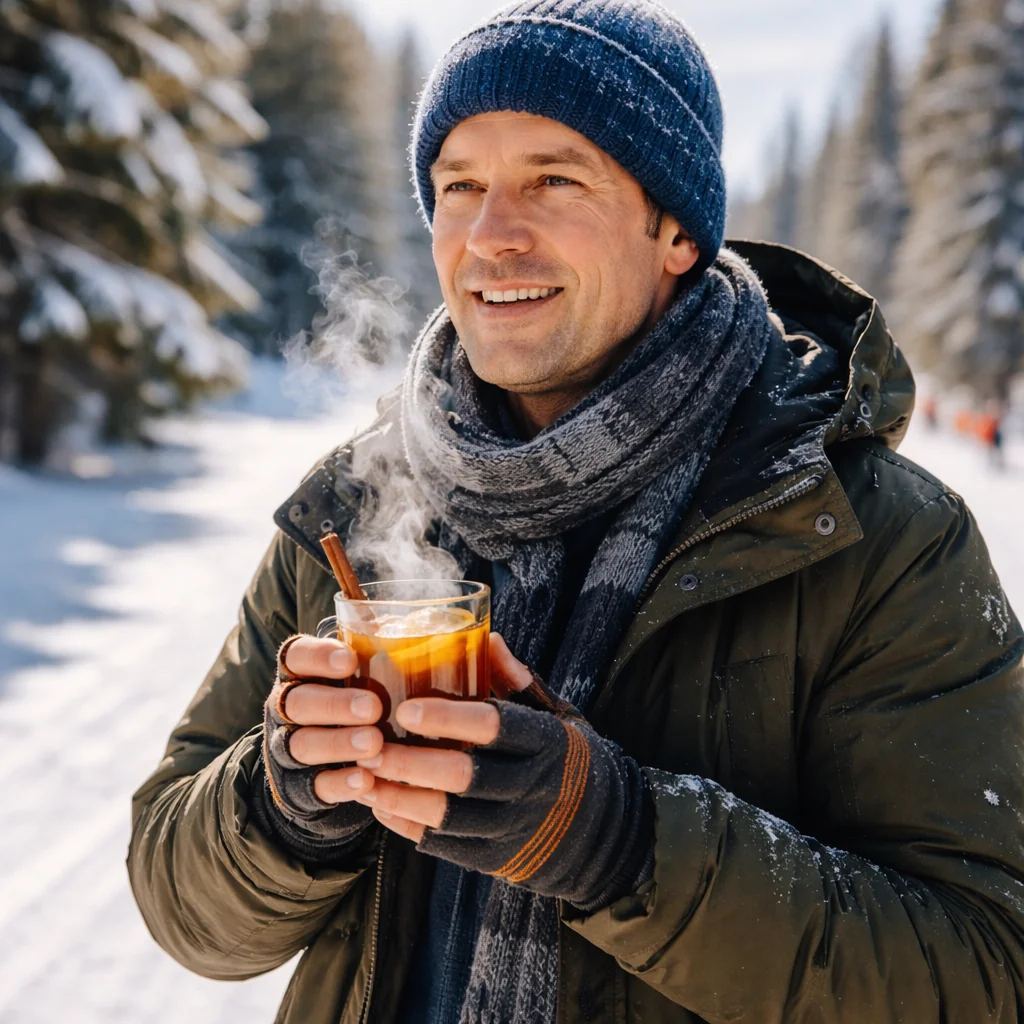
Alcohol makes you feel warmer while making you measurably colder. That gap between sensation and physiology is why the hot toddy myth has survived for two hundred years.
What You'll Discover:
• Why alcohol makes you feel warm while your core temperature is dropping.
• Where the St. Bernard brandy barrel image came from, and why it is fiction.
• The shivering effect that matters more than the flush does.
• Practical guidance for ski trips, tailgates, outdoor events, and shoveling snow.
• What actually warms a cold person up.
The short answer is no. Alcohol does not keep you warm.
It does the opposite, and then it makes you feel like it is doing the opposite of that.
That combination is what makes this genuinely risky rather than merely wrong. A misconception that felt wrong would have corrected itself a long time ago. This one feels right every single time you test it.
Why the Myth Is So Durable
The St. Bernard and the Brandy Barrel
Almost everyone can picture it. A shaggy rescue dog in the Alps, a small wooden cask strapped under its chin, a half-frozen traveler revived by a swallow of brandy.
That image comes from a painting. In 1820, a teenage Edwin Landseer painted "Alpine Mastiffs Reanimating a Distressed Traveller," and he added the keg because it made the scene better.
There is no historical record of the monks at the Great St Bernard Hospice ever sending dogs out with brandy. It was an artistic flourish, and it has now outlived the artist by two centuries.
The irony is fairly complete. Giving alcohol to someone with hypothermia is one of the more harmful things you can do, which makes the most famous image of alcohol-as-rescue exactly backwards.
The Flush Is Real, It Just Means the Opposite
The second reason the myth holds is that the sensation is completely genuine. Your face gets warm. Your hands stop aching. The cold recedes.
None of that is imagination or suggestion. It is your body moving heat from where it is useful to where it can escape.
What Is Actually Happening in Your Body
Peripheral Vasodilation Moves Heat Outward
Alcohol relaxes the smooth muscle in blood vessel walls, which widens the vessels sitting closest to the skin. Blood that was circulating deep in your core moves out toward the surface.
Skin is dense with temperature receptors and has almost no insulation. Warm blood arriving there registers instantly as warmth, and it radiates away into cold air nearly as fast.
That is the whole trick. You are experiencing your own heat on its way out of you.
In cold weather your body normally does the exact opposite. Surface vessels constrict specifically to keep warm blood deep and protect the organs that need it most. Alcohol overrides that reflex.
Core Temperature Goes Down
The measured effect is not subtle.
A controlled human study of alcohol and thermoregulation found that after drinking, skin blood flow and sweat rate rose significantly while deep body temperature fell about 0.3 degrees Celsius below controls.
The subjects reported feeling hotter while that happened. Sensation and core temperature moved in opposite directions at the same moment, which is the entire problem in one experiment.
Shivering Gets Suppressed
This is the mechanism almost nobody mentions, and it arguably matters more than the vasodilation does.
Shivering is involuntary muscle work that generates heat, and it is one of your body's primary defenses against a falling core temperature.
A clinical review of hypothermia and frostbite management notes that alcohol inhibits shivering while also causing cutaneous vasodilatation.
So alcohol opens the heat-loss valve and switches off the furnace at the same time. Those two effects compound each other rather than cancelling out.
The same review adds the third layer, which is that alcohol dulls awareness of cold and impairs the judgment needed to seek shelter or put on more clothing.
What It Feels Like vs What Is Actually Happening
The Judgment Problem
The physiology is only half of the risk. The other half is behavioral, and it is the half that actually sends people to emergency departments.
People who feel warm make different decisions. They unzip the jacket. They pull a glove off to check a phone. They stay out for one more run, one more quarter, one more block.
Every one of those choices is perfectly sensible if you are warm. Not one of them is sensible if your core temperature is falling and you cannot feel it happening.
The CDC's guidance on preventing hypothermia is direct. People spending time outdoors in cold conditions should avoid alcohol, increase fluid and calorie intake, and avoid overexertion and sweating.
Most hypothermia cases are not people lost in wilderness. They are people who stayed outside longer than they meant to, in weather that was not extreme, without the clothing they would have put on if they had felt cold.
Where This Actually Matters
Ski Trips and the Mid-Mountain Bar
The lodge drink at lunch is the classic version. You are warm inside, it feels excellent, and then you head back out for three more hours.
Skiing already stacks cold air, wind at speed, and sweat trapped under insulating layers. Adding vasodilation and suppressed shivering to that mix is a poor trade for twenty minutes of comfort.
There is a second issue too. Alcohol impairs balance, reaction time, and depth perception, on terrain where all three of those things matter quite a lot.
So save it for after the last run, when the only remaining task is getting to dinner.
Tailgates
A December tailgate is four to six hours standing outside, usually on concrete, often in wind, drinking steadily from late morning onward.
It is one of the longest continuous cold-exposure drinking events most Americans take part in, and almost nobody thinks of it that way, because there is a stadium right there.
Football season has its own drinking patterns worth understanding, and we get into them in our guide to football season drinking.
Outdoor Markets and Winter Events
Holiday markets, tree lightings, and outdoor festivals now come with mulled wine as a default. The drink is warm, which quietly reinforces the belief that it is warming you.
The heat in that cup is completely real and it comes from the liquid. Hot cider or hot chocolate delivers the identical thermal benefit without the vasodilation working against you.
These events cluster into the same nine-week stretch as everything else, and our guide to holiday alcohol consumption covers how the season adds up.
Shoveling Snow
This is the combination worth taking most seriously, and it is the one people think about least.
Strenuous exercise in the cold already produces vasodilation in working muscle. Put alcohol on top of that and the thermoregulatory picture degrades quickly.
Research on thermoregulation failure during exercise and ethanol found that the combination produced virtually no rise in metabolic rate and no visible shivering during cold exposure. The two main defenses simply did not show up.
Shoveling is also harder physical work than people credit, and it frequently happens the morning after a night of drinking rather than during it. Either way, cold, exertion, and alcohol stack badly.
The Dehydration Layer
Alcohol suppresses vasopressin, the hormone that tells your kidneys to hold onto water, which increases urine output.
Cold weather compounds it. Cold air is dry, and people drink far less water when they are not hot, so the deficit builds without anyone noticing.
Dehydration reduces blood volume, and lower blood volume makes temperature regulation less efficient. We break the mechanism down in our piece on whether beer dehydrates you, and the same physiology applies to any alcoholic drink.
What Actually Warms You Up
The real list is short and slightly boring, which is a large part of why the myth keeps winning.
Warm non-alcoholic drinks work, because the heat comes from the liquid itself. Food works better than most people expect, since digestion generates genuine heat and gives the body fuel to burn.
Layers work, especially a wind-blocking outer shell, because wind strips heat far faster than still air does. Movement generates heat too, as long as you do not sweat through your base layer.
And going inside periodically beats all of it. Twenty minutes indoors every couple of hours resets core temperature more effectively than anything you can put in a cup.
If Someone Is Already Too Cold
Do not give them alcohol. This is the one place where the myth causes direct, immediate harm.
The StatPearls clinical reference on hypothermia lists alcohol among the substances that contribute to hypothermia, by blunting the body's physiologic responses to cold and prolonging exposure through impaired judgment.
Get the person indoors, get wet clothing off, wrap them in dry blankets, and offer warm sweet non-alcoholic drinks if they are fully alert.
Confusion, slurred speech, clumsiness, or shivering that has stopped in a person who is still cold are all reasons to call for emergency help rather than wait it out.
The Same Pattern Shows Up at Altitude
The feeling-warm-while-losing-heat effect is not unique to snow. It turns up anywhere the environment is already putting stress on your circulation.
Cabin air on a flight is dry and pressurized to the equivalent of several thousand feet, which is why a drink at 35,000 feet lands differently than the same drink on the ground. We cover that in our guide to flying and drinking.
Where Naltrexone Fits
Most people reading this will switch to hot cider at the next tailgate and never think about it again.
For some people, the winter drinking has become heavier than they want, and the ski trip or the tailgate is simply where it becomes visible to them.
Naltrexone is an oral medication, typically 50mg tablets, that blocks the opioid receptors alcohol acts on and reduces the reward that drives the next drink.
People frequently describe two drinks feeling like enough for the first time in years, which is a different experience from talking yourself out of a third.
Some take it daily and others take a targeted dose before a known occasion. Which approach fits depends on your drinking pattern and health history, so it belongs in a conversation with a prescribing physician.
Choose Your Horizon combines naltrexone with coaching and physician-guided care rooted in clinical, neurological, and behavioral science, for people who want to drink less and for people who want to stop entirely.
Feeling Warm and Being Warm Are Not the Same Thing
Alcohol widens the blood vessels near your skin, which floods the surface with warm blood and feels genuinely wonderful. That heat then leaves your body, and your core temperature drops.
At the same time it suppresses shivering and blunts your perception of cold. So you generate less heat and you are less likely to notice that you need to.
None of this makes a drink at a winter party dangerous. It means alcohol is not the tool for staying warm, and it should never be the reason you decide to stay outside longer.
The hot toddy is definitely doing something. It is just the mug doing it, not the whiskey.
Frequently Asked Questions
Does alcohol actually lower your body temperature?
Yes. Controlled studies show core temperature drops by a few tenths of a degree Celsius after drinking, even while people report feeling warmer, because blood gets redistributed toward the skin.
Why do I feel warm after a drink in the cold?
Alcohol dilates the blood vessels near your skin, so warm blood from your core moves to the surface where the temperature receptors are. You are feeling heat on its way out.
Is a hot toddy good for warming up?
The hot liquid genuinely warms you. The alcohol works against it by increasing heat loss, so hot cider, tea, or cocoa give you the benefit without the tradeoff.
Can drinking cause hypothermia?
It raises the risk considerably. Alcohol increases heat loss, suppresses shivering, and impairs the judgment needed to seek shelter or add clothing, which is why cold weather guidance recommends avoiding it.
Should you give alcohol to someone who is very cold?
No. It worsens hypothermia by increasing heat loss and blunting the body's response to cold. Get them indoors, into dry clothing, and offer warm non-alcoholic drinks if they are fully alert.
Is it safe to drink while skiing or shoveling snow?
Both combine cold exposure with physical exertion, which already stresses temperature regulation. Alcohol also impairs balance and reaction time, so it is better saved for afterward.
If winter drinking has quietly become heavier than you want it to be, that is worth a look. Take the online Alcohol Use Assessment to find out whether naltrexone could help.