A 2 minute assessment to get a personalized mental health or alcohol recovery plan.

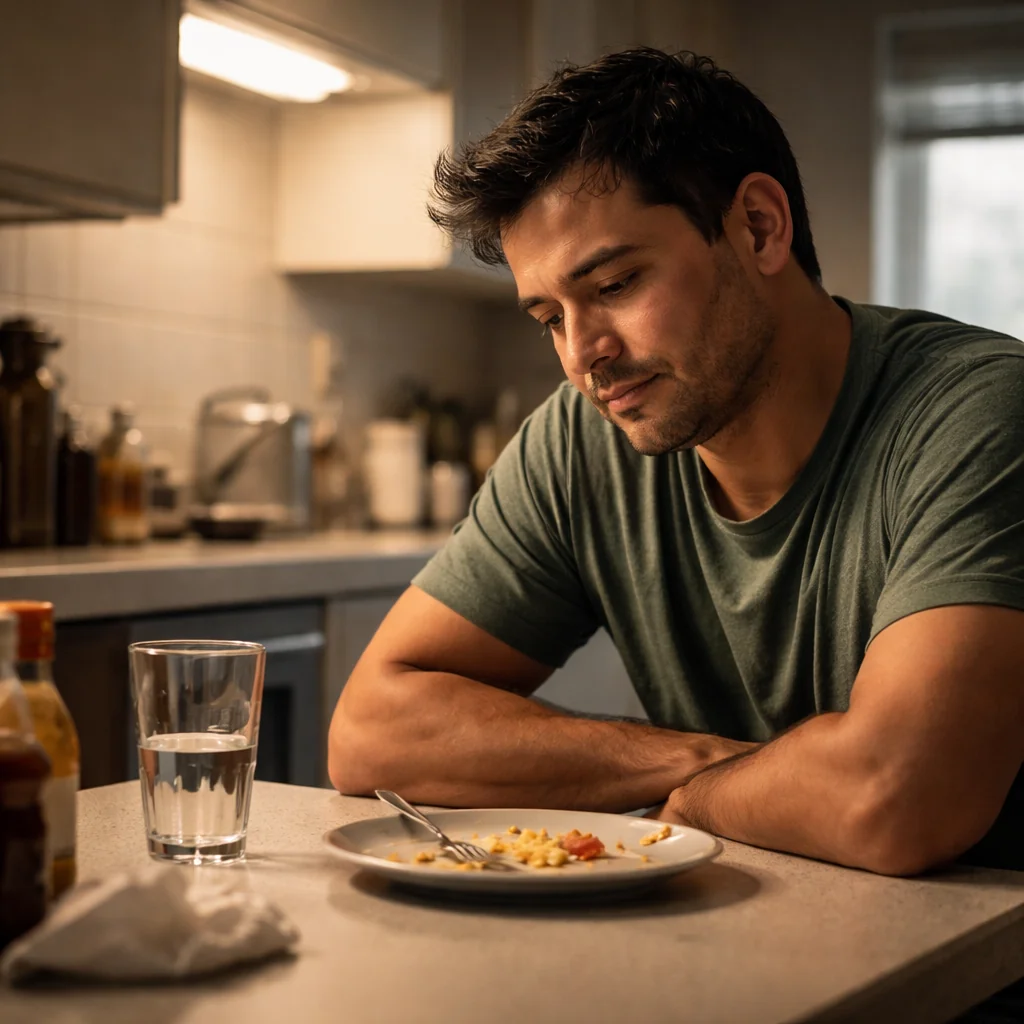
If two drinks now wreck you the way five used to, you are not imagining it. A GLP-1 changes how your body meets alcohol, and the morning after is where you feel it most.
What You'll Discover:
• How GLP-1 medications like Ozempic change the way alcohol moves through you.
• The four forces that stack up into a worse hangover on the same drinks.
• Why blood sugar and dehydration do so much of the damage.
• Practical ways to protect yourself if you do decide to drink.
• When a rougher morning is a signal worth paying attention to.
You had two glasses of wine, the same two you have had a hundred times, and the next morning felt like a full-blown hangover. Pounding head, queasy stomach, wrung out.
If you started a GLP-1 medication recently, that connection is real. You are not being dramatic, and you are not suddenly a lightweight for no reason.
Medications like Ozempic, Wegovy, and other GLP-1 drugs (the class includes semaglutide) change your body in ways that quietly rewrite how it handles alcohol. Nobody warns you that the drink stays the same while the morning gets worse.
The good news is that this is understandable and, to a large degree, manageable. Let's walk through what is actually happening and what you can do about it.
What a GLP-1 Does to a Drink's Journey
GLP-1 medications work partly by slowing down how fast your stomach empties. Food and drink linger longer before moving into the small intestine, which is a big part of how these drugs help you feel full and eat less.
That slowdown is well documented. Research on GLP-1 medications describes delayed gastric emptying as a core effect of the drugs, significant enough that doctors account for it before surgery and procedures.
Here is why that matters for drinking. When your stomach is working in slow motion and you have eaten very little, alcohol arrives into a system that is not buffered the way it used to be.
You are also simply eating less overall. A stomach that feels full on a few bites means many people drink with almost no food on board, and food is one of the main things that softens alcohol's impact.
So the same two drinks land in a body that has less food, less fluid, and a digestive system running at half speed. The drink did not change. The whole landscape it enters did.
That single shift is the root of most of what follows. Keep it in mind as we go, because nearly every factor below traces back to a body that is eating and drinking far less than it used to.
Why the Same Drinks Hit Harder Now
Rougher mornings on a GLP-1 are rarely about one thing. Four forces tend to stack on top of each other, and together they turn a mild night into a hard morning.
The first is lower tolerance. Most people drink noticeably less once they start a GLP-1, often without even trying, and tolerance fades with reduced use.
That means the amount that once felt easy now meets a body that has lost its practice. We cover this shift in detail in our piece on whether Ozempic lowers alcohol tolerance.
The second force is reduced food. Less in your stomach means alcohol hits faster and your body has fewer resources to draw on while it recovers overnight.
The third is dehydration, which we will get to in a moment. The fourth is blood sugar swings. On their own, each of these is manageable. Together, they compound into a morning that feels out of proportion to what you drank.
Look at that table as a whole rather than row by row. No single line is alarming, but the combined effect is a body with most of its usual defenses turned down at once.
The Blood Sugar Swing You Do Not Feel Coming
Alcohol has a real effect on blood sugar, and a GLP-1 is already working on that same system. When the two overlap, your glucose can dip lower than you expect.
Alcohol interferes with the way your liver releases stored glucose. Research on alcohol and metabolism shows that drinking can impair glucose control and, in some situations, push blood sugar down to uncomfortable lows.
That effect can show up hours later, including overnight while you sleep. It is part of why you can wake at 3 a.m. feeling shaky and wired after what seemed like a modest night.
Low blood sugar also feels a lot like a hangover. Shakiness, sweating, headache, fog, and nausea all overlap, so a glucose dip can make your morning feel far worse than the alcohol alone would explain.
This matters even more if you take a GLP-1 alongside other medications for blood sugar. That combination raises the stakes, and it is worth understanding how alcohol and diabetes interact before you drink.
If you ever feel deeply unwell, confused, or shaky after drinking on these medications, treat it seriously and reach for fast-acting carbohydrates. When in doubt, get medical help rather than waiting it out.
Dehydration on an Already-Empty Tank
Alcohol is a diuretic, which means it makes you lose more fluid than you take in. That is true for everyone and is a classic driver of the next-day headache.
On a GLP-1, you are often starting from a lower baseline. Reduced appetite frequently means you drink less water too, simply because you are not eating meals that usually come with a glass of something.
Side effects make it worse. Nausea, vomiting, or loose stools can pull even more fluid out, sometimes without you fully registering how much you have lost.
Stack alcohol's diuretic effect on top of all that and you can wake up genuinely dehydrated. That is a large part of the pounding head, dry mouth, and wrung-out feeling.
Hydration will not erase a hangover on its own. But going into a night already low on fluids nearly guarantees a harder morning, and this is one factor that is very much within your control.
What a Hangover Actually Is
It helps to know what a hangover really is, because it is not just dehydration. It is a whole-body response to processing alcohol and its byproducts.
As your body breaks alcohol down, it produces compounds that trigger inflammation and oxidative stress. Researchers link hangover severity to markers of that inflammatory response, along with effects on blood sugar, sleep, and hydration.
That is why a hangover hits so many systems at once. Your head, your stomach, your energy, and your mood are all caught up in the same cleanup effort.
A GLP-1 does not add new toxins to that process. What it does is remove several of the cushions, the food, the fluids, and the tolerance, that used to blunt the blow.
Sleep is part of the picture too. Alcohol fragments the second half of your night, and poor sleep alone can leave you feeling wrecked before dehydration and blood sugar even enter the equation.
It also helps to be honest about how much you are drinking. A standard drink is 14 grams of pure alcohol, and generous pours mean two drinks can quietly be four, which changes the math on any morning.
How to Protect Yourself on a GLP-1
You do not necessarily have to give up drinking to feel better in the morning. A few deliberate habits go a long way, especially given how the factors stack.
• Eat real food before and while you drink, even if your appetite is low.
• Alternate every alcoholic drink with a full glass of water.
• Go slower and lower, since your tolerance is not what it used to be.
• Skip drinking on days with strong nausea or other GI side effects.
• Never drink on a truly empty stomach, particularly if you take blood sugar medication.
Timing matters too. If your GLP-1 dose tends to bring on nausea in the day or two right after your injection, that is not the moment to add alcohol into the mix.
Pay attention to how you feel as the night goes, not just how much you have had. On a GLP-1, the usual internal signals can arrive later and stronger than you are used to.
A good non-alcoholic option in your hand helps here too. It slows your pace, keeps you social, and gives you something to sip that will not add to the next-day cost.
There is no prize for pushing through nausea to keep up with a table. Listening to your stomach on these medications is not weakness, it is good sense.
For a fuller picture of the safety side, our guide on whether you can drink alcohol on a GLP-1 walks through what to watch for. The theme is simple. Slower, with food and water, is your friend.
When a Rough Morning Is Worth Listening To
Sometimes a harder morning is just chemistry. Other times it is useful information about your relationship with alcohol, and it is worth hearing without judging yourself for it.
Many people on GLP-1 medications notice their desire to drink drops on its own. Food and drink both seem to lose some of their pull, and a lot of people quietly find themselves wanting less.
Our overview of Ozempic and alcohol digs into why that happens and what researchers think is behind it.
If the hangovers keep coming because cutting back feels harder than it should, that is worth paying attention to, gently. It does not mean anything is wrong with you, and it does not require hitting any kind of bottom.
For some people, adding targeted support makes drinking less feel far more doable. Naltrexone, a daily 50mg tablet, quiets the reward alcohol sends to the brain, so the pull to keep going softens over time.
At Choose Your Horizon, that support comes as an integrated solution built on clinical, neurological, and behavioral science, delivered online and without judgment. The point is never a label. It is simply feeling better and staying in control.
Conclusion
If Ozempic or another GLP-1 seems to be making your hangovers worse, you are reading your body correctly. Slowed digestion, less food, lower fluids, and a drop in tolerance all stack up, and the same drinks land harder than they used to.
None of that means you did something wrong. It means the terrain changed, and your habits can change right along with it.
Eat before you drink, match every drink with water, go slower, and skip alcohol on rough dosing days. Those small moves handle most of the damage before it starts.
And if the mornings keep telling you that you would feel better drinking less, that is a message worth honoring. Help for that is steady, private, and built around your goals rather than a diagnosis. You get to decide what feeling good looks like.
Frequently Asked Questions
Does Ozempic actually make hangovers worse?
For many people, yes. Ozempic and other GLP-1 medications slow digestion and reduce how much you eat and drink, so alcohol lands in a less buffered body and the morning after can feel rougher on the same drinks.
Why do I get drunk faster on Ozempic?
Lower tolerance and less food on board are the usual reasons. Most people drink less once they start a GLP-1, so tolerance fades, and a fuller-feeling stomach means you often drink with little food to slow alcohol down.
Is it dangerous to drink alcohol on a GLP-1?
It can be, mainly because of low blood sugar and dehydration, especially if you also take blood sugar medication. Drinking with food and water and going slow lowers the risk, and serious symptoms warrant medical care.
How can I avoid a hangover on Ozempic?
Eat before and while you drink, alternate alcohol with water, drink less and slower, and avoid alcohol on days with nausea or GI side effects. Going in hydrated and fed makes the biggest difference.
Does Ozempic reduce how much I want to drink?
Often, yes. Many people find their desire for alcohol drops on a GLP-1, since the medication seems to quiet the reward from food and drink alike, which can make cutting back feel more natural.
Should I stop drinking entirely on a GLP-1?
Not necessarily, though some people choose to. If drinking consistently leaves you unwell or you find it hard to cut back, that is a good reason to talk with a clinician about your options.
Take the Next Step
If drinking less is starting to feel like the direction your body is pointing you, you can get real support for it. Take a quick, discreet online Alcohol Use Assessment to see if naltrexone through Choose Your Horizon could be a good fit for you.