A 2 minute assessment to get a personalized mental health or alcohol recovery plan.

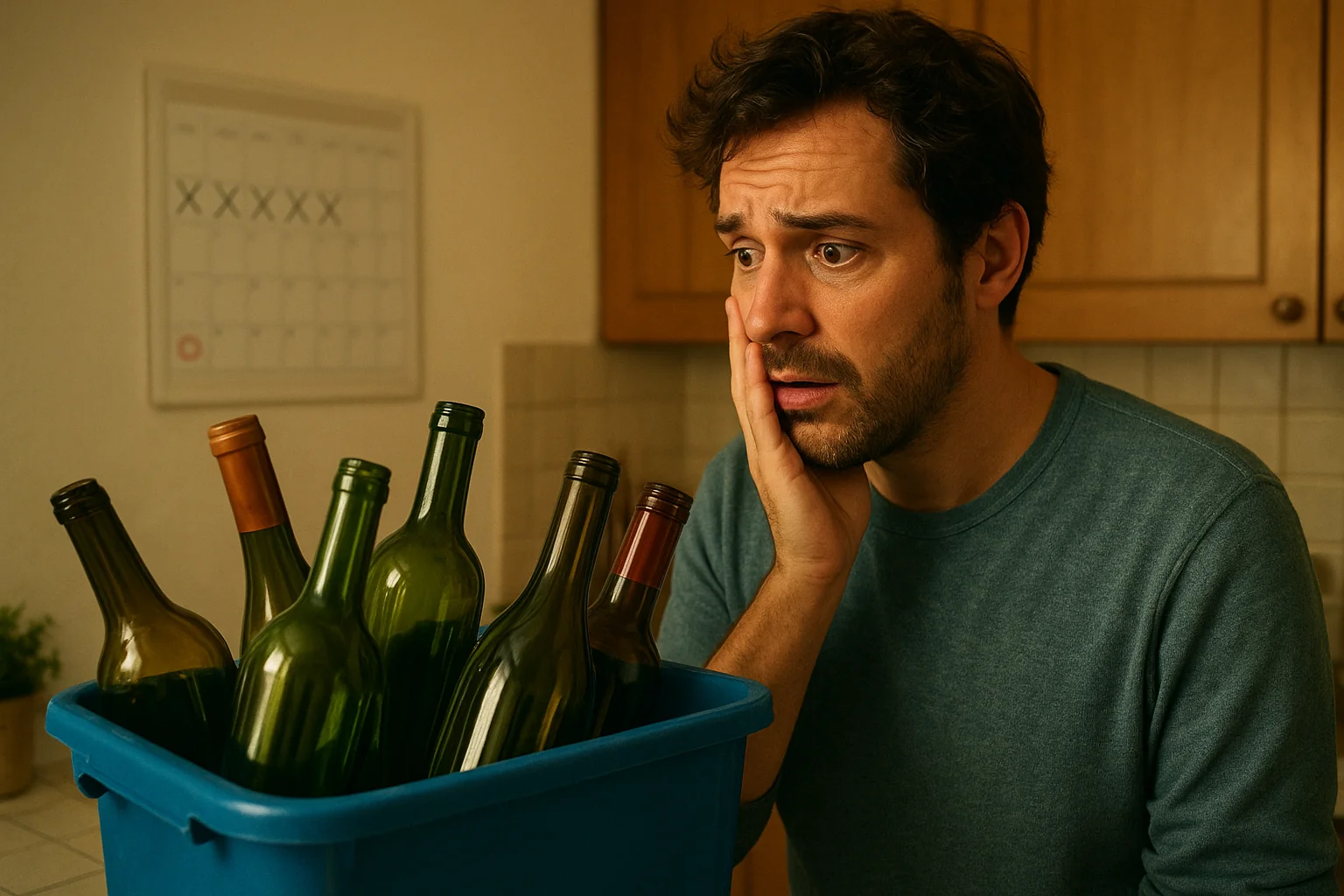
Drinking alcohol every day can become a concern depending on the amount, and understanding the risks helps you make informed decisions about your habits.
What You'll Discover:
• Whether daily drinking is automatically a problem.
• Health risks associated with drinking every day.
• How daily drinking becomes a habit.
• Warning signs that your daily drinking is concerning.
• How to assess your own situation.
• Options if you want to change your pattern.
• How medication can help break the daily habit.
Many people drink alcohol every day. For some, it's a glass of wine with dinner. For others, it's several drinks throughout the evening. Whether daily drinking is a problem depends on how much you're consuming and how it's affecting your life.
According to the National Institute on Alcohol Abuse and Alcoholism, moderate drinking is defined as up to 1 drink per day for women and up to 2 drinks per day for men. Daily drinking at or below these levels carries relatively low health risks. Exceeding them regularly changes the picture significantly.
Is Daily Drinking Automatically a Problem?
The first thing to know is that daily drinking isn't automatically problematic. The amount matters more than the frequency.
Low-risk daily drinking:
• 1 standard drink per day for women
• Up to 2 standard drinks per day for men
• No binge episodes
• Able to skip days without difficulty
• No negative consequences from drinking
Higher-risk daily drinking:
• Exceeding the guidelines above
• Multiple drinks per day consistently
• Unable to comfortably skip a day
• Noticing tolerance (needing more to feel effects)
• Consequences from drinking (poor sleep, health issues, relationship problems)
Something to consider is what a "standard drink" actually means. It's 5 ounces of wine, 12 ounces of regular beer, or 1.5 ounces of spirits. Many people pour significantly more than these amounts, especially at home.
So, how do you know if your daily drinking has crossed a line? The short answer is to count your actual drinks in standard units, be honest about any consequences you're experiencing, and notice whether you can take breaks without difficulty.
Health Risks of Daily Drinking
Daily alcohol consumption carries health risks that increase with the amount consumed.
Liver effects: The liver processes most of the alcohol you consume. Daily drinking, even at moderate levels, means your liver works harder every day. Heavy daily drinking can cause fatty liver, hepatitis, and eventually cirrhosis.
Cancer risk: According to the World Health Organization, alcohol is a carcinogen. Daily consumption increases risk of mouth, throat, esophagus, liver, breast, and colorectal cancers. The risk increases with the amount consumed.
Cardiovascular effects: Daily drinking above moderate levels raises blood pressure and increases risk of heart disease and stroke. Any potential heart benefits from moderate drinking have been questioned by recent research.
Brain effects: Regular daily drinking affects memory, cognitive function, and mental health. Research shows that heavy daily drinkers have increased risk of brain shrinkage and cognitive decline.
Sleep disruption: While alcohol may help you fall asleep, it disrupts sleep quality. Daily drinkers often experience poor REM sleep, leading to fatigue despite sleeping adequate hours.
Dependence: Daily drinking increases the risk of developing physical and psychological dependence. The brain adapts to regular alcohol, and withdrawal symptoms can occur when drinking stops.
For more on health effects, see our article on effects of alcohol on the brain.
How Daily Drinking Becomes a Habit
Daily drinking often develops gradually through a predictable pattern.
Stage 1: Occasional use You drink sometimes, at social events or occasionally at home. No pattern exists.
Stage 2: Regular use You start drinking more frequently, perhaps most evenings. It becomes part of your routine.
Stage 3: Habitual use Drinking becomes automatic. You reach for a drink at certain times without consciously deciding. The evening doesn't feel complete without alcohol.
Stage 4: Dependence You feel uncomfortable if you don't drink. You may experience anxiety, restlessness, or difficulty sleeping on nights without alcohol.
If it seems like this happened without you noticing, that's how habits work. They develop gradually, and by the time they're established, they feel natural and automatic.
The neural pathways that drive habitual drinking operate below conscious awareness. When evening comes, or you sit in your usual spot, or you experience stress, your brain automatically signals that it's time to drink. This is why willpower alone often fails.
Warning Signs Your Daily Drinking Is Concerning
Several indicators suggest that daily drinking has become problematic.
Quantity signs:
• Drinking more than 1 to 2 drinks daily
• Serving sizes have increased over time
• You finish the bottle more often than you intend
Behavioral signs:
• You look forward to drinking as the best part of your day
• You feel restless or irritable if you can't drink
• You plan your schedule around drinking time
• You drink alone regularly
• You've tried to cut back and couldn't
Physical signs:
• Sleep quality is poor despite fatigue
• You feel foggy or tired in the mornings
• You've noticed weight changes
• You feel anxious or shaky before your first drink
Consequence signs:
• Relationships have been affected
• Work performance has suffered
• Health issues have emerged
• You've done things while drinking you regret
The presence of several of these signs indicates that daily drinking has likely crossed into problematic territory.
Our article on do I have a drinking problem provides a more detailed assessment framework.
Assessing Your Own Situation
Honest self-evaluation helps determine whether your daily drinking needs attention.
Track your consumption: For 2 to 4 weeks, record every drink you have. Note the amount in ounces, convert to standard drinks, and calculate your weekly total. Many people are surprised by the number.
Try taking a break: Go 3 to 7 days without alcohol. Notice how this feels. Difficulty completing this experiment is informative.
Ask yourself:
• Do I drink more than I intend to?
• Would it be hard to stop for a week?
• Has anyone expressed concern about my drinking?
• Has my drinking increased over time?
• Do I use alcohol to cope with emotions?
• Does my drinking affect my sleep, health, or relationships?
Consider the trend: Are you drinking more now than a year ago? Two years ago? Escalating consumption is a warning sign.
All that said, you don't need to have severe problems to benefit from changing your drinking patterns. Many people who drink every day make positive changes before significant problems develop.
Options If You Want to Change
If you've concluded that your daily drinking habit should change, several approaches can help.
Set specific limits: Define exactly how much you'll drink and on which days. For example: "No more than 1 drink, no more than 3 days per week."
Break the routine: Change the circumstances that trigger drinking. Sit somewhere else. Do a different activity during your usual drinking time. Remove alcohol from your home.
Replace the ritual: Have a substitute beverage ready. Sparkling water, herbal tea, or a mocktail can fill the role that alcohol played.
Add accountability: Tell someone your goal. Check in regularly about your progress.
Consider medication: Naltrexone is an FDA-approved medication that reduces cravings and makes drinking less rewarding. It's particularly helpful for breaking habitual drinking patterns.
For more strategies, see our article on tips for quitting alcohol.
How Medication Helps Break the Daily Habit
Naltrexone addresses the biological aspect of daily drinking that behavioral changes alone often can't overcome.
How it works:
The medication blocks opioid receptors in the brain. When you drink with naltrexone in your system, alcohol doesn't produce the same pleasurable effects. The anticipated reward doesn't materialize, which weakens the habit loop.
Why it helps with daily drinking:
• Reduces the craving that builds as drinking time approaches
• Makes alcohol less satisfying when consumed
• Breaks the association between drinking and reward
• Allows new habits to form more easily
Naltrexone is taken as a daily 50mg tablet. It doesn't make you sick if you drink and doesn't require abstinence. Many people use it while transitioning from daily drinking to occasional or no drinking.
Research shows that people taking naltrexone have significantly fewer drinking days and consume less when they do drink.
For that reason, programs like Choose Your Horizon combine naltrexone with coaching to address both the biological and behavioral aspects of changing drinking patterns.
Our article on how naltrexone helps you regain control explains the medication in more detail.
Taking the Next Step
Drinking alcohol every day isn't automatically a problem, but the amount matters and the habit can escalate. Honest assessment of your consumption and its effects helps you determine whether change is needed. Medication like naltrexone can make breaking the daily drinking habit significantly easier.
If you want to explore how medication could help you change your drinking pattern, take the online Alcohol Use Assessment to see if naltrexone might be right for you.