A 2 minute assessment to get a personalized mental health or alcohol recovery plan.


A drink by yourself is not automatically a problem, but the reasons behind it, and how often it happens, are what really matter.
What You'll Discover:
• Whether drinking alone is actually bad.
• What research says about solo drinking and risk.
• The specific things that make it risky.
• A quick self-check you can run today.
• Simple ways to shift the pattern if you want to.
If you have ever poured a drink alone and then wondered whether that says something about you, you are far from the only one. It is one of the most common quiet worries people have about their drinking.
The honest answer is reassuring. Drinking alone is not automatically a problem.
Plenty of people enjoy a single drink solo with no harm done. What matters more is why you are drinking, how often, and whether it is creeping in a direction you do not like.
This guide is educational, not medical advice. If something here hits close to home, that is worth exploring, not panicking over.
Is Drinking Alone Actually Bad
Let us clear the air first. A glass of something on your own after a long day is not, by itself, a sign of a drinking problem.
Context is everything. A relaxed solo drink with dinner is very different from drinking alone to numb out, hide it from others, or get through a hard feeling.
The behavior itself is fairly neutral. It is the function it serves and the pattern it falls into that tell the real story.
So the better question is not whether drinking alone is bad. It is what this drink is doing for you, and how often you reach for it. That shift in framing is where the useful answers live.
If you already sense the answer is uncomfortable, you can gently start sorting it out with our guide to whether you might have a drinking problem.
It also helps to drop the shame around the question entirely. Wondering about your own drinking is not a confession, it is good self-awareness.
People who never think twice about their habits are not necessarily the healthiest drinkers. The fact that you are paying attention is actually a point in your favor.
So read on with curiosity rather than dread. The goal here is clarity, not a label, and clarity is something you can use.
What the Research Says About Solo Drinking
Here is where it gets interesting, because researchers have actually studied this. Solo drinking turns out to be more than just a habit. It can be a meaningful signal.
A systematic review and meta-analysis on solitary drinking found that drinking alone is linked to heavier consumption and more alcohol-related problems in adults.
The pattern shows up early too. Research on solitary drinking in teens found that drinking alone was tied to drinking in response to negative feelings and predicted alcohol problems later in young adulthood.
The thread running through this work is coping. People who drink alone are more likely to be drinking to manage stress, sadness, loneliness, or anxiety, rather than for fun or connection.
That does not mean every solo drink is a warning sign. It means the reasons behind it deserve a closer look, because drinking to cope is the part that tends to escalate.
What Makes Drinking Alone Risky
So if a solo drink is not the problem on its own, what tips it into risky territory. A few specific things tend to make the difference.
Frequency is the first. An occasional drink alone is one thing, but a nightly solo ritual that you would struggle to skip is a different pattern.
The coping function is the second, and it may be the biggest. When alcohol becomes the tool you reach for to feel less anxious, sad, or bored, it slips into the role of self-medication.
Secrecy is a third signal. Hiding how much or how often you drink, or feeling you need to drink alone so no one sees, often points to something worth examining.
Escalation rounds it out. If the amount is slowly climbing, or you need more to get the same effect, that drift matters more than any single evening.
None of these makes you a bad person. They are simply signals, and noticing them early is a strength, not a failure. The National Institute on Alcohol Abuse and Alcoholism frames alcohol problems as a spectrum, which means small shifts can move you in a healthier direction.
It is worth saying that these signals tend to travel together. Someone drinking to cope is also more likely to drink more often, and to keep it private.
That clustering is the real thing to watch. One signal alone is easy to explain away, but several at once paint a clearer picture of where things are heading.
The point is not to scare yourself. It is to give yourself an honest read so you can decide, calmly, whether you want to make a change.
Solo-Drinking Signals and What They Suggest
It helps to see these signals laid out plainly. This table pairs common solo-drinking patterns with what they tend to suggest, so you can read your own habits more clearly.
Use this to spot patterns, not to label yourself. One row does not define you, but several together are worth paying attention to.
A Quick Self-Check
If you want a simple gut-check, sit with a few honest statements and notice which ones ring true. You do not have to share the answers with anyone.
• I drink alone mostly to change how I feel, rather than to enjoy it.
• I would feel uneasy if someone knew how often I drink alone.
• The amount has slowly gone up over the past few months.
• I have tried to cut back on my own and found it harder than expected.
There is no score to tally here. If even one or two ring true, it does not mean disaster. It means this is worth a closer look.
The value of a check like this is honesty, not a verdict. Reading your own pattern clearly is the first move, and it costs nothing.
You can come back to this list every few weeks. Patterns shift, and seeing whether more or fewer statements ring true over time is a quiet way to track yourself.
If several ring true, it may be worth learning the broader signs of alcohol dependence so you know what you are looking at.
And if you are not sure how serious it is, that uncertainty is normal. You do not need to have it all figured out to start making small changes.
How to Shift the Pattern
The good news is that solo-drinking patterns are very changeable, especially when you catch them early. You do not need to overhaul your whole life.
Start by naming the trigger. If you tend to drink alone when you are stressed, lonely, or bored, simply knowing that gives you a place to step in.
Then build a small buffer. Put a gap between the urge and the pour, even ten minutes, and use it to text a friend, step outside, or drink a glass of water first.
Swap the ritual, not just the drink. Often the comfort comes from the routine of unwinding, so a non-alcoholic version of the same ritual can do a lot of the work.
A few practical moves help here:
• Keep appealing non-alcoholic options on hand so the easy choice is there.
• Plan one or two alcohol-free evenings a week and protect them.
• Notice the feeling under the urge and meet that need directly.
Give yourself a realistic timeline too. Patterns that built up over months rarely vanish in a weekend, and expecting perfection usually backfires.
Aim for progress you can actually sustain. A couple of alcohol-free nights that stick beats an all-or-nothing plan that collapses by Wednesday.
If cutting back feels harder than it should, that is useful information, not a verdict. Our guide on how to start drinking less walks through gentle, realistic steps.
When the Feelings Underneath Are the Real Driver
For a lot of people, drinking alone is less about the alcohol and more about what it quiets. Loneliness, stress, low mood, and boredom all sit underneath that nightly pour.
That is worth saying out loud, because the solution is not just removing the drink. It is finding something that actually meets the need the drink was covering.
Sometimes that means more connection, even a single regular phone call or a standing plan with a friend. Isolation feeds solo drinking, and small doses of company push back on it.
Other times it means tending to the mood itself. If anxiety or sadness is the engine, treating that directly often takes the pressure off the drinking without a fight.
You do not have to untangle all of this perfectly. Just naming what the drink is really for is a big step, and it points you toward the support that will actually help.
Where Naltrexone Fits for Cravings
For some people, willpower and routine changes are enough. For others, the cravings themselves are the sticking point, and that is where medication can help.
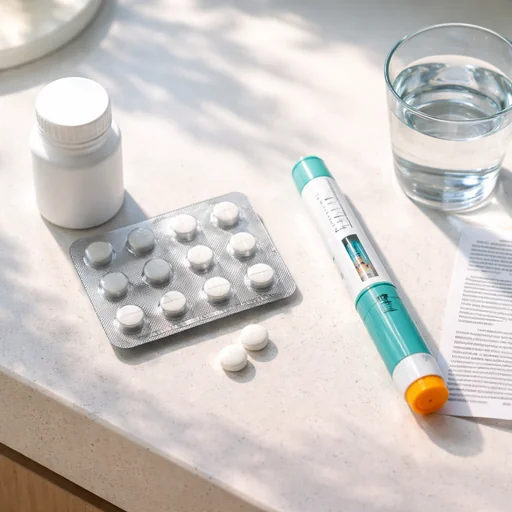
Naltrexone is a prescription option that works on the brain's reward response to alcohol. In plain terms, it can dial down the pull of that solo drink so the craving is easier to ride out.
It is not a magic fix, and it is not for everyone. It is simply a tool that, for the right person, makes drinking less feel a lot more doable.
What is nice about it is that it supports both goals. Whether you want to cut back or stop entirely, it can take some of the white-knuckle effort out of the early stretch.
Many people find that the medication and the lifestyle work reinforce each other. When the craving is softer, the pause before pouring is easier to hold, and the new ritual has room to take root.
It also tends to lower the stakes of a single slip. With cravings quieter, one solo drink is less likely to snowball into the old pattern, which makes the whole effort feel less fragile.
If your solo drinking is driven by cravings you find hard to resist, naltrexone is worth asking a clinician about. The rest of the work, the habits and the feelings, becomes easier when the craving is quieter.
A Solo Drink Is Not a Verdict, but the Pattern Is Worth Knowing
Drinking alone is not automatically a problem, and noticing your own habits is a sign of self-awareness, not weakness. The drink itself matters far less than the why and the how often.
If the pattern is mostly about coping, creeping upward, or something you would rather hide, those are the signals worth taking seriously. Catching them early makes change much easier.
It also helps to remember that none of this is about willpower being weak. Alcohol changes the brain's reward wiring, so needing support is the norm, not the exception.
Reaching for help, whether that is a friend, a coach, or a clinician, is simply using the tools available. There is no prize for doing it the hard way.
Small shifts often go a long way, and you do not have to do it alone or hit some imagined rock bottom to deserve support.
Whatever your goal, drinking a little less or stopping for good, the path starts the same way. You notice the pattern, you get curious about the why, and you take one small step.
Frequently Asked Questions
Is drinking alone a sign of alcoholism?
Not on its own. Many people drink alone occasionally without any problem. It becomes more concerning when it is frequent, secretive, or used mainly to cope with hard feelings.
Why do I only want to drink when I am alone?
Often it points to drinking as a way to cope with stress, loneliness, or boredom. That coping pattern is worth examining, since it is the part most likely to escalate over time.
How much drinking alone is too much?
There is no single number. Watch the pattern instead. Rising frequency, climbing amounts, secrecy, and trouble skipping a solo drink are the signals that matter most.
Can drinking alone lead to a drinking problem?
It can raise the risk. Research links solitary drinking to heavier consumption and more alcohol problems, especially when the reason is coping rather than enjoyment.
How do I stop drinking alone every night?
Start by naming your trigger, adding a pause before you pour, and swapping the ritual for a non-alcoholic version. If cravings make it hard, talk to a clinician about options.
If cravings are the hard part, you can take a quick, discreet online Alcohol Use Assessment to see if Choose Your Horizon's naltrexone program makes sense for you.