A 2 minute assessment to get a personalized mental health or alcohol recovery plan.


Most people brace for deprivation when they drink less. What surprises them is the relief, the quiet feeling of setting down a weight they forgot they were carrying.
What You'll Discover:
• The constant mental monitoring that goes quiet when you drink less.
• Why the missing morning dread feels like such a relief.
• How cutting back removes a decision you were making all day.
• Why relief is a stronger motivator than fear.
• What helps when the first few weeks still feel hard.
People expect drinking less to feel like deprivation. A loss. Something to grit their teeth through and white-knuckle on Friday nights.
Then something unexpected happens. It starts to feel like relief instead.
Not the dramatic, fireworks kind of relief. The quiet kind, like setting down a heavy bag you had been carrying so long you forgot it was there.
This is the part of drinking less almost nobody talks about, and it is often the real reason people stay.
The Mental Monitoring You Did Not Know You Were Doing
There is a quiet program running in the background when you drink regularly. Most people never notice it until it stops.
It sounds like a running tab. How many have I had. Is this too many. Should I slow down. Do I have enough at home for tomorrow.
Then it branches out. Am I okay to drive. Is anyone noticing. What did I just say. Did that come out wrong.
That is a lot of mental bandwidth spent monitoring yourself, and it runs on top of whatever else you are trying to enjoy. It is tiring in a way that is hard to see from the inside.
When you drink less, that whole background process goes quiet. The mental space it was using comes back, and the quiet is its own kind of relief.
People describe it as their head feeling less crowded. There is simply less to keep track of, and less to manage, all evening long.
It shows up in small moments. You get to the end of a dinner out and realize you never once did the math on how many you had, or wondered how you would get home. You were just there.
The Morning Dread That Just Is Not There
The clearest relief shows up in the morning. Specifically, in the mornings that used to start with a knot in your stomach.
You know the feeling. The 3 a.m. wake-up, the vague sense of doom, the reach for your phone to check what you texted and whether you owe anyone an apology.
That next-day dread is not just in your head. According to the National Institute on Alcohol Abuse and Alcoholism, hangover symptoms include anxiety, irritability, and low mood, alongside the physical stuff.
Research backs this up. Studies on the day after drinking find measurably lower mood and higher anxiety, along with slower thinking and reduced alertness.
We gave this feeling its own name and its own article, because hangxiety is one of the most common and least discussed costs of drinking. It is real, and it is chemical.
When you drink less, those mornings change character. They become neutral, and then, surprisingly often, they become good. Waking up without dread is a gift you give your future self.
That shift alone convinces a lot of people. Once you have had a run of clear, calm mornings, the trade starts to feel obvious.
It also breaks a cycle you may not have named. The dread of the morning often fuels the next evening's drink, because a drink is the fastest way to quiet the anxiety the last one left behind. Remove the dread and the whole loop loses its grip.
One Less Decision to Make All Day
Here is a relief people rarely expect. Drinking less removes a decision you were quietly making over and over.
Should I drink tonight. How much. Should I stop now or have one more. Do I open the second bottle. Every one of those is a small negotiation.
Those negotiations add up. Psychologists call it decision fatigue, and it drains the same mental energy you want for work, family, and everything else.
When cutting back becomes your default, that whole category of decisions gets quieter. You are not relitigating the same question every evening.
There is real peace in a decision you made once and no longer have to make in the moment. It is one less thing pulling at you at the end of a long day.
It also removes the small internal argument that used to come with it. The part of you that wanted to cut back and the part that wanted the drink are no longer negotiating every single evening.
The Weight of Drinking Versus the Relief of Drinking Less
The costs of drinking are easy to picture. The relief of drinking less is quieter, so it helps to lay them side by side.
None of the right-hand column is dramatic. Added together, it is the feeling of a load you no longer have to carry.
You Are Actually Here Now
There is a kind of presence that comes back when you drink less, and it catches people off guard.
You remember the whole dinner, not just the first half. You catch the details of the conversation. You are there for your kid's bedtime story instead of half-watching the clock.
Alcohol has a way of putting a thin film between you and your own life. Everything is a little softer, a little blurrier, a little less recorded.
Take it away and the picture sharpens. The evening is yours, and you are in it, and you will actually remember it tomorrow.
That presence is subtle, but it is one of the things people miss most when they slip back, and value most when they stay the course.
The Relief Your Body Feels, Too
The relief is not only in your head. Your body starts to unclench in ways you can feel within the first week or two.
Sleep is usually the first to shift. Once your system stops processing alcohol every night, you sink into deeper rest and wake up feeling like you actually slept.
Your digestion settles. That low, queasy hum some people carry most mornings quietly disappears, and food starts to sit right again.
Then there is your energy. Instead of the mid-afternoon crash you learned to expect, you get a steadier baseline that does not drop out from under you at 3 p.m.
None of these are dramatic on their own. Together they feel like your body exhaling after holding tension for a very long time.
The People Around You Feel It Too
The relief does not stay contained to you. The people who share your evenings tend to feel the shift as well.
You are steadier and more patient when you are not either drinking or recovering from it. The short fuse that showed up on rough mornings gets longer.
Partners notice that you are present at dinner. Kids notice that bedtime is calmer. Friends notice that you actually follow up on the plans you made.
There is also relief in not having to manage the after-effects for anyone else. No apologies for last night, no smoothing over something you half-remember saying.
Those repaired small moments add up. A lot of people find that easing off alcohol quietly improves the relationships they care about most.
Relief Is a Stronger Motivator Than Fear
Most messaging about alcohol leans on fear. The liver, the long-term risks, the worst-case scenarios. Fear can start a change, but it rarely sustains one.
Relief is different. It is a reward you feel today, tonight, and tomorrow morning. It shows up on a schedule you can count on.
That daily payoff is what makes drinking less stick, far more than any scary statistic. You are not avoiding a distant threat, you are collecting a real benefit right now.
And you do not have to quit entirely to feel it. Research shows that even a meaningful cut in drinking improves quality of life and reduces alcohol-related problems.
We walk through more of these everyday upsides in our guide to the benefits of drinking less alcohol, and the theme is consistent. The relief arrives early, well before any finish line.
That is worth holding onto when motivation dips. You are not chasing a distant reward or dodging a far-off consequence. You are collecting something real tonight and again tomorrow morning.
When the First Few Weeks Still Feel Hard
Honesty matters here. The relief is real, but it usually sits on the other side of an adjustment period.
The first couple of weeks can feel hard. The habit pulls at you, social situations feel different, and the old cue still fires at 6 p.m. even when you would rather it did not.
We wrote about exactly why in our piece on why quitting alcohol is hard, because expecting the difficulty makes it much easier to move through.
Some people also want to make the change without turning it into an announcement. If that is you, our guide on how to drink less without anyone knowing lays out quiet, practical ways to do it.
The good news is that the hard part and the relief are connected. Push through the early friction and the quiet, steady relief is what waits on the far side.
Where a Small Tool Makes the Relief Easier to Reach
If the pull is strong, you do not have to muscle through on willpower alone. Sometimes a small medical tool makes the whole thing lighter.
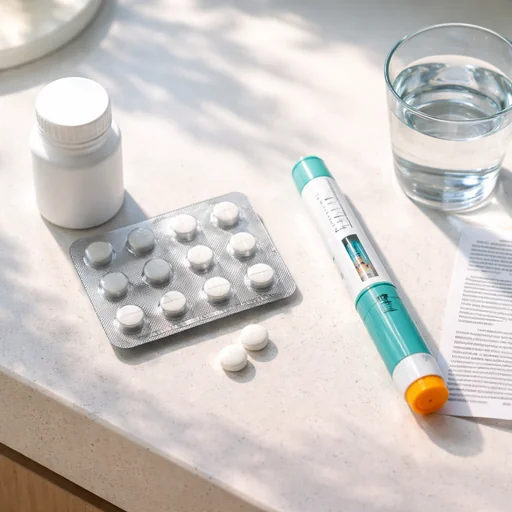
Naltrexone is an FDA-approved option that softens alcohol cravings by blocking the reward the brain gets from drinking. With the craving turned down, that nightly decision gets a lot quieter.
That is the point where the relief becomes easier to reach. When the urge is not shouting, the calm mornings and the clear evenings are simpler to hold onto.
Naltrexone is not a substitute for the changes you make around it. It works best alongside new routines, giving them room to take hold before a craving can derail them.
You do not need to hit a crisis to consider it. Wanting the quiet relief of drinking less is reason enough to look into what could help.
The Weight You Get to Put Down
Drinking less is usually framed as giving something up. In practice, it often feels like the opposite, like getting something back.
You get back the quiet head, the calm mornings, the mental energy, and the simple presence of being in your own life.
The relief is not loud, and it does not announce itself. It is the absence of a weight you had gotten so used to that you stopped noticing it.
Most people who cut back are surprised by how good that feels. Not dramatic, just lighter, and lighter tends to last.
You spent a long time carrying the weight without questioning it. Setting it down, even a little, is allowed. And the relief that follows is yours to keep.
Frequently Asked Questions
Why does drinking less feel like a relief instead of a loss?
Because regular drinking comes with hidden work, like monitoring your intake, managing mornings, and deciding whether to drink each night. Removing that work frees up mental energy and feels like a weight lifting.
Why do I feel anxious the morning after drinking?
Next-day anxiety, sometimes called hangxiety, is a real chemical effect of alcohol leaving your system. Research links the day after drinking to lower mood and higher anxiety, and it eases when you drink less.
Do I have to quit completely to feel better?
No. Studies show even a meaningful reduction in drinking improves quality of life and reduces alcohol-related problems. Many people feel the relief long before, or without, quitting entirely.
How long until I feel the relief of drinking less?
The morning benefits often show up within days, while the deeper mental calm builds over the first few weeks. The early adjustment can feel hard, but the relief arrives fairly quickly.
Can naltrexone make cutting back easier?
Yes. Naltrexone reduces alcohol cravings by blocking the brain's reward from drinking, which makes the nightly decision quieter and the relief easier to reach.
Drinking less is not only something you give up. It is something you get back, one calm morning and one clear evening at a time.
If you are ready to feel that relief, a quick and discreet online Alcohol Use Assessment can show whether Choose Your Horizon's naltrexone option is a good fit for you. Take the online Alcohol Use Assessment and see what lifting feels like.