A 2 minute assessment to get a personalized mental health or alcohol recovery plan.

The "I earned this" drink feels like a reward you chose. More often it is a reflex you were taught. Here is how the loop forms and how to loosen it.
What You'll Discover:
• Where the "I deserve a drink" mindset actually comes from.
• How a well-earned reward quietly turns into a daily reflex.
• What is really happening in your brain when the clock hits wine time.
• Rewards that restore you instead of costing you the next morning.
• How naltrexone can unhook the reward loop without willpower.
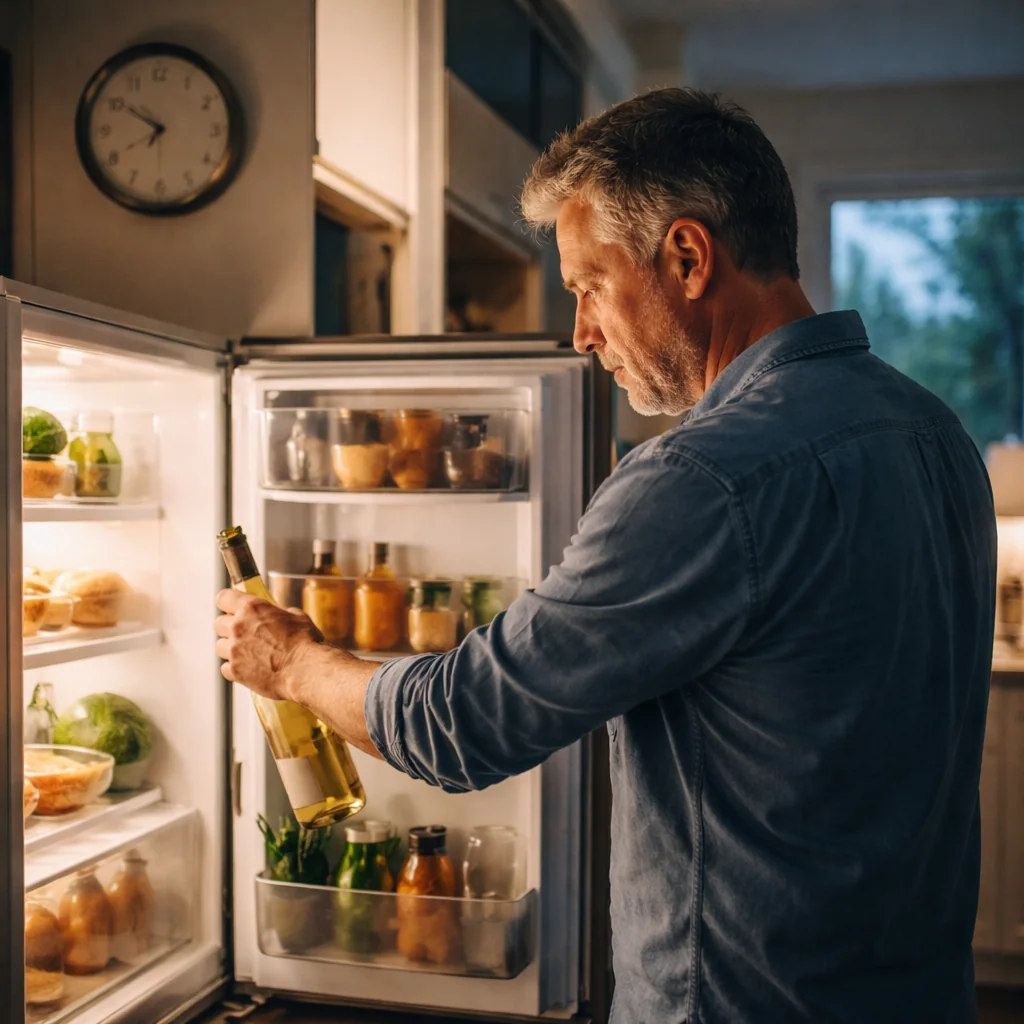
It is 6 p.m. The day was a lot. You open the fridge, reach for the wine, and a familiar thought clicks into place. I earned this.
There is nothing wrong with wanting a reward after a hard day. The trouble is what that particular reward quietly turns into over time.
The "I earned this" drink feels like a choice. Often it is running on autopilot, a deal you struck with yourself so long ago that you forgot you made it.
This is not about shame or willpower. It is about seeing the machinery behind the reward drink clearly, so you can decide whether it is still working for you.
Where "I Earned This" Actually Comes From
Nobody is born believing a glass of wine is a reward. That idea is learned, and it is learned early and often.
Think about how alcohol shows up in the culture around you. The beer at the end of the workday. The wine that is framed as self-care. The champagne for every win.
Over years, those pairings sink in. Alcohol gets welded to the idea of relief, celebration, and rest, until reaching for it after a hard day feels as natural as breathing.
Marketing leans on this hard. A huge amount of alcohol advertising is built on one message, that you deserve it, that this drink is your reward for making it through.
None of that makes you weak for absorbing it. It makes you human. You were taught the association the same way you were taught that popcorn goes with a movie.
It often gets personal, too. The reward drink can attach itself to a role you play, the hard worker who has earned a beer, the busy parent who has survived the day and deserves a glass.
Once the drink is tangled up with your identity, skipping it can feel like denying yourself something you are owed. That is the belief doing its quiet work.
How a Reward Becomes a Reflex
Here is the quiet part. A reward you choose now and then can slide into a reflex you no longer decide on at all.
Habits run on a simple loop. There is a cue, then a routine, then a reward. The cue might be 6 p.m., a stressful email, or just sinking into the couch.
The routine is the pour. The reward is the relief that follows. Run that loop enough times and your brain automates it, so the cue alone starts the sequence.
That is how "I earned this" becomes "it is just what I do at night." The choice fades into the background and the behavior keeps running.
We dig into this pattern in our piece on the wine o'clock habit, because the evening ritual is where a lot of daily drinking quietly takes root.
The tricky part is that the reward slowly shifts. Early on you drink to feel good. Later you often drink to stop feeling the absence of it, which is a very different thing.
What Is Really Happening in Your Brain
The reward drink is not just a story you tell yourself. There is real brain chemistry underneath it.
When you drink, alcohol nudges a region called the nucleus accumbens to release dopamine, the brain's learning and motivation signal. That surge is what stamps in the "that felt good" memory.
According to the National Institute on Alcohol Abuse and Alcoholism, dopamine is what teaches the brain to link alcohol with the cues around it, the people, places, and times of day.
That is why the clock itself can start to trigger the urge. Your brain has learned that 6 p.m. predicts reward, so the wanting shows up before you have consciously decided anything.
Researchers call this incentive salience, and studies on the neurobiology of reward show how cues linked to a drug start to grab attention and drive craving on their own.
In plain terms, the cue hijacks the wanting. You can find out more about the dopamine side of this in our explainer on how alcohol increases dopamine.
The good news hidden in all of this is simple. What was learned can be unlearned. The loop is not permanent wiring, it is a pattern, and patterns can change.
The Reward Quietly Gets More Expensive
Here is the part the "I earned this" story leaves out. The nightly reward does not stay the same size. It slowly costs more and gives back less.
Your brain adapts to regular drinking by dialing down its own feel-good chemistry. So over time it takes more alcohol to reach the same relief you used to get from one glass.
That is tolerance, and it is why a reward that started as one drink can drift toward two or three without any decision to drink more. The bar just keeps moving.
There is a next-day tax as well. Alcohol dampens your stress tonight and then leaves your baseline anxiety a little higher tomorrow, which sets up the exact craving the reward drink promises to solve.
So the loop starts to feed itself. You drink to relieve a tension that last night's drink helped create. The reward becomes maintenance, and maintenance is a much harder thing to notice.
The Reward-Drink Story Versus What Is Really Happening
The story in your head and the process in your brain do not always match. Seeing them side by side makes the gap obvious.
None of this means the reward you want is wrong. It means the tool you reach for is quietly asking for more than it gives back.
The After-Work Pour Is the Classic Example
If there is one reward drink almost everyone recognizes, it is the after-work one. It marks the line between the workday and your own time.
That boundary is real and worth protecting. The problem is that the drink becomes the only thing that signals the shift, so the ritual gets load-bearing.
Skip it one night and the evening can feel incomplete, like the day never properly ended. That feeling is the habit talking, not a real need.
You can build a different boundary. A walk around the block, changing clothes, a specific playlist, all of these can become the new signal that work is over.
What makes this work is repetition. The pour only became your off switch because you did it night after night, so the new signal needs the same consistency to take over the job.
We lay out practical swaps in our guide on how to stop drinking after work, and the theme is always the same. Keep the transition, change the tool.
Rewards That Actually Reward You
Here is the reframe that helps most. The reward slot is real and you deserve to fill it. The question is only what you fill it with.
The catch is that a good replacement has to actually deliver. It needs to feel like a reward in the moment, not like homework you are assigning yourself.
That usually means something with a real payoff. Movement, good food, a hot shower, time with someone you like, a show you have been saving. All of these move dopamine in healthier ways.
It also helps to make the new reward easy and immediate. The pour wins partly because it is fast, so your alternative should be close at hand and low effort.
One thing that helps is stacking a couple of small rewards instead of hunting for one big replacement. A shower, then a good dinner, then a show adds up to a genuinely nice evening.
It also helps to remove friction from the old routine. If the wine is not chilled and in the door, the automatic reach has one more step, and that pause is often enough to let a choice back in.
Give it a few weeks and the brain starts to update. The new routine begins to carry the "that felt good" tag, and the old cue loosens its grip.
How Naltrexone Unhooks the Loop
Sometimes the loop is wired in deep enough that fresh routines alone are a hard climb. This is where a medical tool can quietly change the math.
Naltrexone is an FDA-approved medication that blocks the opioid receptors alcohol uses to trigger that dopamine reward. With those receptors blocked, drinking simply does less.
The pharmacology is well established, and the effect on the reward loop is the interesting part. When the drink stops delivering the old payoff, the brain slowly stops chasing it.
Over weeks, the cue and the craving start to come apart. The 6 p.m. urge fades because your brain is no longer being rewarded for it.
That is different from forcing yourself to resist. As we explain in our overview of whether naltrexone stops alcohol cravings, it works with your brain's learning system rather than against your willpower.
Researchers sometimes call this pharmacological extinction. Each time you drink with the receptors blocked, the old reward link weakens a little more, the same way an unrewarded habit naturally fades.
It is not instant, and it is not magic. It is a steady nudge in the right direction that makes every other change you are trying to make feel less like a fight.
You do not have to be at rock bottom to use a tool like this. Wanting the reward drink to stop running your evenings is reason enough.
Rewriting the Deal You Made
The "I earned this" drink is not a character flaw. It is a deal you made with yourself years ago, reinforced by culture, marketing, and a very efficient brain.
That is oddly hopeful. A deal can be renegotiated. You can keep the reward and change what delivers it.
Start by noticing the cue without judging it. Then give yourself a reward that pays you back tomorrow instead of billing you for it.
Notice the thought when it clicks into place. That small pause, the moment you catch the "I earned this" before you act on it, is where your options quietly open back up.
For some people, routine changes are enough. For others, a tool like naltrexone makes the whole thing lighter by turning down the pull at its source.
Either way, you get to decide what you have earned. And it can be something that leaves you better off in the morning, not something that quietly asks for more each night.
You worked hard for your evenings. It is worth making sure the reward you reach for is actually giving them back to you, rather than slowly borrowing against the next one.
Frequently Asked Questions
Why do I feel like I deserve a drink after a hard day?
That feeling is a learned association built up over years of culture and marketing that pair alcohol with reward and relief. It is extremely common and does not mean anything is wrong with you.
Is a daily "reward" drink actually a problem?
It depends on the pattern, not a label. If the drink has become automatic and the evening feels incomplete without it, that is a sign the habit is running you rather than the other way around.
How do I stop the after-work drinking habit?
Keep the transition but change the tool. Replace the pour with another clear end-of-work signal like a walk, a shower, or a routine, and make the new reward quick and satisfying.
What can I reward myself with instead of alcohol?
Anything with a genuine, immediate payoff, such as movement, good food, a hot shower, or time with someone you enjoy. The key is that it feels like a reward, not a chore.
How does naltrexone help with the reward drink?
Naltrexone blocks the receptors alcohol uses to trigger its pleasurable effect, so drinking delivers less reward. Over time, the brain stops linking your cues to a payoff and the urge fades.
Wanting a reward after a long day is human, and you do not have to give that up to change your relationship with alcohol.
If the evening pour has started running on autopilot, a quick and discreet online Alcohol Use Assessment can show whether Choose Your Horizon's naltrexone option is a good fit for you. Take the online Alcohol Use Assessment to see where to start.