A 2 minute assessment to get a personalized mental health or alcohol recovery plan.


Most people whose drinking is a problem would not be diagnosed with an alcohol use disorder. They live in the gray area, where drinking is doing real damage without hitting the thresholds we traditionally label as a problem.
What You'll Learn:
• What the term "gray area drinking" actually means and where it comes from.
• Why the old "alcoholic or not alcoholic" binary misses most of the people who struggle with drinking.
• The specific patterns that define this middle space.
• Why gray area drinking is hard to address, even when the person knows it is a problem.
• What evidence-based paths exist for people who see themselves in this description.
For decades, cultural conversation about problem drinking has been organized around a binary. You are either an alcoholic or you are fine. If you have not yet lost a job, a marriage, or a driver's license, you are presumed to be in the second category, with the implicit message that whatever concerns you have about your drinking are probably overblown.
This binary misses most of the people whose drinking is actually causing them harm. It misses the parent who drinks every evening but never in the morning. It misses the professional who has four glasses of wine on a Tuesday without thinking about it. It misses the person who knows they want to drink less but cannot make the cutback stick.
The term gray area drinking names this pattern. It describes a real, common experience that does not meet diagnostic criteria for alcohol use disorder but is clearly doing damage to the person's health, mood, sleep, relationships, or sense of agency. This article walks through what gray area drinking looks like, why it is so widespread, and what options exist for people who recognize themselves in it. It is educational, not medical advice.
Where the Term Comes From
Gray area drinking has been popularized by writers, coaches, and clinicians who work with people whose drinking does not fit the classic alcoholism narrative. The concept predates the phrase. Clinicians have long recognized that alcohol use disorder is a spectrum rather than a binary, and that the threshold for formal diagnosis captures only a portion of those who would benefit from change.
The term captures an experience many people share. They know their drinking is not great. They also know they are not in the category they grew up picturing when people said "alcoholic." They feel stuck in between, often with a lot of shame and very little clear language for what is actually going on.
What It Looks Like in Practice
Gray area drinkers tend to share several features. Not all apply to every person, but the cluster is recognizable:
• Drinking most evenings, often one to three drinks, as a default.
• Drinking more on weekends, social events, or stressful weeks without any corresponding "off" periods.
• Rarely getting very drunk but rarely being sober either.
• Noticing that the automatic pour has become automatic in a way that does not feel entirely chosen.
• Wanting to cut back, trying to cut back, and finding the cutback hard to sustain.
• Feeling some combination of morning anxiety, low-grade fatigue, fragmented sleep, and irritability that the person may or may not connect to the drinking.
• Functioning normally in terms of work, family, and outward life.
• Feeling that the drinking is simultaneously not a big deal and quietly a big deal.
None of these items, individually, rises to the level of a clinical problem. Together, they describe a pattern that is costing the person real quality of life and that is difficult to address with conventional tools.
Why the Old Framing Misses This Pattern
The Diagnostic and Statistical Manual, the clinical reference used to diagnose alcohol use disorder, has eleven criteria. Meeting two or three is mild alcohol use disorder. Meeting four or five is moderate. Six or more is severe. The criteria include items like tolerance, withdrawal, unsuccessful attempts to cut back, and use despite adverse consequences.
Many gray area drinkers meet one or two of these criteria, most commonly unsuccessful attempts to cut back and use despite some mild adverse consequence like disrupted sleep. One or two criteria does not produce a diagnosis.
The practical result is that people who want help with their drinking often fall between the cracks of traditional systems. They do not qualify for residential treatment. They do not need medical detox. They often feel out of place in traditional recovery communities, whose frame assumes a severity that does not match their experience.
This gap is one of the reasons the cultural conversation about drinking has shifted in recent years. People who would not have sought help under the old framing are recognizing themselves in the language of gray area drinking and looking for approaches that fit their actual situation.
Why It Is Still a Problem Even Without a Diagnosis
Gray area drinking may not produce dramatic life consequences, but it produces consistent, measurable ones:
• Sleep quality is degraded, often by more than the person realizes.
• Morning mood is worse than it would otherwise be.
• Inflammation and metabolic markers are elevated.
• Long-term health risks, including cardiovascular disease, cognitive decline, and certain cancers, are elevated in a dose-dependent way.
• Sense of personal agency is compromised when the drinking feels automatic rather than chosen.
As we cover in our article on alcohol free lifestyle, people who cut meaningful amounts of drinking out of their lives often describe improvements that they had not expected, because they had not realized how much the baseline had been compromised.
Why Willpower Alone Often Does Not Work
Many gray area drinkers have been trying to cut back for years, usually unsuccessfully. The common pattern looks like this. Declare dry January. Do the month. Feel better. Return to old patterns within a few weeks. Repeat the following year.
This cycle is not a failure of character. It reflects how alcohol interacts with reward pathways in the brain. Each time alcohol produces a pleasurable effect, neural circuits reinforce the association. Over years, this reinforcement produces automatic behavior that willpower alone cannot easily override. The pour at 6 p.m. is not a decision. It is a reflex. Reflexes respond poorly to willpower.
Understanding this is important, because it reframes the cutback challenge. Gray area drinkers are not failing to reduce because they lack discipline. They are working against a well-grooved neural circuit with a tool, willpower, that was never designed for this kind of problem.
What Actually Works
Several approaches have evidence behind them for gray area drinkers specifically.
Structured cognitive behavioral therapy helps with the cognitive and behavioral patterns that sustain drinking. It is particularly useful for building alternative stress-management strategies and for addressing the automatic cues that trigger evening drinking.
Mindfulness-based approaches help with the experiential component of craving, particularly the tendency to drink in response to mild emotional discomfort without noticing the trigger.
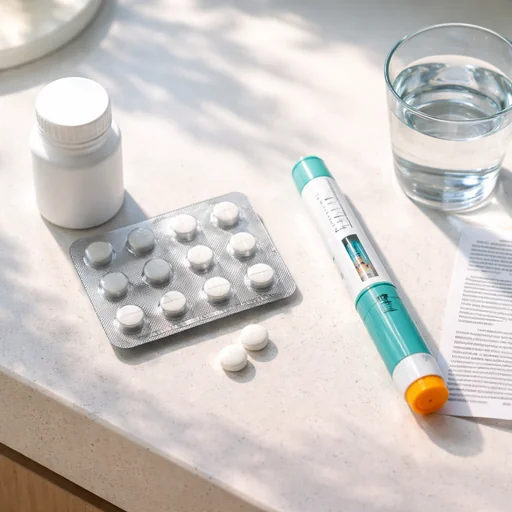
Naltrexone, the most commonly used medication for alcohol cravings, is particularly well-suited to gray area drinking because it targets the exact mechanism that makes cutback so hard. The medication reduces the pleasure signal alcohol sends to the brain, which over a few weeks quiets cravings. Many patients describe it as making the automatic pour feel less automatic, which creates space to make actual choices rather than act on reflex. Our guide to how to use naltrexone to stop alcohol cravings covers the practical details.
A specific version of naltrexone use, sometimes called the Sinclair Method, involves taking the medication an hour before drinking rather than daily. This is most appropriate for patients whose goal is meaningful reduction rather than abstinence, which describes the majority of gray area drinkers.
Peer support that is not built around the traditional twelve-step framing may also help. Smart Recovery and several newer modality-neutral groups offer community without requiring patients to identify as alcoholics.
The Goal Question, Reduction Versus Abstinence
One of the distinguishing features of gray area drinking is that the goal is often reduction rather than complete abstinence. Many gray area drinkers do not want to never have a glass of wine again. They want to not drink every evening by default. They want to be able to take a drink or leave it.
This goal is entirely legitimate and increasingly supported by the medical literature. The World Health Organization and National Institute on Alcohol Abuse and Alcoholism both recognize reduction as a valid treatment goal for patients who are not severely dependent.
Naltrexone is particularly compatible with a reduction goal because it does not require abstinence to work. Patients can continue drinking at reduced levels while the medication works to further reduce cravings over time.
A Note on Self-Recognition and Shame
Many people who fit the gray area drinking pattern also carry a layer of shame about it. The shame usually takes one of two forms. Either they feel like they are being dramatic by being concerned about drinking that is technically within normal limits, or they feel like they are failing because they cannot cut back on something that is technically within normal limits.
Both forms are unhelpful. Recognizing a pattern that is hurting you and wanting to change it does not require a diagnosis. The change itself does not require you to adopt an identity. You can reduce or stop drinking without calling yourself an alcoholic. You can address a problem without first becoming a certain kind of person.
When to Seek Medical Attention
If you have tried to stop or reduce your drinking and experienced tremors, sweating, rapid heartbeat, or confusion, those are signs of alcohol withdrawal and deserve prompt medical attention. Do not try to stop drinking suddenly on your own. Contact your primary care clinician, call 911, or go to an emergency department.
If you are experiencing significant depression, thoughts of self-harm, or panic symptoms, reach out to a mental health professional or call 988 in the United States for support.
Bottom Line
Gray area drinking is a real, common pattern that sits between occasional moderate use and clinical alcohol use disorder. Most people whose drinking is quietly a problem live here. The pattern is hard to address because it does not match traditional categories, and because willpower alone is usually not enough to override the automatic drinking that defines it.
Effective approaches do exist. Structured therapy, mindfulness, peer support, and medical options including naltrexone all have a place, and they often work better in combination than alone.
If this description fits you, our online Alcohol Use Assessment can help you see where your drinking sits and what options might fit your goals. You do not need a diagnosis or an identity to ask for help.
This article is educational and is not medical advice. Decisions about drinking, health changes, or prescription medication should be made with a qualified clinician who knows your full medical history.