A 2 minute assessment to get a personalized mental health or alcohol recovery plan.

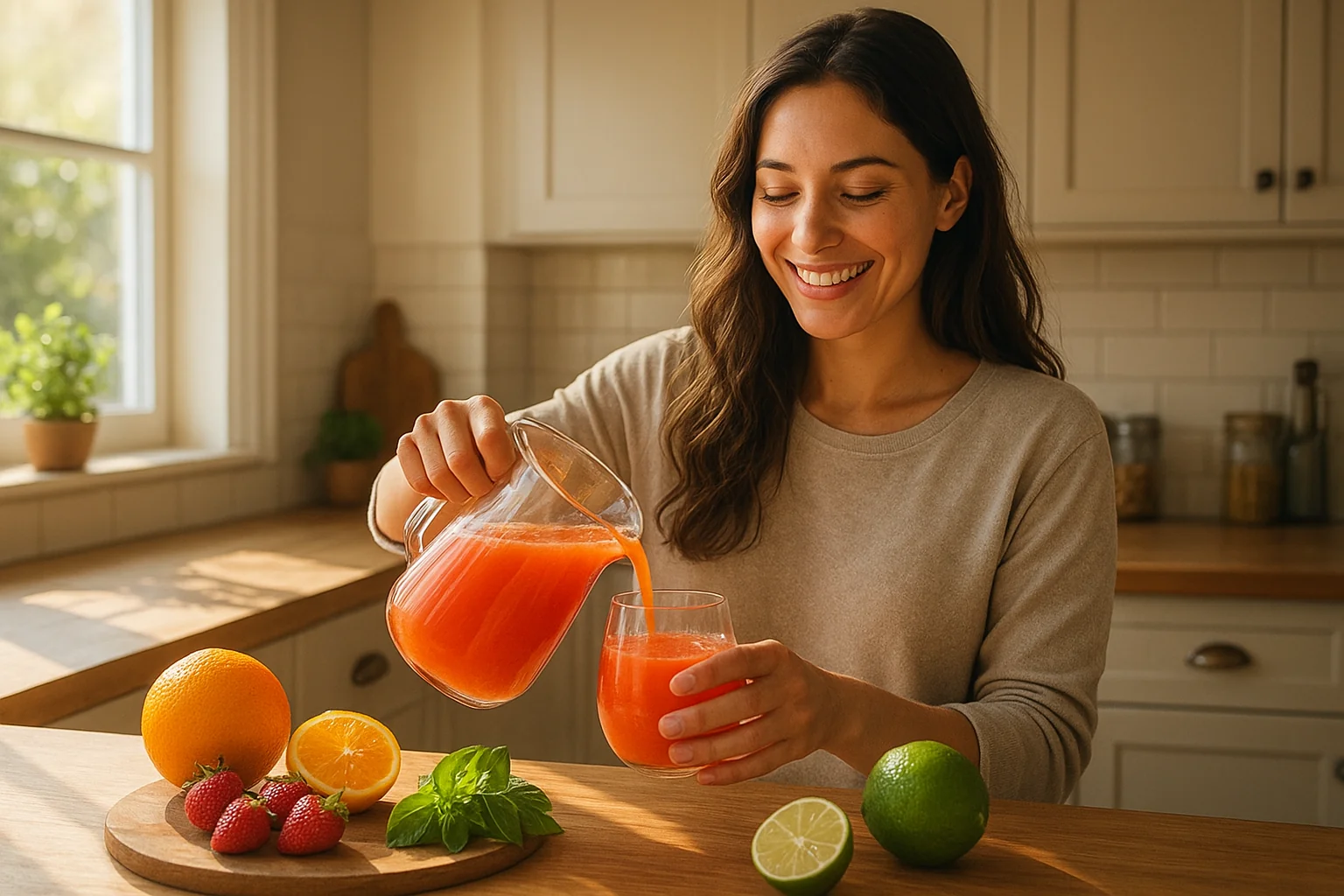
The alcohol-free lifestyle is not about deprivation. It is a deliberate redesign of daily habits, social rhythms, and reward systems.
What You'll Learn:
• The data behind the growing alcohol-free movement
• What an alcohol-free lifestyle actually looks like day to day
• Benefits across physical health, mental health, finances, and relationships
• Practical strategies for navigating social situations without drinking
• Why the identity shift from "I can't drink" to "I choose not to drink" is the key to making it last
Something is shifting. Across the United States and around the world, a growing number of people are stepping back from alcohol. Not because they have to, but because they want to.
They are not joining a recovery program or responding to an ultimatum. They are making a deliberate choice to build a life that does not revolve around drinking, and they are discovering that what waits on the other side is not deprivation. It is freedom.
If you have been thinking about what an alcohol-free lifestyle might look like for you, or if you are already somewhere on that path and want reassurance that you are headed in the right direction, this guide is for you.
We will look at the data behind the movement, explore the benefits across every area of life, and talk honestly about how to build routines, navigate social situations, and make this change stick, whether you go fully alcohol-free or simply decide to drink far less than you used to.
This article is educational and not a substitute for medical advice. If you have concerns about your drinking, talk to a healthcare professional.
The Alcohol-Free Movement Is Bigger Than You Think
The Numbers Behind the Shift
If choosing not to drink still feels countercultural, the data might surprise you. According to the National Institute on Alcohol Abuse and Alcoholism, survey data over the past decade shows a measurable decline in alcohol consumption among adults under 35. Gallup polling has found that the percentage of young adults who say they drink alcohol has dropped significantly compared to previous generations.
Dry January, which started as a niche challenge in the United Kingdom, now draws millions of participants globally each year. Many of them report drinking less for months after the challenge ends.
This is not a fringe movement. It is a generational recalibration. Millennials and Gen Z adults in particular are approaching alcohol differently than their parents did. Mental health awareness, wellness culture, and a growing body of public health research have all contributed to a cultural environment where choosing not to drink is not only accepted but increasingly admired.
The Boom in Non-Alcoholic Options
The marketplace has noticed. The non-alcoholic beverage industry has expanded dramatically in recent years. Craft non-alcoholic beers, zero-proof spirits, and ready-to-drink mocktails are appearing on shelves and bar menus that five years ago would have offered nothing beyond soda and juice.
This explosion of options matters because it removes one of the oldest barriers to going alcohol-free: the feeling that you are stuck with water while everyone else has something interesting in their glass.
Today, you can order a beautifully crafted zero-proof cocktail at a growing number of restaurants and bars, or stock your home with non-alcoholic spirits that hold their own in any recipe. If you are curious about what is available, our guide to non-alcoholic cocktails and mocktails covers a wide range of options worth exploring.
What an Alcohol-Free Lifestyle Actually Looks Like
When most people first consider going alcohol-free, they picture what they are giving up: the after-work glass of wine, the weekend beers, the toast at a celebration. That focus on subtraction is natural, but it misses the point.
An alcohol-free lifestyle is not about creating a void. It is about redesigning how you decompress, celebrate, socialize, and reward yourself, and discovering that the replacements are often better than what they replaced.
In practical terms, it looks like this. Your evenings open up because you are not dulled by a drink or two after dinner. Your mornings are sharper because your sleep quality improves.
Your weekends have more hours in them because you are not recovering from Friday or Saturday night. Celebrations still happen, but you are fully present for them.
Stressful days still require a release valve. But instead of a drink, you find yourself going for a run, calling a friend, cooking something interesting, or simply sitting with the feeling until it passes, which, without alcohol amplifying it, happens faster than you expect.
If you are looking for concrete ideas about what to do with the time and energy that used to go toward drinking, our article on what to replace drinking with offers a range of practical alternatives for every situation.
The point is that an alcohol-free lifestyle is not a blank space where alcohol used to be. It is a full, active life with different habits, rituals, and rhythms. For most people, the new version feels richer than the old one.
Benefits Across Every Part of Your Life
One of the most striking things about going alcohol-free is how the benefits ripple outward. It starts with your body, expands to your mind, and eventually reshapes your finances, your relationships, and your professional life.
Physical Health and Fitness
The physical changes tend to be the first things people notice, and they can be dramatic. According to the Centers for Disease Control and Prevention, alcohol contributes to a wide range of health issues including liver disease, cardiovascular problems, weakened immunity, and increased cancer risk. When you stop drinking, your body begins to recover.
The specific timeline varies from person to person, but common changes include improved sleep quality within the first one to two weeks, noticeable improvements in skin hydration and clarity, reduced bloating and gradual changes in body composition, lower resting heart rate and blood pressure over time, stronger immune function and faster recovery from illness and exercise, and improved athletic performance and endurance.
For many people, the fitness gains alone are enough to sustain the change. When you are not working against the inflammatory, dehydrating, and sleep-disrupting effects of alcohol, your body responds to exercise more effectively. Recovery is faster. Energy is more consistent.
Mental Health and Emotional Clarity
The mental health benefits of going alcohol-free are profound, though they sometimes take longer to fully appreciate. Alcohol is a central nervous system depressant. While it may temporarily relieve anxiety or low mood, it worsens both conditions over time. Research published through the National Institutes of Health shows that alcohol disrupts neurotransmitter balance, increases anxiety between drinking sessions (sometimes called "hangxiety"), and is strongly associated with depression.
When you remove alcohol from the equation, many people report a significant reduction in baseline anxiety within the first few weeks, more stable and predictable moods throughout the day, improved focus, memory, and cognitive sharpness, greater emotional resilience, and a clearer sense of what they actually feel, which improves decision-making in every area of life.
This emotional clarity is one of the less-discussed but most transformative benefits of an alcohol-free lifestyle. When you are no longer cycling between the artificial high of a drink and the low that follows, you discover a more even, grounded version of yourself.
Finances, Career, and Relationships
The benefits extend well beyond your body and mind. Financially, alcohol is expensive. Between drinks at restaurants and bars, bottles at home, ride-shares after a night out, and the occasional impulsive spending that follows a few too many, many moderate drinkers are surprised to learn they were spending hundreds of dollars per month on alcohol and its downstream costs.
Going alcohol-free puts that money back in your pocket.
Professionally, the effects are equally noticeable. Clearer thinking, better sleep, more consistent energy, and zero mornings spent recovering from the night before translate directly into sharper performance and more reliable output.
In relationships, the shift can be particularly meaningful. Alcohol tends to flatten emotional range and reduce the quality of connection, even when it feels like it is enhancing it in the moment.
Partners, friends, and family members often notice the change before you do: more patience, more presence, more genuine engagement. If you want a deeper look at the full spectrum of improvements people experience, our article on the benefits of quitting alcohol covers each domain in more detail.
Navigating Social Situations Without Alcohol
This is the part that worries people the most, and understandably so. Alcohol is deeply embedded in social life: dinners, weddings, work happy hours, holidays, casual hangs with friends. The prospect of showing up to these events without drinking can feel daunting.
Here is the honest truth. It gets easier much faster than you expect. The first few times may feel awkward.
You might be hyperaware of what is in your glass, worried about questions, or uncertain about how to relax without a drink. But most people find that after a handful of alcohol-free social events, the discomfort fades and is replaced by a quiet confidence that was never accessible through alcohol.
A few strategies that consistently help:
• Have a non-alcoholic drink in hand. This eliminates the visual cue that invites offers and questions.
• Set a time limit. Tell yourself you will stay for an hour. If you are having a good time, stay longer.
• Be the person who suggests the plan. When you choose the activity and the venue, you control the environment.
• Prepare a simple response for anyone who asks. "I am taking a break" or "I am not drinking tonight" is enough.
• Bring a friend who supports your choice. One ally in the room changes the entire dynamic.
If you are exploring the broader mindset behind questioning your relationship with alcohol, our guide on being sober curious covers the cultural movement and the practical steps people are taking to drink more intentionally or not at all.
The Spectrum: Fully Alcohol-Free, Significantly Reduced, and Everything In Between
One of the most important things to understand about the alcohol-free lifestyle is that it is not binary. Some people choose to eliminate alcohol entirely and never look back. Others significantly reduce their intake.
Maybe they drink only on rare occasions, or they cut back from nightly to a few times a month. Both approaches are valid. The best one is the one that aligns with your goals and your life.
The NIAAA's Rethinking Drinking resource provides helpful frameworks for understanding where you fall on the spectrum of alcohol use and what changes might benefit you. For some, moderation is a comfortable and sustainable destination.
For others, it is a stepping stone toward going fully alcohol-free once they experience how much better they feel. For some, moderation simply does not work, and abstinence turns out to be easier than trying to maintain a middle ground.
None of these paths is inherently superior. What matters is that you are making the choice consciously rather than defaulting to drinking because it is what you have always done.
The Identity Shift That Makes It Last
The strategies, the statistics, and the health data all matter. But if you ask people who have successfully built an alcohol-free lifestyle what the real turning point was, most of them will point to something internal: a shift in identity.
Early on, going alcohol-free often feels like a restriction. The internal narrative sounds like "I can't drink" or "I am not allowed to drink."
That framing is fragile because it positions you as someone who is depriving themselves of something desirable. Every social event becomes a test of willpower, and willpower is a finite resource.
The shift happens when "I can't drink" becomes "I choose not to drink" and eventually evolves into "I don't drink. It is just not part of my life." At that point, the decision stops requiring effort.
It becomes part of who you are, the same way you might identify as someone who does not smoke or someone who exercises regularly. You are not resisting temptation. You have simply moved on.
This identity shift is supported by building evidence. Every clear-headed morning, every social event you navigate successfully, every physical improvement you notice, every dollar you save: these all reinforce the story you are telling yourself about who you are becoming. Over time, the new identity becomes self-sustaining.
For some people, the challenge is not the identity work but the biology. Cravings, habitual drinking patterns, or a deeper dependence on alcohol can make the transition genuinely difficult regardless of how motivated you are. If that resonates with you, it is worth knowing that medical support exists.
Naltrexone is an FDA-approved oral medication that works by reducing the rewarding effects of alcohol in the brain. It does not force you to stop drinking. It makes the urge to drink less powerful, which gives your new identity room to take root.
It is one tool among many, but for people who find cravings a persistent barrier, it can be the difference between struggling and succeeding.
Your Horizon, Your Choice
The alcohol-free lifestyle is not about perfection, and it is not about purity. It is about choosing to build your daily life around clarity, health, and presence rather than around a substance that takes more than it gives.
Whether you go fully alcohol-free or simply decide to drink far less than you used to, you are joining a growing community of people who have decided that the best version of their life does not require alcohol to access it.
The movement is real. The benefits are well-documented.
The options for non-alcoholic beverages have never been better. And the social landscape is shifting in your favor.
If you are recognizing that your relationship with alcohol has become something you would like to change and you want support in making that change, you can take a free online Alcohol Use Assessment to explore whether naltrexone-assisted treatment might be a good fit for your goals. There is no pressure and no judgment, just a confidential starting point for the life you are choosing to build.