A 2 minute assessment to get a personalized mental health or alcohol recovery plan.

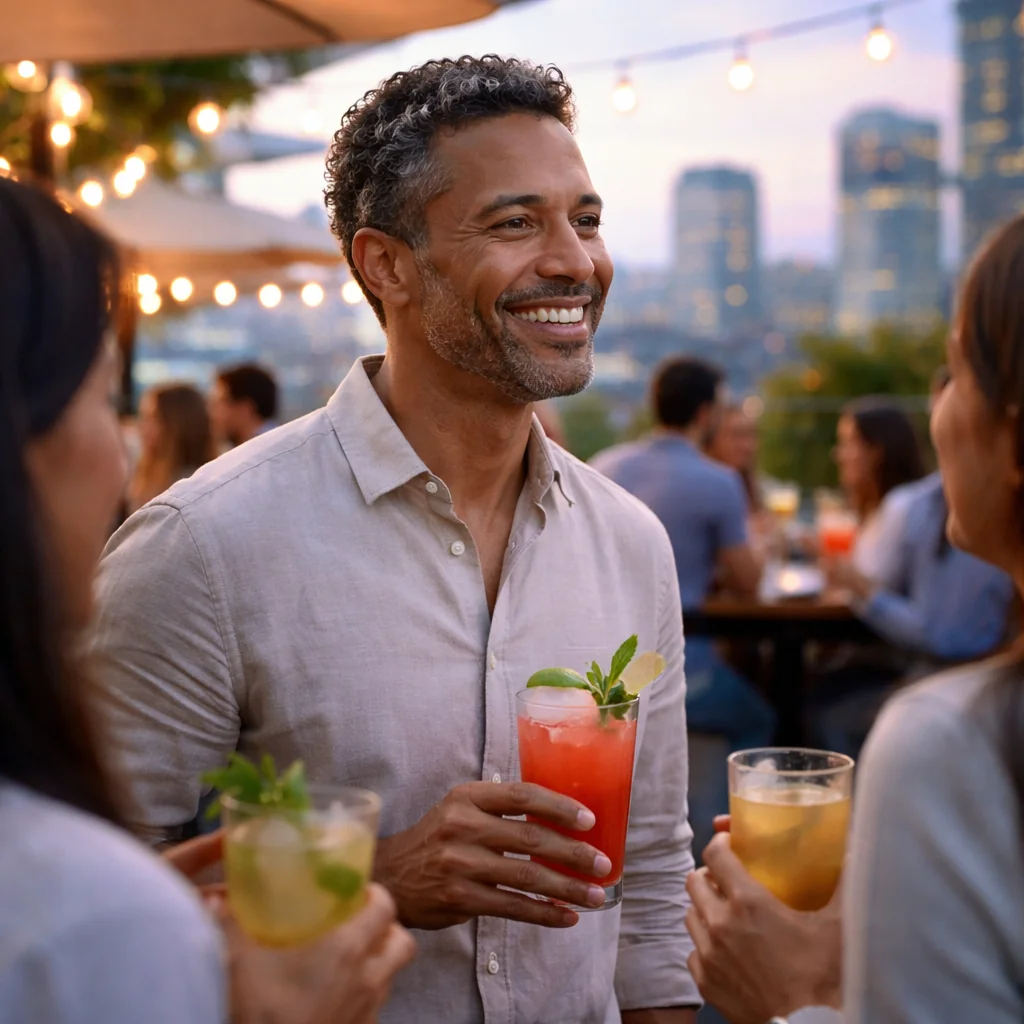
Happy hour is about the people, not the pours. Here is how to stay for the connection, skip what you do not want, and leave when you are ready.
What You'll Discover:
• Why happy hour is its own specific challenge when you are cutting back.
• What to order so you are not fielding questions all night.
• How to step out of the round-buying cycle without a fuss.
• Deflection lines that end the drink talk fast.
• How targeted naltrexone can make an after-work drink easier to walk away from.
Cutting back on alcohol does not mean giving up your social life. It usually means learning to handle the few situations that make drinking feel automatic, and happy hour sits near the top of that list.
The after-work drink is a ritual. There is the round-buying, the coworker who clocks that you are not drinking, and the slow slide from one drink to four, all before you have even had dinner.
Here is the good news. Happy hour is very manageable once you have a plan. You can show up, enjoy the people, and head home clear, without making a thing of it.
Why Happy Hour Is Its Own Kind of Hard
Happy hour has a few features that make it trickier than a dinner out. The first is timing. It starts early, on an empty stomach, at the end of a draining workday.
That combination lowers your guard. You are tired, you have not eaten, and a cold drink feels like the reward you have been waiting for since 3pm.
The second feature is the group. Happy hour runs on momentum, and rounds keep that momentum going whether or not anyone actually wants another.
For perspective, the CDC counts moderate drinking as up to one drink a day for women and two for men. A few rounds after work sail past that without anyone noticing.
Your own confidence matters more than you would think. Research on social drinking finds that drink refusal self-efficacy, meaning your belief that you can say no, predicts how much people actually drink in a group.
In other words, the people who drink less are not always more disciplined. They are just more sure they can turn down a drink, and that is a skill you can build.
Set Your Anchor Before You Walk In
A lot of this is won before you arrive. Two minutes of planning at your desk beats any amount of willpower at the bar.
Eat something first. A snack or an early bite takes the edge off the empty-stomach rush that makes the first drink hit hard and fast.
Decide your number before you go. Choosing "one drink, then sodas" while you are calm is far easier than deciding mid-conversation with a glass already in your hand.
Pick your rough exit time too. If you know you are leaving around 6:30, every choice between now and then has a natural finish line.
What to Order So You Are Not Explaining All Night
The easiest way to avoid a conversation about your drinking is to hold a glass that looks like everyone else's. Order first, and order with confidence.
A club soda with lime and a straw looks exactly like a vodka soda. A tonic with bitters looks like a cocktail. Many bars now keep proper nonalcoholic beers and mocktails on the menu too.
A full glass answers the question before anyone asks it. No one at a busy table is auditing what you are drinking.
If you can, order food when you arrive. Eating gives your hands and mouth something to do, slows the drinking for the whole table, and makes a nonalcoholic drink feel completely normal.
It also helps to know what a real drink even is. The CDC's standard drink sizes show how a heavy pour can quietly count as two, which is useful the times you do decide to have one.
The Round-Buying Problem
Rounds are the engine of happy hour, and they are the single biggest reason people drink more than they meant to. When someone buys for the table, sitting out can feel rude.
You do not have to play. The simplest move is to opt out early and warmly. "I'm going to do my own thing tonight, but thank you," said once at the start, sets the tone for the evening.
Picture the classic trap. Someone insists on buying, you did not want another, and now a fresh glass is sitting in front of you. Heading that off with an early "I'm set, thanks" is far easier than refusing a drink already poured.
If you would rather stay in the group flow, buy your own round and make it a soda. You are still part of the ritual, just not matching everyone drink for drink.
You can also be the one who gets the next round and quietly order yourself a nonalcoholic version. Nobody checks, and you stay in the rhythm without the alcohol.
Stay for the Connection, Not the Drinks
Here is the reframe that changes everything. You are not at happy hour for the alcohol. You are there for the people, the laughing, the venting about work, the actual connection.
Once you separate the two, a lot of pressure lifts. You can be present, funny, and engaged with a soda in your hand. The drink was never what made you good company.
Notice who you actually remember talking to after a long night out. It is almost never the third round. It is the real conversation you had early, before the volume went up.
If the worry underneath is that you need alcohol to feel comfortable in a crowd, that is worth addressing directly. Our guide to socializing without alcohol has practical ways to feel at ease.
And if nerves are the real driver, you are far from alone. We go deeper in our piece on social anxiety without alcohol, including why the "liquid courage" trade is usually a bad deal.
Deflecting the Questions Without a Speech
Someone will probably ask why you are not drinking. It is rarely a challenge, usually just curiosity, and it passes in seconds if you keep it easy.
You do not owe an explanation. "I'm good tonight," "I'm driving," or "taking it easy this week" all work, delivered lightly, then move the conversation along.
Having a line ready is the whole trick. The NIAAA suggests practicing your drink refusal skills in advance, so the words come out smoothly when you are put on the spot.
If you want options for different crowds, our guides on how to say no to a drink and how to explain not drinking have lines for coworkers, friends, and the persistent offerer.
Here is the whole evening, trap versus play:
The Early Exit That Is Not Weird
You do not have to shut the place down. In fact, the cleanest way to enjoy happy hour is to treat it as exactly that, an hour.
Arrive on time, be genuinely present, and plan to leave before the night tips from social into sloppy. The first hour is the good part anyway.
When you go, keep it simple and upbeat. "This was great, I've got to run" needs no defense. You do not have to invent an excuse or wait for a lull.
Leaving early is a quiet superpower. You get the connection you came for and skip the part of the night that costs you the next morning.
The Slide From One to Four Costs More Than You Think
The reason to bother with any of this is not guilt. It is that a heavy happy hour quietly taxes the rest of your week.
Alcohol in the evening fragments your sleep, even when you fall asleep quickly. You wake up less rested and lean harder on coffee the next day to make up for it.
Then there is the foggy morning at work, the flat mood, and the low-grade regret about that fourth drink you did not really want. None of it is dramatic, but it stacks up.
Handling happy hour well is really about protecting your Tuesday. You keep the social part and hold on to the clear head, the good sleep, and the steady mood that come with it.
When Happy Hour Becomes Every Day
For some people, happy hour is not a Friday thing. It is a daily decompress, the drink that marks the end of the workday, every single day.
If that is you, these tactics still help, and the pattern itself is worth a closer look. A daily after-work drink has a quiet way of growing in size over time.
There is no shame in it. The end-of-day drink is one of the most common habits there is, precisely because it works in the short term. It just tends to cost more than it gives.
A useful test is to skip the drink for a few days and see what comes up. If the evening feels genuinely hard without it, that is good information, not a verdict.
Noticing the pattern is the first move. From there, the same tools, a plan, a nonalcoholic swap, and sometimes naltrexone, make it easier to loosen alcohol's hold on your evenings.
Where Naltrexone Fits for After-Work Drinks
If one drink at happy hour reliably turns into four, that is not a character flaw. It is how alcohol works on the brain's reward system, and it is exactly what naltrexone was made to interrupt.
Naltrexone is an FDA-approved medication for alcohol. A 50mg tablet taken about an hour before drinking blocks the opioid receptors that release the dopamine surge behind that "one more" feeling.
With the reward turned down, the pull to keep ordering fades. Many people find they stop comfortably after one or two, instead of riding the round-buying wave to five.
That predictability is the key. Unlike a surprise night out, a happy hour is on the calendar, which makes a targeted dose simple to plan around.
None of this requires calling yourself anything or hitting some rock bottom. Plenty of people who would never describe themselves as heavy drinkers use a little support to make moderation stick.
Choose Your Horizon builds this around clinical, neurological, and behavioral science, with physicians guiding the plan. Some people dose daily, and others only before events like this.
Putting It All Together
Happy hour does not have to be a test you either pass or fail. With a few habits, it becomes just another nice hour with people you like.
Order something that looks the part. Sit out the rounds. Stay for the conversation, keep your answer to the drink question short, and leave while you still feel great.
Cutting back in social settings is a skill, not a personality trait. Every happy hour you handle well makes the next one easier, and you do not have to figure it out alone.
Start with the next one on your calendar. Pick your order, your number, and your exit before you go, and let the evening show you how good you feel the morning after.
Frequently Asked Questions
What is the best nonalcoholic drink to order at happy hour?
Club soda with lime, a tonic with bitters, or a nonalcoholic beer all blend in and keep your hands busy. They look like everyone else's drink, so they do not invite questions.
How do I get out of buying and drinking rounds?
Opt out early and warmly, before the first round forms. Saying "I'm doing my own thing tonight" once sets the tone, and you can still buy a round and make yours a soda.
How do I leave happy hour early without seeming rude?
Treat happy hour as one hour. Arrive on time, be present, and leave on a high note with a simple "This was great, I have to run." No excuse required.
What do I say when a coworker asks why I am not drinking?
Keep it short and light. "I'm good tonight" or "taking it easy this week" works, then change the subject. Most people stop caring within seconds.
Can naltrexone help me stop at one drink at happy hour?
Naltrexone taken about an hour before drinking mutes the reward that drives "one more," so many people stop after one or two. A clinician can help you decide if it fits.
Is it okay to still drink a little when I am cutting back?
Yes. Cutting back is a valid goal, not a lesser version of quitting. Many people aim to drink less and slower rather than not at all, and that counts.
You can enjoy happy hour and still wake up sharp for tomorrow. If after-work drinks keep getting away from you, take the Alcohol Use Assessment to see whether naltrexone from Choose Your Horizon is a good fit for you.