A 2 minute assessment to get a personalized mental health or alcohol recovery plan.

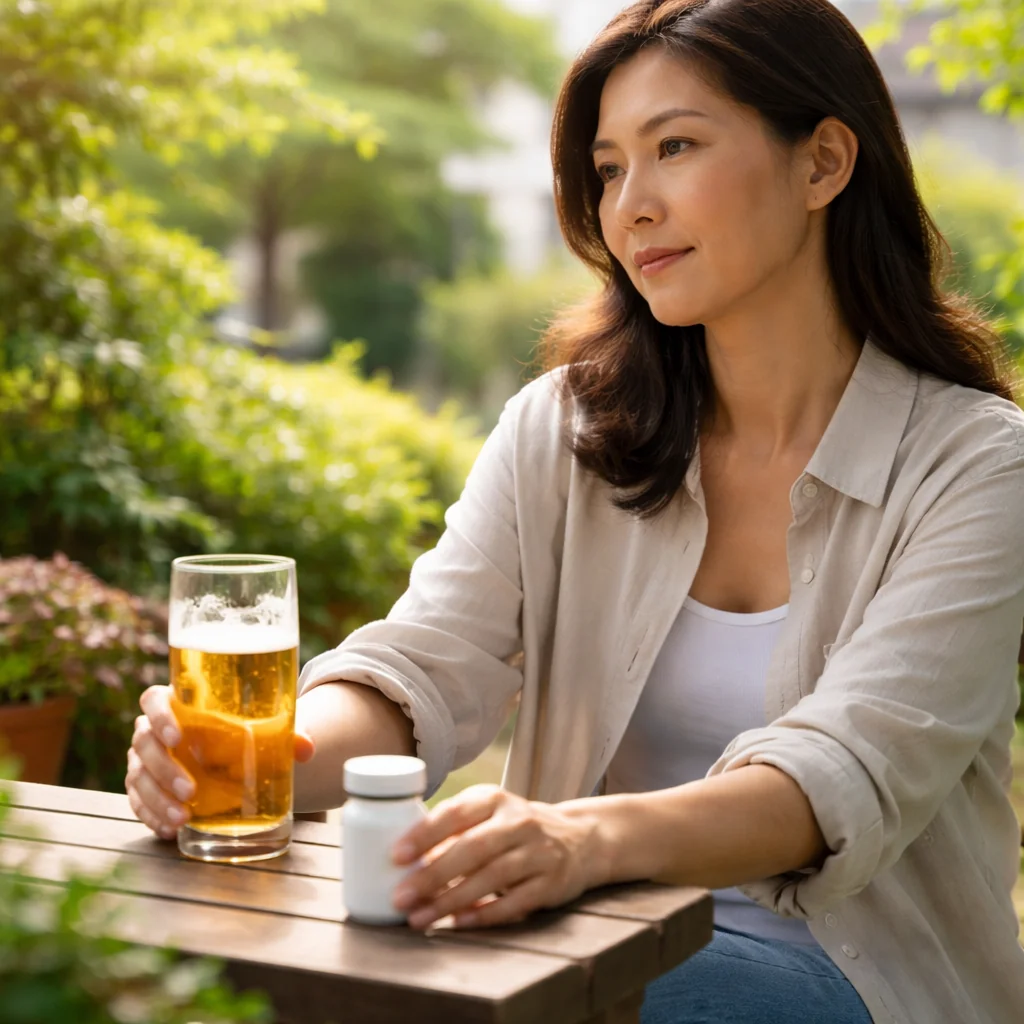
Naltrexone changes how rewarding a drink feels. It does not change how much that drink impairs you, and confusing those two is genuinely dangerous.
What You'll Discover:
• The difference between alcohol's reward and alcohol's impairment.
• What tolerance actually means in clinical terms.
• Why a drink feeling flat does not mean you are less intoxicated.
• What happens to tolerance when drinking decreases over months.
• The one safety rule that does not bend on naltrexone.
There is one thing about naltrexone that people consistently get backwards, and it is worth clearing up before anything else.
Naltrexone blunts the reward you get from alcohol. It does not blunt the intoxication.
Your blood alcohol level, your coordination, your reaction time, and your judgment are all affected exactly as they were before you started taking it.
The Short Version
A drink on naltrexone often feels underwhelming. The lift that usually arrives twenty minutes in is quieter, and the pull toward a second one is weaker.
None of that means the alcohol is doing less to your brain and body. It is doing precisely the same amount.
The reward signal and the impairment run on separate systems. Naltrexone touches one of them and leaves the other completely alone.
What Alcohol Tolerance Actually Means
Tolerance has a specific clinical meaning that differs from how people use the word at a bar.
A review on tolerance to alcohol as a critical yet understudied factor defines it as a lower effect of alcohol with repeated exposure, and notes it has historically been one of the diagnostic criteria for alcohol use disorder.
In practice that means you need more alcohol to reach the same effect than you once did. Three drinks do what two used to do.
Tolerance Is Not the Same as Being Sober
Here is where the logic goes wrong for a lot of people. Tolerance changes what you feel. It does not change your blood alcohol concentration.
Two people of similar size who drink the same amount will land in a similar place on a breathalyzer, whether one of them drinks nightly and the other drinks twice a year.
The tolerant drinker feels less of it. Their motor control and judgment are still compromised, and no legal limit anywhere makes an allowance for practice.
Why Rising Tolerance Is a Signal Rather Than a Skill
Tolerance often gets treated as a point of pride. Clinically it points the other direction.
Needing more to get the same effect means the brain has adapted to regular exposure. That adaptation is one of the recognized features of a developing alcohol use disorder.
It also tends to push consumption upward on its own, because the old amount stops delivering what it used to.
What Naltrexone Changes About Drinking
Naltrexone is a mu-opioid receptor antagonist. The StatPearls clinical reference notes that medications used to treat alcohol and opioid use disorder work by altering their reinforcing effects on inducing euphoria.
When you drink, your brain releases endorphins that land on mu-opioid receptors and trigger dopamine release in the reward circuitry. That is the pleasant lift.
Naltrexone occupies those receptors first. The endorphins arrive and very little happens.
Reward, Not Intoxication
Human laboratory research spells this out in detail. Meta-analyses of naltrexone effects on subjective responses to alcohol compared naltrexone with placebo across controlled drinking sessions.
Naltrexone reduced craving, reduced stimulation, increased sedation, and increased negative mood.
Read that list slowly. Every single item is about how alcohol feels.
Nothing in it describes alcohol clearing faster, blood alcohol rising more slowly, or motor coordination being preserved. Those systems are untouched, because naltrexone has no access to them.
We go deeper into the subjective side in our article on what drinking on naltrexone feels like.
It is also worth knowing that the blunting is specific rather than global, which we address in our piece on whether naltrexone stops all pleasure.
The Safety Point You Cannot Round Off
Do not assume you are safe to drive because a drink felt less rewarding.
That is the most important sentence on this page. If a drink felt flat, your blood alcohol concentration is still exactly where the arithmetic puts it.
The legal limit does not move because you take a medication. Field sobriety performance does not improve. Crash risk does not fall.
If anything, the odds of a bad judgment call go up, because the internal signal you have always used to gauge yourself has gone quiet.
The Confidence Gap
There is research on precisely this gap, and it is worth sitting with.
A randomized, double-blind, placebo-controlled study on driving performance and confidence in driving ability identified a dissociation between actual driving performance and subjective awareness of impairment.
Participants showed significantly diminished driving ability at 0.07% blood alcohol. Their confidence in their own driving ability stayed unchanged across conditions.
That was in people taking nothing that dampened the felt experience of drinking. Add naltrexone and the internal gauge gets quieter still.
The rule stays simple. Count drinks and time, not feelings.
What Naltrexone Changes and What It Does Not
Why the Two Systems Are Separate
It helps to understand why one medication can change one and not the other.
Alcohol's impairing effects come mostly from its action on GABA and glutamate signaling across the brain, which slows neural communication broadly. That is what produces the slurred speech, the slowed reactions, and the poor judgment.
The rewarding effects run through a much narrower path, the endorphin and mu-opioid route into the dopamine system.
Naltrexone is a key that fits one specific lock. It has nothing to say to GABA or glutamate.
So the reward pathway goes quiet while the impairment pathway runs at full volume, and you experience that as a drink that feels like nothing while your body knows otherwise.
What Happens to Tolerance as Drinking Decreases
Here is the piece that surprises people, and it usually arrives a few months in.
Tolerance is built by repeated exposure, so it fades when the exposure drops. As drinking decreases on naltrexone, tolerance tends to come down with it.
That means the amount of alcohol that used to feel like nothing starts registering again. Two drinks after three months of moderation can hit harder than four used to.
We cover the timeline and what to expect in our guide to the alcohol tolerance reset.
Lower Tolerance Cuts Both Ways
Falling tolerance is mostly good news. It signals that the brain is unwinding its adaptation, and it means less alcohol is needed for any given occasion.
It also creates a real risk window. Someone who returns to their old drinking amount after months of reduction can reach a higher blood alcohol level and feel it more sharply than they expect.
That combination, lower tolerance plus a dampened reward signal, is worth being deliberate about rather than discovering at a wedding.
The Mistake People Make Around Week Three
A pattern shows up often enough to be worth naming.
Someone has been on naltrexone a few weeks. Alcohol has become genuinely uninteresting. They have two drinks at dinner, feel almost nothing, and conclude they are fine to drive home.
They are not fine. They have the same blood alcohol level as anyone else who had two drinks at dinner in the same body on the same night.
The absence of a buzz is the medication working exactly as designed. It is not a report on your blood chemistry.
The fix is boring and effective. Use a rideshare, use a designated driver, or use time. Naltrexone changes your relationship with alcohol. It does not change the math.
How Long the Blunting Lasts
Timing matters here, because the reward blockade and your blood alcohol level run on entirely different clocks.
Oral naltrexone has a half-life of about 4 hours according to StatPearls, with an active metabolite that lasts longer. In practical terms a 50mg dose covers roughly a day.
Alcohol, meanwhile, leaves at a fairly steady rate that has nothing to do with whether you took a pill that morning.
That means it is entirely possible for the blockade to still be active while your blood alcohol is high, which is exactly the scenario where a drink feels like nothing and a breathalyzer disagrees.
Signals to Use Instead of How You Feel
If the felt experience of drinking is no longer a reliable gauge, something has to replace it.
Counting is the practical answer, and it works better than intuition ever did.
• Track standard drinks rather than glasses, since pour sizes and alcohol content vary widely.
• Use clock time as your main variable, because the body clears alcohol at a fairly steady pace.
• Decide your transportation before the first drink rather than after the third.
• Treat the decision as fixed once made, rather than something to reconsider while drinking.
None of that is dramatic. It is the same advice that applies to anyone, and it simply matters more once your internal warning system has been quieted.
Many people find that writing the number down changes behavior on its own. Tracking is not surveillance, it is information you can use.
Why This Matters More With Targeted Dosing
Some people take naltrexone every day. Others take it an hour before situations where they expect to drink, which is often called targeted dosing.
Targeted dosing tends to concentrate the effect around social occasions, which are exactly the occasions where someone might drive afterward.
So the pattern that maximizes the medication's benefit is also the pattern most likely to produce the false-confidence problem.
If you use naltrexone this way, decide on your ride home before you leave the house. The plan should be made by the version of you that has not had a drink.
Does Naltrexone Cause Tolerance to Itself
This comes up alongside the tolerance topic often enough to answer directly.
No. People do not develop tolerance to naltrexone's effect on drinking, and the dose does not need to keep climbing to stay useful.
It is not habit-forming either, and taking it alongside alcohol is safe by design. We cover that fully in our article on whether you can drink alcohol on naltrexone.
The standard oral dose for alcohol use disorder is 50mg, and for most people it stays there.
Conclusion
Naltrexone works on one specific link in a longer chain. It sits between alcohol and your brain's reward system, and it does that job well.
Everything downstream of that link is unchanged. Absorption, blood alcohol, coordination, reaction time, and judgment all behave exactly as they did before.
So the drink that feels like nothing is still a drink. Treat it that way when you make decisions about driving, about work, or about anything that needs your full function.
Understanding that distinction is not a caveat on the medication. It is what makes the medication usable in ordinary life.
If you have been drinking for long enough that a heavy night barely registers, that is worth a conversation rather than a shrug. High tolerance is information, not a verdict on you.
Frequently Asked Questions
Does naltrexone make you less drunk?
No. Naltrexone reduces how rewarding alcohol feels, not how much it impairs you. Your blood alcohol concentration and your coordination are affected exactly as they would be without it.
Can I drive after drinking if I am on naltrexone?
The same rules apply as for anyone else. A drink feeling flat does not lower your blood alcohol level, so count drinks and time rather than relying on how you feel.
Does naltrexone increase alcohol tolerance?
No. It does not raise the amount of alcohol needed for a given physical effect. It reduces the reward signal, which is a different mechanism entirely.
Will my tolerance go down while taking naltrexone?
Usually yes, because tolerance follows exposure. As overall drinking decreases across weeks and months, the amount of alcohol needed to feel an effect tends to fall.
Do people build up tolerance to naltrexone itself?
No. Effectiveness does not wear off with continued use, and the dose does not need to escalate over time to keep working.
Why do I feel nothing when I drink on naltrexone?
That is the medication doing what it is designed to do. The endorphin-driven reward signal is blocked, so the lift you expect never arrives even though the alcohol is fully present.
Understanding how alcohol works on your brain is the first step. Deciding what to do about it is the next one.
Take the online Alcohol Use Assessment to see whether naltrexone could be a good fit for you.