A 2 minute assessment to get a personalized mental health or alcohol recovery plan.


At twelve months without alcohol, most of the dramatic changes have already happened, but a set of subtler long-term shifts is just beginning. Here is what to expect and how to keep building on the foundation you have built.
What You'll Learn:
• The physical and mental health changes that are usually complete by one year.
• What the financial math tends to look like at this milestone.
• Why identity shifts often feel different at one year than at thirty or ninety days.
• Common challenges that show up around the twelve-month mark.
• How to think about year two without treating it as an anticlimax.
If you are reading this with one year of sobriety behind you, congratulations. You have done something very difficult, and most of the hardest work is behind you. If you are reading this in preparation for an anniversary, or because you are curious what this milestone looks like, you are in good company.
The timeline content about sobriety tends to concentrate around the first ninety days, because that is where the most dramatic changes happen. Less is written about what twelve months actually looks like, which is a gap worth filling. Year one has its own texture, different from the early months and different from the year-two steady state that follows. This article walks through what typically happens by the twelve-month mark and what most people find useful to know going into year two. It is educational and not medical advice.
What Is Already Complete by One Year
By the twelve-month mark, the major physical changes from stopping drinking have largely resolved.
Sleep architecture has normalized for most people. REM and slow-wave sleep have returned to healthy levels, and the fragmented early-morning waking that many drinkers experience has usually resolved. Most one-year-sober individuals describe sleep as reliably better than it was during drinking years.
Liver function tests have normalized for the vast majority of people whose baseline labs were not catastrophic to start with. The American Liver Foundation notes that for many people with alcohol-related liver changes short of cirrhosis, meaningful healing occurs within a year of stopping.
Inflammatory markers have dropped substantially. C-reactive protein, interleukin-6, and other inflammation indicators typically normalize within six months, and the secondary symptoms driven by inflammation, including joint stiffness, skin issues, and general malaise, have usually resolved.
Weight has usually stabilized, often lower than the pre-sobriety baseline, though some people gain initially as appetite returns and blood sugar regulation adjusts. As we explain in our article on 90 days no alcohol, the first months often bring weight changes that eventually settle.
Cardiovascular markers including blood pressure, resting heart rate, and lipid panels have typically improved, especially in people who were drinking at moderate-to-heavier levels before stopping.
Mental Health at One Year
The mental health picture at one year is often subtler than the physical one. The early weeks and months often bring dramatic mood improvements as alcohol-induced depression and anxiety resolve. By six to nine months most of that acute improvement has plateaued into a new baseline.
At one year, patients commonly describe:
• A stable, reliable mood baseline that is noticeably better than during drinking.
• Reduced background anxiety, particularly the morning anxiety that had been chronic.
• Better emotional regulation and the capacity to feel difficult things without spiraling.
• Clearer thinking, better memory, and improved cognitive stamina.
• A sense of being more fully present in daily life.
Some people also encounter a phenomenon often called "pink cloud deflation," where the initial euphoria of early sobriety fades and is replaced by ordinary life with all its normal difficulties. This is a normal part of the year-one experience and does not indicate that something has gone wrong. It is simply the transition from active recovery to integrated recovery.
The Financial Picture
The financial math at one year is often more dramatic than people expect. Someone who had been drinking a bottle of wine most evenings was spending perhaps $200 to $400 a month just on alcohol, not counting bar tabs, dinner out, and related spending. Over twelve months that is $2,400 to $4,800 in direct alcohol costs alone.
Add in the indirect costs, Uber rides home, hangover-day takeout, impulse buys, missed work, and medical costs from alcohol-related health issues, and the total often approaches $5,000 to $10,000 a year for regular drinkers.
Many one-year-sober people describe this math as sobering in a different way than the health math. The numbers are concrete, and they add up to significant sums that were previously invisible. People commonly redirect this money toward travel, savings, home improvements, or debt payoff, and the long-term compounding effects can be substantial.
Identity at One Year
Something shifts around the twelve-month mark that does not happen at thirty or ninety days. The question of whether you are "someone who drinks" has usually been settled. For most of the first year, people describe themselves as not drinking, which still locates their identity in relation to alcohol. By year one, many people find that alcohol has simply stopped being the main axis of their self-concept.
This is a bigger shift than it sounds. Social situations no longer carry the same charge. The presence of alcohol at a dinner or wedding does not require the same mental effort to navigate. People find that they can enjoy gatherings without consciously tracking the drinking around them.
That said, identity at one year is not fully stable. Year two often involves continued integration of who you are now with who you were before. This process is usually gradual and not dramatic, which is why year-one content often understates it.
Challenges That Tend to Show Up
Several common challenges land around the twelve-month mark.
The first is complacency. A year of not drinking produces real confidence, and confidence can tip into overconfidence. Some people at this stage start to feel they "could have a drink and be fine." This is worth noticing. For people with a significant history of problem drinking, a single drink is often more likely than not to reopen the pattern. The stability of year one is worth more than the experiment of finding out whether it would hold.
The second is emotional processing that was deferred. The first year of sobriety is often structured around maintaining sobriety, which can push more diffuse emotional work to the side. At one year, with the immediate task accomplished, some of that work surfaces. Therapy, if you have not already been doing it, is often valuable starting around this point.
The third is social recalibration. Friendships that were built on drinking have usually either adapted or faded by one year. Either way, the social landscape often looks different than it did before, and some people at the one-year mark feel a need to intentionally rebuild connection in ways that fit who they are now.
The fourth is boredom. Alcohol had been occupying time, attention, and emotional energy. A year in, that space is empty and needs to be filled with something. Hobbies, creative work, exercise, relationships, and service often move into this space, but the transition is not automatic.
For People Who Used Naltrexone to Get Here
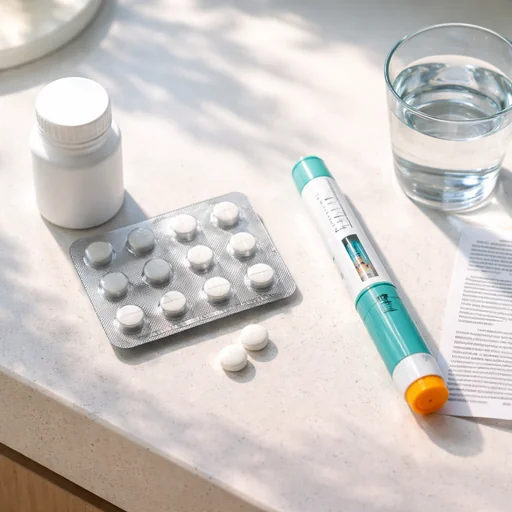
Some people reach one year of sobriety through traditional abstinence-based approaches. Others reach it with medical support including naltrexone. Both paths are legitimate, and both end in similar places at twelve months.
If you used naltrexone to navigate the first year, the question of how long to continue the medication often comes up around this point. There is no single right answer. Some patients stay on it indefinitely as a long-term safety measure. Others taper off in conversation with their clinician. Our article on how long you need to take naltrexone covers this decision in more detail.
For patients whose original drinking pattern was driven by strong cravings, continued naltrexone often feels worthwhile as a background support. For patients whose cravings resolved quickly, tapering is reasonable. The decision should be individual and should involve the clinician who knows your history.
How to Mark the Milestone
A twelve-month anniversary is worth marking, even for people who do not consider themselves celebration-oriented. The simple act of acknowledging the accomplishment reinforces the internal narrative that this change was significant and that you are someone who does hard things.
What that looks like varies. Some people take a trip. Some write a letter to their one-year-earlier self. Some make a donation in recognition of the money they have saved. The specific ritual matters less than the recognition itself.
As we cover in our article on 1 year sober benefits, the long list of what changes at this milestone is itself often worth writing down. Many people underestimate how far they have come until they see it laid out explicitly.
Year Two Is Different
Year two rarely contains the dramatic revelations of year one. Sleep is better. Health is better. Finances are better. The story of sobriety often becomes less interesting, which is a good sign, not a bad one. You are no longer in active recovery from something. You are simply living a life that does not include daily drinking.
This plateau is where many people feel confused about what to work on next. The answer is often whatever was underneath the drinking in the first place. Relationships, creative work, career, physical health, parenting, financial goals. These are the projects of year two and beyond, and they are the projects that had been partially crowded out by the effort of managing drinking.
When to Seek Medical Attention
If you experience physical symptoms that concern you, including chest pain, severe fatigue, new neurological symptoms, or anything else unusual, see your primary care clinician. A full physical at the one-year mark is a good practice and can catch things that otherwise go unnoticed.
If you are experiencing significant depression, thoughts of self-harm, or other mental health concerns, do not wait. Contact a mental health professional or call 988 in the United States for free, confidential support.
Bottom Line
One year sober is a real milestone, not just a number. The dramatic physical and mental health changes of the early months have largely stabilized into a new baseline, and the deeper work of rebuilding life around a different core starts to take shape. The challenges at this stage are different, but so are the rewards.
If you reached one year with medical support and are wondering about long-term plans, or if you are coming up on the one-year mark and thinking about how to sustain the gains, our online Alcohol Use Assessment and ongoing clinical support can help you think through what year two looks like for you.
This article is educational and is not medical advice. Decisions about continuing, tapering, or changing any prescription medication should be made with a qualified clinician who knows your full medical history.