A 2 minute assessment to get a personalized mental health or alcohol recovery plan.


Drinking costs more than the number on the receipt. Once you add up the money, the lost sleep, the slow mornings, and the time, the full tab is bigger than most people expect. So is what you get back.
What You'll Discover:
• A simple formula to total your yearly alcohol spend.
• The calories you are drinking without ordering them.
• The hidden costs to your sleep, energy, mood, and time.
• What you reclaim when you cut back.
• How to start without overhauling your life.
Most of us clock the price of a drink at the bar and stop there. The real cost runs quieter and longer, and it shows up in your bank account, your sleep, and your Monday.
None of this is about guilt. It is about seeing the full tab clearly.
Because once you do, cutting back stops feeling like a sacrifice and starts looking a lot like a raise.
The Money Math, Add It Up
Start with the part you can actually count. The formula is simple: drinks per week, times price per drink, times 52.
Say you have two drinks a night, four nights a week, at about $9 a drink. That is $72 a week.
Over a year, that lands a little north of $3,700. Add the weekend rounds you pick up, the tips, and the occasional delivery fee, and it climbs faster than the plain math suggests.
Those extras matter more than they seem. A couple of rounds for the table and a few delivery fees a month can quietly add another $1,000 to the year.
Even staying in adds up. A $15 bottle of wine every couple of nights runs close to $2,600 a year.
The numbers run bigger than your receipts because drinking has costs beyond the pour. The CDC estimates that every alcoholic drink carries about $2.05 in broader economic costs, from lost productivity to health care.
Spread across the country, that works out to roughly $807 per person each year, whether you personally drink or not.
If you want your own exact figure, NIAAA has a free alcohol spending calculator that adds it up in about a minute. Most people are quietly shocked by the total.
Five Years of Fridays
It helps to translate that yearly number into something you can actually picture. That is where the total stops feeling abstract.
Take the $3,700 a year from the example. Over five years, that is more than $18,000, roughly the price of a very good used car sitting in your recycling bin.
Even the smaller at-home number, around $2,600 a year, is a yearly vacation, a full emergency fund, or a serious dent in a loan.
The point is not to scold the spending. It is to notice that the money is already leaving, quietly, in ten-dollar pieces.
Once you see it as one number instead of a hundred small ones, drinking a little less feels less like going without and more like keeping what is already yours.
Run Your Own Number
The averages are useful, but your number is the one that matters. It takes about two minutes to find.
Write down how many drinks you have in a normal week. Be honest, and count the ones that are easy to forget, like the pour while cooking or the last round on the way out.
Multiply that by what you usually pay per drink, then multiply by 52. That is your baseline, before tips, rounds, and delivery.
Then run it again for a week with a few less. The gap between those two numbers is the raise sitting on the table.
Most people find the gap is bigger than they expected, and seeing it in real dollars makes the next weekend easier to plan.
The Calories You Never Ordered
Money is only the first line on the tab. There is a second one you never actually order, which is calories.
A glass of wine runs around 120 to 125 calories, a regular beer closer to 150, and plenty of cocktails clear 200 to 300 once you count the mixers.
Those pile up fast, and they arrive with almost nothing useful attached. As NIAAA puts it, alcohol supplies calories but few nutrients and can quietly contribute to weight gain.
There is a catch that makes it worse. Liquid calories do not fill you up, so they stack on top of everything else you eat instead of replacing any of it.
Four drinks on a Friday can equal a full extra meal you did not plan for and did not enjoy as food. Over a year, that is a real number your body has been carrying around.
The Hidden Costs Nobody Rings Up
Here is where the tab gets expensive in ways no register shows. Drinking quietly bills your sleep, your energy, your mood, and your time.
Sleep is the first charge. Alcohol helps you fall asleep faster but disrupts the second half of the night, so you wake up less rested even after a full eight hours.
That flows straight into your energy. Poor sleep and a body busy processing alcohol leave you foggy and flat the next day.
It is a predictable dip, not a personal failing, and we dig into the link in our guide to alcohol and energy levels.
Your mood pays too. As the alcohol clears, the brain rebounds toward anxiety, and that low-grade morning dread has a name a lot of people use now, which is hangxiety.
If that uneasy feeling sounds familiar, you are not imagining it. We break down where it comes from in our guide to hangxiety.
Then there is time, the one charge you can never earn back. Research on hangovers found people lost nearly a quarter of their productivity on the days after drinking, with hangovers driving real absenteeism and lost work performance.
Add it up and a few drinks can cost you a slow morning, a wasted afternoon, and a workday running at partial power.
The Cost You Feel First: Your Monday
The money adds up slowly, but the hidden costs hit you the very next day. Monday is usually where the tab comes due.
You wake up a little behind. The sleep looked full but never went deep, so the morning starts foggy instead of fresh.
The workout you planned gets skipped. The focus you needed at work shows up late, if at all, and the day runs at maybe eighty percent.
Stretch that across a few weekends a month, and you are spending a real chunk of your best days recovering instead of living them. That is the cost people feel long before they ever add up the money.
Why the Tab Stays Hidden
If the full cost is this big, it is fair to wonder why it never feels that way in the moment. The short version is that the tab is built to hide.
The money leaves in small pieces, ten or fifteen dollars at a time, so it never lands as one alarming number. Each drink feels minor on its own.
The next-day costs hide even better. A foggy morning gets blamed on bad sleep, a busy week, or just getting older, rather than on the drinks that actually caused it.
Because the charges are scattered and quiet, the total almost never shows up in one place. That is exactly why writing it down changes things.
Seen all at once, on a single line, the tab is a lot harder to ignore. That is the whole reason the math is worth doing.
The Real Cost vs What You Get Back
Here is the whole tab in one place, alongside what each line looks like in reverse.
What You Reclaim by Drinking Less
This is the part that flips the whole story. Every cost above runs in reverse when you drink less, and the gains stack faster than you would guess.
The money is the easiest one to picture. Cutting your drinking in half could hand you a thousand dollars or more a year, which is a trip, a debt payment, or a real cushion.
To put a face on it, $1,500 back in a year is a long weekend away, a few months of groceries, or the start of a real savings habit. It was always your money.
The returns are not only short-term, either. Steadier sleep and a lower weekly intake support your heart, your liver, and your long game, so the payoff keeps compounding for years.
The sleep and energy show up within days, not months. Mornings get clearer, workouts get easier, and the afternoon slump loosens its grip.
Your mood steadies too, and the free-floating anxiety that trailed a big night starts to lift. We cover the full list in our guide to the benefits of drinking less alcohol.
There is a compounding effect worth naming. A clearer morning leads to a better day, a better day leads to a better week, and the reclaim quietly outgrows any single number.
None of this requires quitting entirely. Even a modest cut pays out across money, rest, and time all at once.
How to Start Without Overhauling Your Life
You do not need a dramatic overhaul to see the return. Small, specific moves tend to stick far better than sweeping resolutions.
A few that genuinely work:
• Count before you cut. Track one normal week honestly, so you know your real starting number.
• Set a couple of alcohol-free nights. Protecting even two nights a week compounds quickly.
• Swap and space. Alternate each drink with water or a non-alcoholic option to keep the total down.
Pick one to start, not all three. A single change you actually keep beats a perfect plan you drop by Thursday.
The aim is progress you can feel, not a perfect record. One protected weeknight or one lighter weekend is enough to start seeing the money and the mornings come back.
For a fuller plan, our guide on how to start drinking less walks through it step by step.
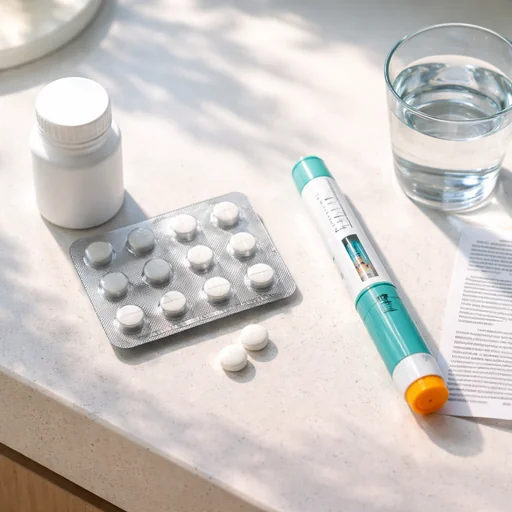
If cutting back feels harder than the tips make it sound, that is common, and it is not a willpower issue. Naltrexone is an FDA-approved medication for alcohol that softens the reward loop, so the pull toward the next drink eases over time.
Some people take a 50mg tablet about an hour before they expect to drink, so a night winds down after one or two. This is educational, not medical advice, and a clinician can help you decide whether it fits.
The Bottom Line
The real cost of drinking is bigger than any receipt, because it is charged to your wallet, your sleep, your mood, and your time all at once. Seeing the full tab is not about shame, it is about clarity.
The good news is that the entire bill runs in reverse when you cut back. You get the money, the mornings, the energy, and the calm returned to you, often faster than you would expect.
You do not have to quit everything or hit a crisis to start. Support built on clinical, neurological, and behavioral science is here whenever you want a hand, no rock bottom required.
Frequently Asked Questions
How much does the average person spend on alcohol a year?
It varies widely, but many regular drinkers spend $2,000 to $4,000 a year once rounds, tips, and delivery are included. Running your own drinks-per-week math gives you a real number.
Does drinking less actually save meaningful money?
Yes. Cutting your intake in half often frees up a thousand dollars or more a year, on top of savings on food, rideshares, and lost productivity.
What are the hidden costs of drinking besides money?
The big ones are broken sleep, low next-day energy, higher anxiety, and lost time. These rarely show up on a receipt, but they add up fast.
How many calories are in a typical drink?
Roughly 120 to 125 in a glass of wine, about 150 in a regular beer, and 200 or more in many cocktails. They add calories with almost no nutrients.
Will cutting back help me sleep better?
Usually yes. Less alcohol means deeper, less fragmented sleep, which is why most people feel more rested within the first week of drinking less.
How do I know if I am drinking too much to afford it?
If the yearly total surprises you, or the next-day costs keep piling up, that is worth a closer look. A quick online assessment can help you see where you stand.
If the full tab surprised you, it may be worth a closer look. Take an online Alcohol Use Assessment with Choose Your Horizon to see if naltrexone could help you drink less and get more back. Start your online Alcohol Use Assessment here.