A 2 minute assessment to get a personalized mental health or alcohol recovery plan.

Quitting alcohol leaves a void in your routine. Here's how to fill it with drinks and activities that actually satisfy.
What You'll Learn:
• Why finding replacements matters for successful recovery.
• Drink options that satisfy the ritual and sensory experience of alcohol.
• Activities that fill the emotional and social roles drinking once served.
• How to build sustainable new habits that don't feel like deprivation.
When you decide to stop drinking, you quickly realize that alcohol occupied more space in your life than just the liquid in your glass. It was the after-work ritual, the social lubricant, the stress reliever, the celebration marker. Simply removing it without putting anything in its place leaves a vacuum that your brain will constantly try to fill—often by returning to alcohol.
The most successful recoveries involve active replacement rather than pure subtraction. This isn't about finding a substitute that mimics alcohol's effects. It's about addressing the various needs that alcohol appeared to meet and finding healthier ways to satisfy them.
Why Replacement Matters
According to the National Institute on Alcohol Abuse and Alcoholism, alcohol affects the brain's reward system in ways that create powerful associations. When you drink in certain contexts repeatedly, your brain builds neural pathways connecting those situations with alcohol. Just being in those contexts triggers cravings.
Replacement works on several levels. It gives you something to do with your hands at a party. It provides a ritual for the end of the workday. It offers a way to celebrate or commiserate. Without these alternatives, every triggering situation becomes a white-knuckle test of willpower.
Research on habit change supports this approach. According to behavioral psychology research published in the Journal of Experimental Psychology, replacing an unwanted behavior with a new behavior is more effective than simply trying to stop the unwanted behavior. Your brain needs something to do in the situations where it expects alcohol.
Drink Replacements: Beyond Just "Not Alcohol"
The act of drinking something is deeply ingrained in social rituals and personal routines. Having a satisfying non-alcoholic option makes an enormous difference.
The Importance of Sensory Satisfaction
Part of alcohol's appeal is sensory. The fizz of a cold beer, the weight of a wine glass in your hand, the ritual of mixing a cocktail. Effective replacements acknowledge this sensory dimension rather than ignoring it.
Sparkling beverages often work well because carbonation provides oral stimulation similar to beer. The bubbles create interest that plain water lacks. Quality sparkling water, flavored seltzers, and tonic water with lime all offer this effervescence without alcohol.
The container matters too. Drinking sparkling water from a wine glass creates a different experience than drinking it from a plastic cup. Using nice glassware signals to your brain that this is a special occasion, not deprivation.
Premium Non-Alcoholic Options
The non-alcoholic beverage market has exploded in recent years. What was once limited to sugary sodas and boring mocktails now includes sophisticated options that satisfy even discerning palates.
Non-alcoholic craft beers have improved dramatically. Brands now produce NA versions with complex flavor profiles that rival their alcoholic counterparts. For beer lovers, these can fill the ritual of cracking open a cold one without the consequences.
Non-alcoholic wines and spirits have also matured as a category. While they don't perfectly replicate the experience of alcohol, many offer enough complexity and ritual to satisfy the psychological aspects of drinking. Some NA spirits are specifically designed for mixing, allowing you to make mocktails that feel genuinely special.
Warm Beverages for Comfort
For many people, alcohol serves as a warm blanket against the stresses of life. Hot beverages can provide similar comfort through different mechanisms.
Herbal teas offer both the ritual of preparation and genuine calming effects. Chamomile, in particular, contains compounds that interact with GABA receptors in ways that promote relaxation. It's not as powerful as alcohol, but it provides real physiological effects without the downsides.
Golden milk—a warm mixture of turmeric, ginger, cinnamon, and milk—has gained popularity as an evening ritual. The warm spices and creamy texture provide comfort, while the ingredients offer anti-inflammatory benefits. Making it from scratch adds ritual and intention to the experience.
Quality hot chocolate, made with real cocoa rather than sugary mixes, offers both comfort and a mild mood boost from chocolate's compounds. Like other warm beverages, the ritual of preparation and the act of slowly sipping something warm can signal to your nervous system that it's time to relax.
Creating Mocktail Rituals
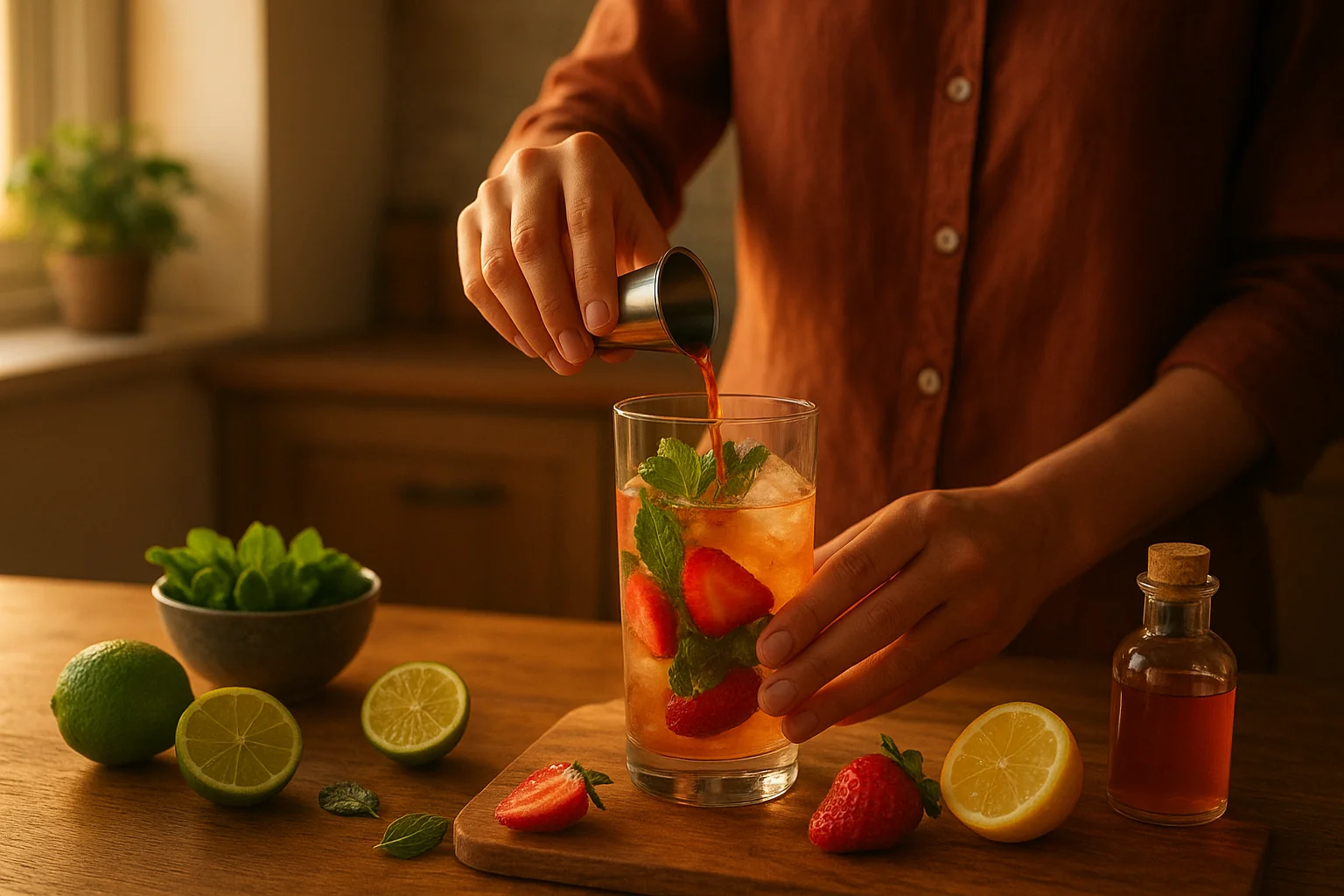
For people who enjoyed the creativity and craft of cocktails, mocktails offer a way to maintain that interest. Modern mocktail recipes go far beyond juice and soda. They incorporate bitters, fresh herbs, unusual syrups, and sophisticated techniques.
The act of mixing a complex drink serves multiple purposes. It's something to do during the trigger time. It engages your hands and your attention. It produces something special that feels like a treat rather than a compromise.
For more comprehensive guidance on beverages that help manage the transition, see our guide to alcohol alternatives.
Activity Replacements: Filling Time and Meeting Needs
Alcohol doesn't just fill a glass. It fills time, provides structure, and serves emotional functions. Activities can address these needs in healthier ways.
Replacing the After-Work Ritual
For many people, the transition from work to relaxation hinged on alcohol. The first drink signaled the end of productivity and the beginning of personal time. Without it, the boundary between work and life blurs.
Physical activity works remarkably well as a replacement ritual. Exercise triggers endorphin release that genuinely improves mood—no hangover required. Even a short walk around the block can serve as a transition between work mode and home mode.
The key is creating a clear demarcation. This might be changing clothes, taking a shower, doing a brief meditation, or preparing an elaborate non-alcoholic drink. The specific activity matters less than its function as a signal that work time is over.
Replacing Social Lubrication
Alcohol's role in social situations is among the hardest to replace. It genuinely reduces social anxiety by dampening the brain's threat-detection systems. Without it, social situations can feel more charged.
Several strategies help. First, choosing different social activities matters. Meeting friends for coffee or breakfast instead of at bars changes the dynamic entirely. Activity-based socializing—hiking, bowling, game nights, cooking together—provides focus beyond conversation and removes alcohol from the center of the gathering.
Second, developing social skills without chemical assistance takes practice but yields lasting benefits. Many people find that their social anxiety actually decreases over time without alcohol, once they learn to navigate situations sober and discover that they can, in fact, be engaging without chemical help.
Third, being honest about recovery often improves social situations. True friends want to support your health. Explaining that you're not drinking currently usually generates more support than awkwardness.
Replacing Emotional Regulation
Perhaps alcohol's most insidious function is emotional regulation. Bad day at work? Drink. Relationship conflict? Drink. Celebrating success? Also drink. Alcohol becomes the all-purpose emotional tool.
Learning to tolerate and process emotions without numbing them is essential recovery work. This doesn't mean white-knuckling through every feeling. It means developing a toolkit of healthy coping strategies.
Physical activity remains powerful here. According to the American Psychological Association, exercise reduces stress hormones and triggers mood-improving neurochemical changes. A run or gym session after a difficult day provides genuine stress relief.
Journaling helps many people. Writing about difficult emotions creates distance from them and often reveals patterns or insights that weren't apparent before. Even a few minutes of unstructured writing can shift emotional states.
Social connection—talking to friends, calling family, attending support groups—addresses emotions through relationship rather than substance. Humans are wired for co-regulation, and sharing difficulties with others genuinely lightens emotional loads.
Replacing the Celebration Marker
Alcohol has colonized celebration in American culture. Weddings, promotions, holidays, and birthdays all seem to require alcohol. Finding ways to mark occasions without it requires intentionality.
Special experiences can replace special drinks. Instead of champagne, celebrate with a fancy meal, an unusual activity, or a gift to yourself. The point of celebration is feeling good about an achievement—alcohol is just one way to create that feeling.
Premium non-alcoholic options also work here. Having an expensive bottle of NA wine or craft mocktail ingredients specifically for celebrations maintains the ritual while changing the substance.
Building Sustainable Habits
Replacements work best when they become genuine habits rather than constant conscious choices.
The Habit Loop Applied
According to habit research, behaviors have three components: cue, routine, and reward. Alcohol habits might look like: stressful workday (cue), pour a drink (routine), feel relaxed (reward). Effective replacement keeps the cue and the reward but changes the routine: stressful workday (cue), go for a walk (routine), feel relaxed (reward).
For this to work, the replacement routine must actually deliver a reward. This is why "just don't drink" fails—there's no reward for doing nothing. The replacement needs to feel good.
Making It Easy
Behavior change research shows that convenience matters enormously. If alcohol is easy to access and alternatives require effort, alcohol will win during moments of low willpower.
Practical steps help: Remove alcohol from your home. Stock your refrigerator with appealing non-alcoholic options. Keep your workout clothes accessible. Have tea or mocktail ingredients ready to go. Reduce friction for the new behaviors and increase friction for the old ones.
Tracking and Celebrating Progress
Visible progress motivates continued effort. Whether you use an app, a journal, or marks on a calendar, tracking your alcohol-free days provides concrete evidence of change. Celebrating milestones—one week, one month, 100 days—reinforces the new identity you're building.
During your first week without alcohol, every day is an achievement. Recognizing this builds momentum for the longer journey.
When Lifestyle Changes Aren't Enough
For some people, finding replacements and building new habits is sufficient to maintain sobriety. For others, especially those with more severe alcohol use disorder, lifestyle changes alone can't overcome the neurological pull of addiction.
If you've tried replacement strategies but find yourself returning to alcohol despite genuine effort, medication may help. Naltrexone is an FDA-approved medication that reduces alcohol cravings and blocks some of the rewarding effects of drinking. It doesn't replace lifestyle changes but works alongside them, making your replacement strategies more effective by reducing the neurological pull toward alcohol.
The combination of medication support and behavioral changes tends to produce better outcomes than either approach alone. This isn't a sign of weakness—it's recognition that addiction has biological components that respond to biological interventions.
Common Mistakes to Avoid
Several pitfalls can undermine replacement strategies.
Choosing Replacements You Don't Actually Enjoy
If you hate herbal tea, forcing yourself to drink it won't create a sustainable habit. Find replacements that genuinely appeal to you. This might require experimentation—trying different beverages, testing various activities, exploring what actually makes you feel good.
Expecting Instant Satisfaction
Alcohol's effects are immediate and powerful. Most replacements work more subtly and require repetition to become satisfying. Exercise might not feel as immediately rewarding as a drink, but with consistent practice, it becomes something you crave and enjoy.
Not Addressing Underlying Issues
If you were drinking to manage depression, anxiety, or trauma, removing alcohol without addressing those underlying issues leaves them to resurge. Professional support—therapy, medication for mental health conditions, or both—may be necessary alongside replacement strategies.
Isolating
Attempting to quit in isolation makes everything harder. Connection with others who support your goals—whether friends, family, support groups, or healthcare providers—improves outcomes significantly.
Summary
Replacing alcohol successfully requires addressing multiple dimensions:
Drink Replacements: Sparkling beverages, premium NA options, warm comfort drinks, and crafted mocktails can satisfy the sensory and ritual aspects of drinking. Quality and presentation matter—make your alternatives feel special.
Activity Replacements: Physical exercise, new social activities, emotional regulation techniques, and alternative celebration rituals can fill the functional roles that alcohol served. Building genuine habits takes time but creates lasting change.
Sustainability: Remove friction from healthy choices and add friction to unhealthy ones. Track progress and celebrate milestones. Expect gradual improvement rather than instant transformation.
Additional Support: When lifestyle changes aren't enough, medication like naltrexone can reduce cravings and make replacement strategies more effective. Combining behavioral and medical approaches often produces the best results.
If you're looking to replace alcohol in your life and want support in making that transition, take an Alcohol Use Assessment to explore whether naltrexone might help you succeed.