A 2 minute assessment to get a personalized mental health or alcohol recovery plan.

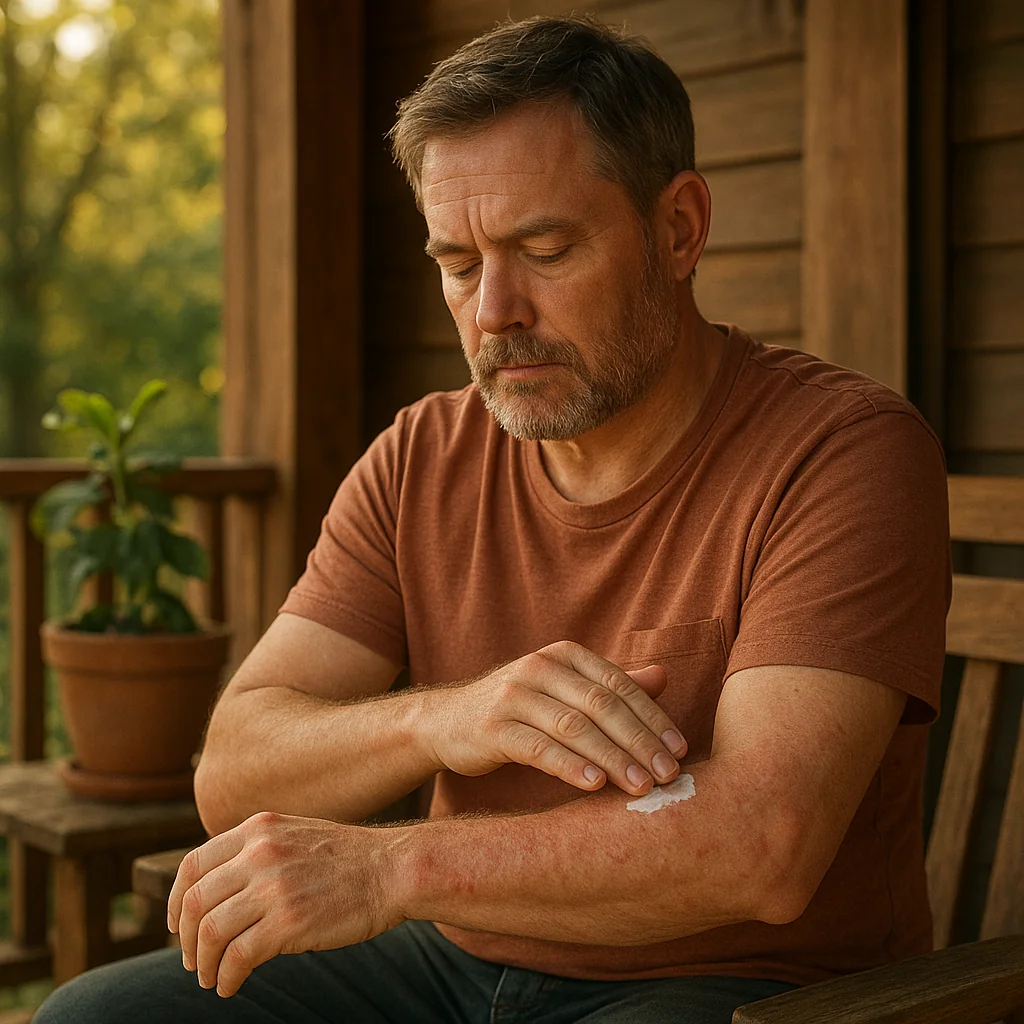
The evidence does not say alcohol causes eczema for everyone, but for plenty of people a few drinks reliably brings on the itch, the redness, and the dry, tight skin of a flare.
What You'll Discover:
• Why the research on alcohol and eczema is genuinely mixed.
• How alcohol triggers histamine release and the flush that itches.
• The way drinking weakens your skin barrier and dries you out.
• How to figure out whether alcohol is your personal trigger.
• What tends to change for your skin when you cut back.
If you have eczema, you have probably learned to read your own skin. Certain soaps, fabrics, stress, and weather all earn a spot on your personal list of triggers. For a lot of people, alcohol quietly belongs there too.
Here is the honest version. Alcohol is not a proven cause of eczema across the board. The population studies are mixed. But many people with eczema notice a clear, repeatable link between drinking and their next flare.
That gap between the research and lived experience is exactly what this article is about. We will walk through what alcohol does to your skin, why reactions vary so much, and how to test whether it matters for you.
Why the Evidence Is Genuinely Mixed
It would be easier if studies all pointed the same direction. They do not. Some research links drinking to more skin problems, and some finds no clear connection at all.
A large population study looking at risk factors for hand eczema in 900 people found no statistically significant association between hand eczema and alcohol consumption.
At the same time, clinical reviews of lifestyle factors in atopic dermatitis treat alcohol as one of several modifiable influences worth discussing with patients.
Why the disagreement. Eczema is not one single condition with one single cause. It is a barrier-and-immune problem shaped by genetics, environment, and dozens of triggers that differ from person to person.
When you average thousands of very different people together, a real effect in some of them can wash out. That is likely what is happening here. Alcohol may matter a lot for one person and barely at all for another.
So the most accurate framing is not "alcohol causes eczema" or "alcohol has nothing to do with eczema." It is that alcohol is a possible personal trigger, and the only way to know your case is to watch your own skin.
Histamine and the Alcohol Flush That Itches
One of the clearest links between drinking and skin reactions runs through histamine. Histamine is the same molecule behind allergic itch and hives, and alcohol can set it loose.
When your body breaks down alcohol, it produces acetaldehyde, a toxic intermediate. In people who clear acetaldehyde slowly, it builds up and can trigger skin reactions.
Research on the flushing response shows that acetaldehyde can prompt skin mast cells to release histamine along with other inflammatory mediators, producing warmth, redness, and itch.
For someone with eczema, that extra histamine lands on skin that is already primed to itch and inflame. The flush that a non-eczema drinker shrugs off can tip you into scratching, and scratching is what turns an itch into a flare.
Some drinks carry histamine of their own, or push your body to make more. Red wine, beer, and aged or fermented ingredients are common culprits people report.
If your face goes hot and itchy after wine in particular, histamine is a likely part of the story.
The Skin Barrier, Ceramides, and Dehydration
Eczema is, at its core, a barrier problem. The outer layer of your skin is built like a brick wall, with skin cells as bricks and a fatty mortar holding them together. In eczema, that mortar is faulty.
A big part of that mortar is made of ceramides, the lipids that lock moisture in and keep irritants out.
Studies on ceramides and the skin barrier in atopic dermatitis show these lipids are reduced and altered in eczema-prone skin, which is why it loses water and reacts so easily.
Alcohol does not help a barrier that is already leaky. Heavy or regular drinking adds inflammation and oxidative stress, both of which can further weaken an already fragile barrier.
Then there is dehydration. Alcohol is a diuretic, so it pulls water out of your body, including the water your skin needs to stay supple. Dry skin is itchy skin, and for eczema that dryness is often the spark.
Put those together and you get a barrier that is already struggling, hit with more inflammation, less moisture, and a histamine nudge.
It is not hard to see why a night of drinking can show up on your skin the next morning. We go deeper into this in our overview of how alcohol affects your skin.
Here is a quick map of the main pathways and what each one does to eczema-prone skin.
Alcohol, Sleep, and the Itch Threshold
There is one more pathway that gets overlooked. Alcohol disrupts sleep, and sleep is quietly central to how eczema behaves.
A drink or two might help you fall asleep faster, but it fragments the deeper stages of sleep later in the night. You wake less rested even if you do not remember waking.
Poor sleep raises stress hormones and lowers your itch threshold. The same patch of skin that felt manageable on a good night's rest feels maddening after a broken one.
That sets up a frustrating loop. You drink, you sleep worse, you itch more, you scratch, and the flare gets worse. Cutting back on alcohol breaks the loop at the start.
Why Reactions Vary So Much From Person to Person
If your partner can drink wine all evening with no skin trouble while two glasses leaves you flushed and itchy, genetics are a big reason why.
Some people carry gene variants that slow down how fast they clear acetaldehyde. Slower clearance means more histamine release and a stronger flush. This is especially common in people of East Asian descent.
Your eczema baseline matters as much as your genes. Skin that is already inflamed and dry has very little buffer, so a small trigger pushes it over the edge.
Triggers also stack. Alcohol on its own might do little, but alcohol on top of a stressful week, dry winter air, and a missed moisturizer can be the tipping point. That is why the same drink can feel harmless one week and set you off the next.
How to Tell If Alcohol Is Your Personal Trigger
Because the science cannot answer this for you individually, the smartest move is to run a simple experiment on yourself. Your own skin is the most reliable data you have.
Keep a two-week log. Each day, jot down what you drank, how much, and a quick rating of your skin the next day. Note itch, redness, and dryness on a simple scale of one to five.
Look for patterns rather than single events. One flare after one glass of wine could be a coincidence. The same reaction three or four times is a signal worth taking seriously.
Pay attention to drink type too. If beer and red wine spike your itch but a clear spirit with soda does not, that points toward histamine-rich drinks as your particular problem.
If you want to be more rigorous, try a short break. Two or three weeks alcohol-free gives your skin a clean baseline. If your eczema calms during the break and stirs when you start again, you have your answer.
What Cutting Back Can Do for Your Skin
If your log points to alcohol, the good news is that this trigger is one you can actually control. Unlike pollen or weather, drinking is a choice you can adjust.
Many people notice less itch and redness within a week or two of cutting back. With fewer histamine surges and better hydration, the skin gets fewer reasons to flare.
Hydration is often the fastest win. Without alcohol pulling water out, your skin holds moisture better, and supple skin itches less. Your moisturizer also works harder when it is not fighting a diuretic.
Sleep usually improves too, and that matters more than people expect. Alcohol fragments sleep, and poor sleep lowers your itch threshold and slows healing. Better rest gives your barrier time to repair.
These skin benefits sit inside a much longer list. We cover the wider payoff in our guides to alcohol and facial inflammation and the broader benefits of drinking less alcohol.
You do not have to quit completely to see a difference. Even trimming how much and how often you drink lightens the load on your skin.
It also stacks well with the rest of your routine. A gentle, ceramide-rich moisturizer works far better when your skin is hydrated and not fighting a fresh histamine surge from the night before.
How to Drink Less Without White-Knuckling It
Knowing alcohol triggers your eczema and actually cutting back are two different things, especially when drinking is tied to relaxing or socializing. The goal is a level that works for your skin and your life.
Start with the basics. Decide on a drink limit before you go out, swap every other drink for water, and protect a few alcohol-free nights each week. Our guide on how to start drinking less lays out practical ways to make those habits stick.
If your skin reacts most to certain drinks, lean into lower-histamine choices on the nights you do drink. It is a small switch that can spare you a flare.
For some people, the issue is not knowledge but cravings, and that is not a willpower failure. Cravings have real biology behind them, and fighting them on grit alone is draining.
Medication can take some of that weight off. Naltrexone is an FDA-approved option that softens the reward and cravings tied to alcohol, which makes drinking less feel more doable.
It will not treat eczema directly. What it can do is help you reduce a trigger you have identified, so your skin gets one less thing working against it. A clinician can tell you whether it fits your situation.
When to Loop In a Doctor
Most alcohol-related flares settle with simple changes, but some skin reactions deserve a professional look. Use your judgment, and err toward asking.
See a dermatologist if your eczema is spreading, weeping, crusting, or showing signs of infection. Skin that is broken from scratching can get infected, and that needs treatment beyond moisturizer.
Talk to a clinician too if your skin reacts hard and fast to alcohol with hives, swelling, or trouble breathing. That can signal a true alcohol or ingredient allergy, which is different from an eczema flare and needs proper evaluation.
And if you have realized you drink more than you would like, a clinician can help with that part directly. There is no shame in asking, and you do not need a dramatic story to qualify for support.
The Bottom Line
Alcohol is not a proven cause of eczema for everyone, and the population studies are honestly mixed. But for many people it is a real, repeatable personal trigger through histamine, dehydration, and barrier stress.
The way to know your case is to watch your own skin. A two-week log or a short alcohol-free trial will tell you more than any general statistic can.
If you find that alcohol is hard to cut back on, that is common, and there is real support. You do not need to hit a crisis point to deserve help drinking less.
Your skin is giving you useful information. Listening to it, and adjusting one trigger you can actually control, is a reasonable and kind thing to do for yourself.
Frequently Asked Questions
Can alcohol cause an eczema flare-up?
For some people, yes. Alcohol can release histamine, dehydrate the skin, and stress an already weak barrier, all of which can spark itch and redness. Reactions vary a lot from person to person.
Which alcohol is worst for eczema?
Many people react most to red wine, beer, and aged or fermented drinks, which tend to be higher in histamine. Clear spirits with a simple mixer are sometimes better tolerated, but it depends on the individual.
How long after quitting alcohol does eczema improve?
Many people notice less itch and dryness within one to two weeks of cutting back. Better hydration and sleep usually show up first, with steadier skin over the following weeks.
Does alcohol weaken the skin barrier?
It can. Alcohol adds inflammation and acts as a diuretic, and people with eczema already have a barrier low in ceramides. That combination can leave skin drier and more reactive.
Is it the alcohol or the sugar in drinks that triggers eczema?
Both can play a role. Alcohol drives histamine and dehydration, while sugary mixers can add inflammation. Tracking your specific drinks helps you tell which matters most for you.
If you have spotted alcohol as a trigger and want help drinking less, you can take an online Alcohol Use Assessment with Choose Your Horizon to see whether naltrexone could be a good fit for you. Start your assessment here.