A 2 minute assessment to get a personalized mental health or alcohol recovery plan.

Alcohol does not just dehydrate your skin. It triggers a genuine inflammatory response through your gut, immune system, and blood vessels that shows up on your face, and understanding those pathways is the key to reversing it.
What You'll Learn:
• How the gut-skin axis turns alcohol into visible facial inflammation
• The role of cytokines, histamine, and vasodilation in causing redness and swelling
• Why facial inflammation is different from simple bloating and requires a different approach
• Which types of alcohol cause the most facial inflammation and why
• How chronic inflammation differs from the morning-after acute kind
• A realistic recovery timeline for what to expect when you cut back
If your face looks persistently red, puffy, or irritated and you suspect alcohol might be the reason, you are probably right. The explanation goes deeper than most people realize.
Alcohol does not just dehydrate your skin or make you retain water overnight. It triggers a genuine inflammatory response that starts in your gut, activates your immune system, and shows up on your face. No amount of moisturizer or cold water can fully address it.
This article explains the science behind alcohol-related facial inflammation in plain language. You will learn what is actually happening inside your body, why it differs from simple bloating, which drinks are the worst offenders, and what the research says about recovery.
Nothing here is meant to shame anyone about their drinking. Understanding the process is the first step toward feeling and looking better.
This article is for educational purposes and is not a substitute for medical advice. If you have concerns about your skin, your drinking, or your health, please talk to a qualified clinician.
What Alcohol-Related Facial Inflammation Actually Looks Like
Most people know the puffy, swollen face that greets them after a night of heavy drinking. But alcohol-related facial inflammation is not the same as next-day bloating.
It tends to be more persistent, more uncomfortable, and harder to resolve with simple fixes like water or sleep.
Signs of inflammatory facial changes from alcohol include:
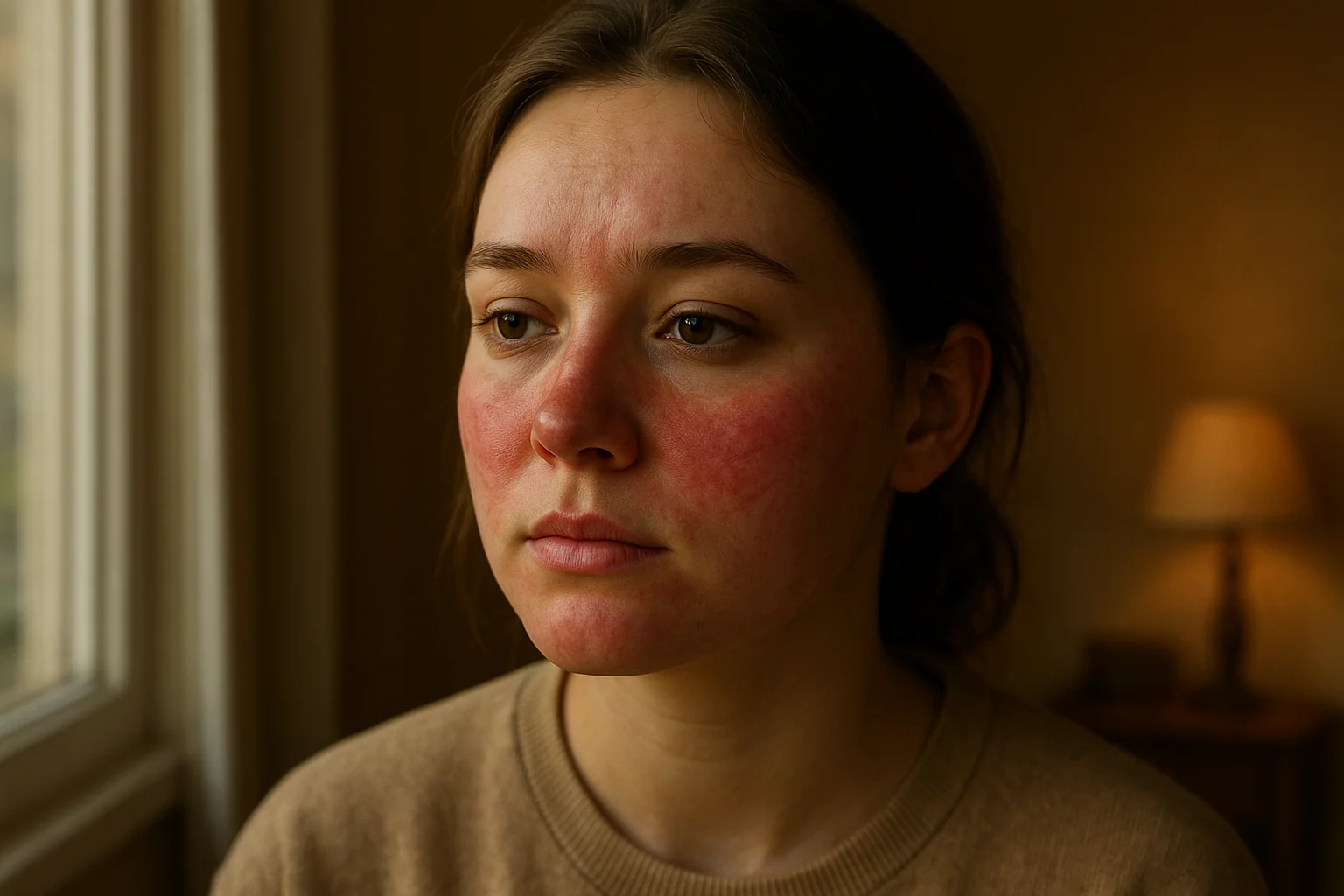
• Persistent redness across the cheeks, nose, and forehead that lingers well beyond the morning after
• A feeling of warmth or heat in the skin, even without sun exposure
• Swelling that does not fully resolve within 24 to 48 hours of your last drink
• Rosacea flares, including visible broken capillaries and a rough, textured skin surface
• Perioral dermatitis, a red bumpy rash around the mouth and chin
• Worsening acne or skin sensitivity that cycles with drinking patterns
If any of this sounds familiar, you are likely dealing with an immune-mediated inflammatory response, not just fluid retention. As we discuss in our guide to alcohol and face bloat, bloating and inflammation can occur at the same time. But they have different underlying mechanisms and require different approaches to resolve.
How Alcohol Triggers Inflammation in Your Face
To understand why alcohol inflames your face, it helps to understand the three main pathways through which alcohol activates your body's inflammatory response.
The Gut-Skin Axis: From Leaky Gut to Inflamed Skin
One of the most important and least discussed mechanisms behind alcohol-related facial inflammation is the gut-skin axis. This is the bidirectional relationship between your digestive tract and your skin, mediated by the immune system.
Here is what happens when you drink regularly. Alcohol damages the lining of your small intestine, weakening the tight junctions between intestinal cells. Alcohol increases intestinal permeability, a condition sometimes called "leaky gut."
When those intestinal walls become more porous, bacterial fragments called endotoxins leak from the gut into the bloodstream.
Your immune system recognizes these endotoxins as foreign invaders and mounts a defense. White blood cells release pro-inflammatory signaling molecules called cytokines, including tumor necrosis factor-alpha (TNF-alpha) and interleukin-6 (IL-6).
These cytokines circulate through your entire body. The face, with its dense network of blood vessels close to the skin's surface, is one of the first places where this systemic inflammation becomes visible.
In other words, the redness and swelling you see in your face may actually originate in your gut. The alcohol compromised your intestinal barrier, toxins slipped through, your immune system sounded the alarm, and the inflammation showed up on your face.
Cytokines, Histamine, and the Immune Cascade
Beyond the gut-skin pathway, alcohol also triggers inflammation through histamine release. Histamine is a chemical your body produces during immune responses. It is also naturally present in many alcoholic beverages, especially fermented ones like wine and beer.
When you drink, you get a double dose of histamine. Your body releases more of it as part of the immune response to alcohol, and the drink itself may contain significant histamine levels.
This flood of histamine causes blood vessels in the face to dilate rapidly, producing flushing, redness, warmth, and swelling.
For some people, alcohol also impairs the enzyme (diamine oxidase, or DAO) that breaks histamine down. According to research published in the National Library of Medicine, this means histamine builds up faster than the body can clear it, prolonging and intensifying the inflammatory response.
This is why some people notice that their facial redness and puffiness last well into the next day or even longer.
The combination of gut-derived endotoxins activating cytokines and excess histamine dilating blood vessels creates a compounding inflammatory effect. It is not just one mechanism. It is several working together, which is why alcohol-related facial inflammation can be so stubborn.
Vasodilation and Blood Vessel Damage
Every time you drink, alcohol causes the blood vessels in your face to dilate. In the short term, this produces the familiar flushed look. But with repeated episodes of vasodilation, the tiny capillaries in your face can lose their ability to constrict back to their normal size.
Over time, this leads to permanently visible blood vessels (telangiectasia), a ruddy complexion that persists even on days when you have not been drinking, and in severe cases, tissue thickening around the nose and cheeks.
This progressive vascular damage is inflammation-driven. Each episode of drinking reignites the cycle of dilation, immune activation, and tissue stress.
Bloating vs. Inflammation: Why the Difference Matters
Many people use "bloating" and "inflammation" interchangeably when talking about their face after drinking. These are distinct processes, and understanding the difference matters for finding the right solution.
Facial bloating is primarily about water retention. Alcohol is a diuretic, meaning it initially causes your body to lose fluid. In response, your body overcompensates by holding onto water, particularly in the face and around the eyes.
This type of puffiness typically resolves within 24 to 72 hours with adequate hydration, reduced sodium intake, and time.
Facial inflammation is an immune response. It involves the activation of cytokines, histamine release, and vascular changes described above. Inflammation may coincide with bloating, but it does not resolve as quickly or as easily.
The redness, warmth, and texture changes associated with inflammation can persist for days, weeks, or indefinitely if drinking continues.
A simple way to tell which you are dealing with: if your face returns to normal within a day or two of not drinking and responds well to hydration and rest, you are likely looking at bloating.
If redness, warmth, skin sensitivity, or textural changes linger even after a few days of not drinking, inflammation is likely playing a significant role.
As we explore in our article on alcohol's effects on skin, the inflammatory component drives the more concerning long-term skin changes. It also tends to get worse over time rather than better if drinking patterns stay the same.
Which Types of Alcohol Cause More Facial Inflammation
Not all alcoholic drinks trigger the same degree of facial inflammation. The differences come down to three key factors: histamine content, congeners, and sulfites.
Red wine and beer tend to cause the most facial inflammation. Both are fermented beverages with naturally high histamine levels. Red wine also contains significant amounts of tyramine, another compound that can trigger flushing and headaches.
Beer adds the additional factor of gluten-related inflammation for people with sensitivities.
Champagne and sparkling wines can be particularly problematic because carbonation speeds alcohol absorption. The inflammatory cascade begins faster and may feel more intense.
Darker spirits like bourbon, scotch, and brandy contain higher levels of congeners, which are chemical byproducts of fermentation and aging. Congeners contribute to inflammation and are a well-known factor in hangover severity. The darker the spirit, the more congeners it typically contains.
Clear spirits such as vodka and gin generally cause less facial inflammation than wine, beer, or dark spirits. They are lower in histamine, congeners, and sulfites.
However, "less" does not mean "none." Alcohol itself, regardless of the type, still triggers the gut permeability and immune activation pathways described earlier.
For a deeper look at how different beverages compare, our guide to the worst alcohols for inflammation breaks down the specifics in more detail.
The bottom line is that switching from red wine to vodka may reduce your facial inflammation somewhat. But the most reliable way to reduce alcohol-related facial inflammation is to reduce the total amount of alcohol you consume.
Chronic vs. Acute Facial Inflammation from Alcohol
It is worth distinguishing between what happens to your face after a single heavy night of drinking and what happens after months or years of regular consumption.
Acute facial inflammation is what most people notice the morning after drinking. Redness, puffiness, warmth, and skin sensitivity show up within hours and may take one to three days to resolve. While uncomfortable and frustrating, acute inflammation generally does not cause permanent changes if it happens infrequently.
Chronic facial inflammation is a different story. When the inflammatory cycle gets triggered repeatedly, week after week and month after month, it can lead to lasting changes in the skin and underlying tissue.
These chronic changes may include persistent rosacea that no longer responds well to topical treatments, permanently visible broken capillaries across the cheeks and nose, thickened or coarsened skin texture, rhinophyma (a gradual thickening and reddening of the nose), and perioral dermatitis that flares with every drinking episode.
The transition from acute to chronic inflammation is gradual. That is one reason it catches people off guard. You get used to the morning-after redness. You stop noticing that it takes a little longer to resolve each time.
Then one day you realize that your face looks different even on days you have not been drinking.
Research published in Alcohol Research: Current Reviews documents how chronic alcohol consumption shifts the body's immune system toward a pro-inflammatory baseline. Over time, it takes less alcohol to trigger a more intense inflammatory response.
This is why many long-term drinkers report that their skin has become progressively more reactive, even if their drinking has not changed much.
If you are noticing these kinds of changes, it is worth taking seriously. Chronic facial inflammation is your body's visible signal that systemic inflammation is occurring internally as well.
How to Reduce Alcohol-Related Facial Inflammation
The good news is that alcohol-related facial inflammation is not permanent in most cases. The body is remarkably good at healing when the source of inflammation is addressed.
Cutting Back on Alcohol: The Most Effective Single Step
No topical cream, supplement, or diet change will outperform simply reducing the amount of alcohol you consume. This is not a moralizing statement. It is the biological reality.
If alcohol is driving the inflammatory cascade through your gut, immune system, and blood vessels, the most direct way to interrupt that cascade is to drink less.
For many people, this is easier said than done. If cutting back feels difficult despite wanting to, that is not a failure of willpower. It may be a sign that the neurological reward pathways associated with drinking have become deeply entrenched.
That is a medical issue, not a character issue.
Naltrexone is an FDA-approved medication that can help. It works by blocking the opioid receptors that mediate the pleasurable "buzz" from alcohol, gradually weakening the brain's association between drinking and reward.
According to a large-scale meta-analysis published in JAMA spanning over 20,000 participants across 118 clinical trials, naltrexone significantly reduces drinking frequency and heavy drinking days. By helping you drink less, it directly addresses the root cause of alcohol-related facial inflammation.
Anti-Inflammatory Nutrition
While you are reducing your alcohol intake, supporting your body with anti-inflammatory foods can help accelerate recovery. Focus on:
• Omega-3 fatty acids from fish, walnuts, and flaxseed, which help counteract pro-inflammatory cytokines
• Colorful fruits and vegetables rich in antioxidants, particularly berries, leafy greens, and tomatoes
• Probiotic-rich foods like yogurt, kefir, and fermented vegetables, which support gut barrier repair
• Adequate water intake, which supports both detoxification and skin hydration
The goal is not a restrictive diet but a general shift toward foods that support gut healing and immune balance.
Topical Skincare Strategies
Topical care will not resolve the internal inflammation, but it can help manage visible symptoms and support the skin's barrier function while it heals.
A gentle, fragrance-free cleanser and a ceramide-based moisturizer form a good foundation. If you are dealing with rosacea flares, look for products formulated for sensitive or rosacea-prone skin.
Avoid harsh exfoliants, alcohol-based toners, and heavily fragranced products.
Sunscreen is particularly important. Inflamed skin is more vulnerable to UV damage, and sun exposure can worsen redness and capillary visibility. A broad-spectrum SPF 30 or higher, applied daily, can make a meaningful difference.
For persistent or severe skin changes, a dermatologist can offer targeted treatments. But addressing the underlying cause will always be the foundation of any effective plan.
Recovery Timeline: What to Expect When You Cut Back
One of the most motivating aspects of reducing alcohol is how quickly your face can begin to change. The skin is one of the first places where the benefits of cutting back become visible.
Days 3 to 7: The acute inflammatory response begins to calm. Morning-after redness and puffiness become less severe or disappear. Your skin may still feel dry or sensitized, but the baseline "heat" in your face starts to cool down.
Weeks 2 to 4: This is when many people notice the most dramatic improvements. As gut barrier function begins to repair, the systemic inflammatory load decreases. Rosacea flares may become less frequent.
Skin tone starts to even out. Friends or coworkers may comment that you look "rested" or "healthier" without knowing why.
Months 1 to 3: Deeper healing occurs. Broken capillaries may become less prominent as the vascular system stabilizes. Skin texture improves as collagen production, which alcohol suppresses, begins to recover. Chronic conditions like perioral dermatitis may significantly improve or resolve entirely.
Months 3 to 6: For people who have been drinking heavily for years, this is when the more stubborn changes continue to improve. Some vascular damage may be permanent, but many people are surprised by how much recovery is possible given enough time and sustained reduction.
As we discuss in our article on how your face changes when you stop drinking, the transformation can be remarkable. Many people who reduce or quit drinking describe looking years younger within a few months.
That is not magic. Their body finally has the opportunity to repair the inflammatory damage that was accumulating under the surface.
It is worth noting that if you have been drinking heavily for a long time, stopping abruptly can cause serious withdrawal symptoms. Always talk to a healthcare provider before making sudden changes to your drinking patterns.
Your Face Is Telling You Something Worth Listening To
If you have been noticing persistent redness, swelling, warmth, or skin changes connected to your drinking, your face is giving you honest feedback about what is happening inside your body.
The inflammation you see on the surface reflects real immune activation, gut barrier disruption, and vascular stress happening beneath it.
That is not a reason to panic. It is a reason to pay attention.
The encouraging reality, backed by the research reviewed by the National Institutes of Health, is that alcohol-related inflammation is largely reversible. When you reduce or eliminate the source, the gut heals, the immune system recalibrates, and the skin recovers.
Most people see meaningful improvements within weeks, and the changes continue to compound over months.
You do not need to be in crisis to take this seriously. You do not need to label yourself anything.
You simply need to recognize that your body is asking for a change, and that effective, evidence-based help exists to make that change more achievable than willpower alone.
If you are curious about whether a medication-assisted approach could support you in drinking less, Choose Your Horizon offers a quick, discreet online Alcohol Use Assessment to help you explore whether naltrexone could be a good fit.