A 2 minute assessment to get a personalized mental health or alcohol recovery plan.

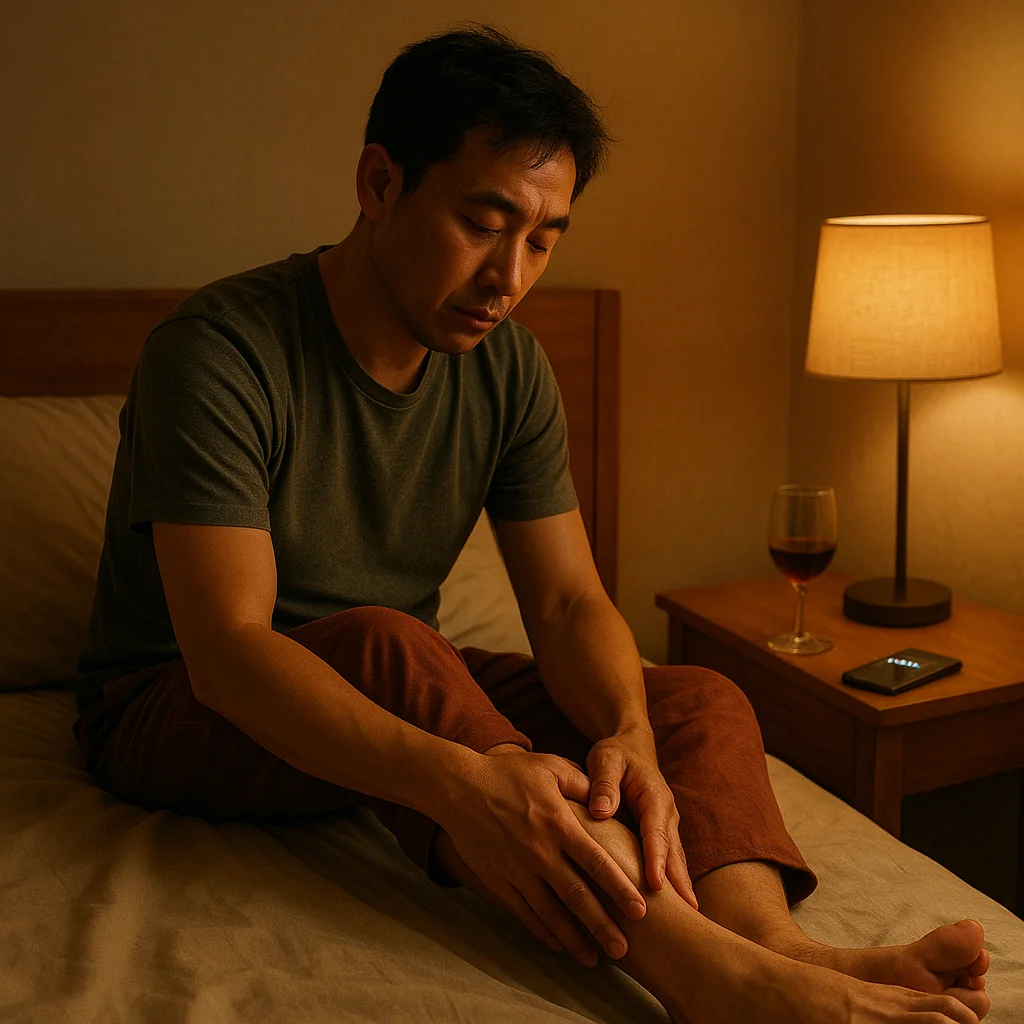
If your legs get more restless on the nights you drink, you are not imagining it. Alcohol disrupts the same dopamine signals and sleep cycles that keep restless legs quiet.
What You'll Discover:
• What restless legs syndrome is and why it flares at night.
• How alcohol disrupts the dopamine signaling tied to restless legs.
• Why evening drinking fragments your sleep and makes symptoms worse.
• How much earlier to stop drinking before bed.
• Practical steps to calm restless legs and sleep better.
You finally get into bed, and your legs start up. That deep urge to move, the crawling or pulling feeling, the relief that only comes when you shift or kick.
And if you have noticed it gets worse on the nights you had a few drinks, there is a real reason behind it.
Restless legs syndrome and alcohol are connected through brain chemistry and sleep, not bad luck. The encouraging part is that this is one of the more changeable triggers.
Once you understand the mechanism, it gets much easier to do something about it.
What Restless Legs Syndrome Actually Is
Restless legs syndrome, sometimes called Willis-Ekbom disease, is a neurological condition. It creates an uncomfortable urge to move the legs, usually paired with sensations people describe as crawling, aching, pulling, or creeping.
The hallmark is that symptoms show up at rest and ease when you move. That is why it tends to strike in the evening and at night, right when you are trying to wind down or fall asleep.
According to the National Institute of Neurological Disorders and Stroke, RLS affects a meaningful slice of adults and shows up more often in women. It ranges from a mild nuisance to a nightly problem that wrecks sleep.
A leading explanation involves dopamine, a brain chemical that helps control smooth, coordinated movement. In RLS, dopamine signaling appears to run less smoothly, especially as the day winds down.
Iron, which the brain needs to make dopamine, also plays a part.
That dopamine connection is exactly where alcohol enters the picture. To see why a drink can make your legs worse, it helps to look at what alcohol does to dopamine in the hours after you drink it.
How Alcohol Disrupts the Dopamine Behind Restless Legs
Alcohol is famous for the short-lived dopamine bump it gives you, the pleasant buzz of the first drink or two. That bump is part of why drinking can feel rewarding in the moment.
The problem is what comes after. Once the alcohol clears, dopamine activity dips below its normal baseline. Your brain overshoots in one direction, then drops in the other.
For someone with restless legs, that rebound dip lands at the worst possible time. Researchers studying dopamine in restless legs syndrome describe a dopamine system that is already running unevenly.
Add a substance that swings dopamine up and then down, and the evening flare can get more intense.
This is why a nightcap can backfire. It might feel relaxing while you sip it, but it sets up a dip in the very system that keeps your legs calm.
Large studies on lifestyle and RLS back this up. Research tracking lifestyle factors and the risk of restless legs syndrome found that habits like heavier drinking, smoking, and inactivity were tied to a higher chance of developing RLS over time.
That does not mean one glass dooms anyone. It means alcohol is a real, measurable contributor, and it happens to be one you can adjust. The other half of the story is what alcohol does to your sleep.
The Sleep Problem: Why Evening Drinking Fragments Your Night
There is a second mechanism, and for restless legs it might matter even more. Alcohol wrecks the quality of your sleep, even when it helps you fall asleep faster.
A drink before bed acts as a sedative early on. You may drift off quickly. But as your body processes the alcohol over the next several hours, sleep turns shallow and broken.
Research on how alcohol disrupts sleep homeostasis shows a clear pattern. Alcohol deepens sleep in the first half of the night, then triggers a rebound in the second half, with more awakenings and lighter, fragmented sleep.
For restless legs, fragmented sleep is a double hit. The more you surface toward wakefulness, the more chances your legs have to start up and pull you fully awake. Each flare can then keep you up even longer.
We go deeper into this cycle in our guide to how alcohol affects sleep, but the short version is simple. Alcohol trades a faster start for a worse second half of the night.
It is worth saying that this fragmentation hurts even people without RLS. They just feel it as grogginess and a foggy morning. If your legs are already prone to acting up, those extra awakenings turn into extra flares.
Here is how the main factors line up.
Looking at the table, a pattern jumps out. Almost everything alcohol does to help you in the moment comes with a cost a few hours later, right when restless legs are most active.
Why Timing Matters Most
If alcohol and restless legs are linked through dopamine and sleep, then when you drink becomes one of the biggest levers you have.
A drink right before bed is close to a worst case. It lands the dopamine rebound and the fragmented sleep squarely in the hours when your legs are most likely to act up.
Pushing your last drink earlier gives your body time to clear the alcohol before you lie down. The tight link between the evening drink and the nighttime flare starts to loosen.
A reasonable target is to stop drinking at least three to four hours before bed, and earlier if you can manage it. Plenty of people notice their legs settle on the nights they leave that gap.
Cutting the total amount helps too. Smaller swings in dopamine mean smaller rebounds. For a lot of people, simply having fewer drinks in the evening is the single change that quiets their legs.
None of this requires perfection. Even shifting from a late nightcap to an earlier glass with dinner can change how the rest of your night goes.
How Iron and Heavy Drinking Fit Together
Iron deserves its own moment, because it ties the alcohol story together. The brain uses iron to build dopamine, and low brain iron is one of the best-established factors in restless legs.
Heavy or frequent drinking can chip away at iron status in a few ways. It can irritate the gut and interfere with how well you absorb iron from food, and it often crowds out balanced meals.
So a pattern of heavy evening drinking can quietly undercut the raw material your brain needs to keep dopamine steady. Over months, that can make restless legs harder to manage, not just on a single night.
If your symptoms are stubborn, ask a clinician about checking your iron, including ferritin. Correcting a real deficiency, alongside cutting back on alcohol, can make a noticeable difference for some people.
Practical Steps to Calm Restless Legs at Night
You do not have to overhaul your whole life at once. A few targeted changes tend to make the biggest difference for alcohol-linked restless legs.
• Move your last drink earlier in the evening, ideally several hours before bed.
• Trim the number of drinks on nights when your legs tend to flare.
• Hydrate through the evening, since alcohol pulls fluid and minerals from the body.
• Add gentle movement before bed, like a short walk or some light stretching.
• Keep a simple log of drinks, timing, and leg symptoms to spot your pattern.
That last one matters more than it sounds. When you track drinks alongside symptoms, the connection often becomes obvious within a week or two, which makes it much easier to stick with changes.
If you have been drinking nightly and decide to cut back, know that sleep can feel rougher for a short stretch first. We cover that in our piece on insomnia after quitting alcohol. It usually settles, and sleep quality climbs back up.
The payoff tends to be broader than just your legs. Deeper, less fragmented sleep is one of the clearest benefits of drinking less alcohol, and steadier dopamine helps with mood and daytime energy too.
There are also simple comfort measures worth trying in the moment. A warm bath, a heating pad, or stretching the calves can take the edge off a flare while you wait for it to pass.
These measures do not fix the root cause. What they do is make a rough night more bearable while you work on the bigger habit of pulling that last drink earlier.
Give any change a couple of weeks before you judge it. Your sleep and your legs both need time to settle into a new rhythm, and the first few nights are rarely the fairest test.
When Restless Legs Signals Something Worth Addressing
Sometimes restless legs is its own standalone condition, and adjusting alcohol and sleep habits is enough to manage it. Other times it is a signal pointing at a larger pattern.
If you find that you keep drinking in the evening even though it worsens your legs and your sleep, that tension is worth noticing.
Wanting to stop and finding it hard is a common, very human experience. It is exactly the kind of thing support can help with.
You do not need to label yourself anything or hit some kind of low point to deserve help. Plenty of people simply decide they would rather sleep well and feel steady than chase a buzz that leaves them worse off by morning.
Restless legs can also stem from low iron, pregnancy, certain medications, or other medical issues. If your symptoms are severe, frequent, or new, it is worth talking with a clinician to rule those out.
There is no shame in either path. Many people use a worsening symptom like restless legs as the nudge that finally gets them to rethink their relationship with alcohol, and they are glad they did.
Frequently Asked Questions
Does alcohol cause restless legs syndrome or just make it worse?
Alcohol is more of a trigger and an aggravator than a root cause. For people who already have RLS, drinking can intensify symptoms. Large studies also link heavier drinking to a higher risk of developing RLS over time.
How long before bed should I stop drinking to help my legs?
Aim for at least three to four hours, and earlier if you can. That gives your body time to clear much of the alcohol before you lie down, which reduces both the dopamine rebound and the fragmented sleep that feed nighttime flares.
Will my restless legs improve if I quit drinking?
Many people see real improvement, especially in how often their legs flare at night and how well they sleep. Results vary, and other causes like low iron can remain, but cutting alcohol removes one strong, controllable trigger.
Why are my restless legs worse only at night?
RLS symptoms naturally peak in the evening and at night, partly because dopamine signaling shifts on a daily rhythm and partly because symptoms appear at rest. Evening drinking stacks right on top of that natural low point.
Does the type of alcohol matter for restless legs?
The total amount and the timing matter more than the specific drink. Any alcohol can drive the dopamine swing and the broken sleep behind a flare, so a late, heavier night tends to be worse whether it is beer, wine, or spirits.
The Bottom Line
If your legs grow restless on the nights you drink, the link is real, and it runs through dopamine and disrupted sleep. Alcohol gives a short dopamine lift, then a dip.
It also trades a faster bedtime for a broken, lighter second half of the night. Both effects land right when restless legs flare.
The encouraging part is how changeable this trigger is. Moving your last drink earlier, cutting the amount, and tracking your pattern can quiet your legs and give you back deeper sleep.
You do not need to hit any kind of low point to deserve calmer nights. A worse symptom is reason enough to make a change.
If you have noticed that drinking is harder to scale back than you expected, you do not have to figure it out alone.
You can take a quick, discreet online Alcohol Use Assessment to see whether naltrexone and Choose Your Horizon's support could be a good fit for you.