A 2 minute assessment to get a personalized mental health or alcohol recovery plan.

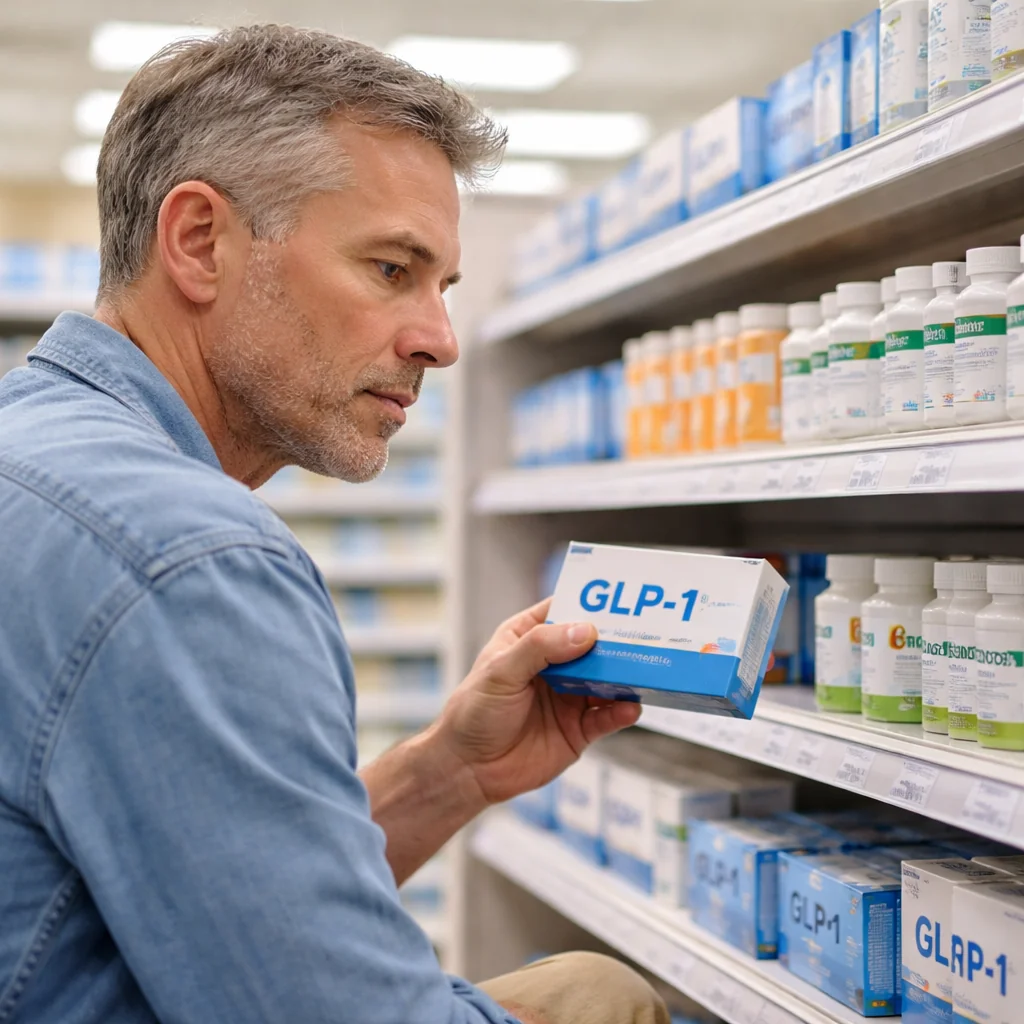
You can want the craving benefit without wanting the weight loss. Here is whether that is realistic, and why the answer often points somewhere else.
What You'll Discover:
• Whether the craving effect can be separated from the appetite effect.
• What low and early-titration doses actually do.
• What weight-neutral means in practice.
• Who should not pursue a GLP-1 for drinking.
• Which option fits which goal.
• Why naltrexone is often the better tool for this exact ask.
Almost everything written about GLP-1 medications and alcohol assumes you want to lose weight. A lot of the people asking this question do not.
They are at a healthy weight already. Or they lift, and losing muscle is not on the table. Or they have a history with restriction and know exactly how badly appetite suppression could go for them.
What they want is narrow and completely reasonable. Turn down the pull of alcohol. Leave everything else where it is.
The Audience Nobody Writes For
This group is larger than the coverage suggests. Plenty of people who drink more than they want to are not carrying extra weight at all.
Some are the opposite. Heavy drinking crowds out food, and a meaningful share of heavy drinkers are underweight or nutritionally depleted rather than overweight.
For them, an appetite-suppressing medication is not a neutral side effect. It is a real risk that deserves a straight answer instead of an upsell.
Athletes and lifters land in the same spot for different reasons. Appetite drives protein intake, and protein intake drives whether hard training turns into muscle or just fatigue.
Older adults have their own version of this. Losing weight after 60 often means losing lean mass, and that trade is rarely worth making for a side benefit.
The question is fair. The answer is more complicated than yes or no.
Can You Get the Craving Benefit Without the Weight Loss
Partly, and not cleanly.
The most useful data point is the randomized trial of once-weekly low-dose semaglutide in adults with alcohol use disorder, published in 2025. It used doses well below what gets prescribed for weight management.
Even at those doses, participants had reduced weekly alcohol craving compared with placebo, along with less drinking in a laboratory session.
That is genuinely encouraging for this question. It suggests the alcohol effect does not require full weight-management dosing.
The catch is that participants in that trial also lost weight. The two effects arrived together, which is what nearly every study of these medications has found.
There is no published protocol for a dose that reliably reduces alcohol craving while leaving body weight untouched. Anyone claiming otherwise is guessing in a confident voice.
What Actually Happens at Low and Early-Titration Doses
GLP-1 medications are started low and increased gradually, mostly to limit nausea. The starting doses really are small.
At those levels appetite suppression is usually mild. Some people barely notice it. Weight change over the first month is often minimal, and some of what does move is water and gut contents rather than fat.
That is the window people are hoping to live in. Enough signal in the reward pathway to blunt the pull of alcohol, not enough in the appetite pathway to change body composition.
For some people that window exists. For others, even a starting dose flattens their appetite for weeks.
The honest framing is that low-dose is a reasonable thing to discuss with a physician, not a guaranteed outcome you can plan your year around.
What the First Few Weeks Usually Look Like
People who try this route describe a fairly common arc. The first week or two is mostly quiet, with maybe some mild nausea and an early sense of fullness.
The alcohol effect, when it shows up, tends to arrive around the same time as the first dose increase. Drinks start feeling less interesting rather than forbidden.
Appetite usually moves in the same window. That is the moment when people trying to protect their weight find out which effect is stronger in their body.
If appetite drops harder than cravings do, that is worth reporting to your prescriber quickly rather than waiting it out for a month.
The Appetite Effect You Cannot Fully Separate Out
Here is the part that gets glossed over. The mechanisms overlap by design.
GLP-1 receptors in the reward circuitry are part of the same system that regulates food reward. Alcohol reward and food reward are not filed in separate drawers.
That is not a flaw in the drug. It is the drug. The reason a GLP-1 may reduce alcohol craving is closely related to the reason it reduces food craving.
Slowed gastric emptying compounds it. Fullness arrives sooner and lingers longer, whether or not that was on your list.
So the realistic expectation is a dial, not a switch. You can aim for a lower setting. You cannot turn one effect off and leave the other running.
What Weight-Neutral Actually Means
Weight-neutral is a specific claim, and it is worth defining before comparing options.
It means the medication is not expected to move your weight in either direction on its own. It does not mean your weight cannot change while you take it.
Cutting back on drinking changes weight all by itself. Alcohol carries real calories, and a person who drops from four drinks a night to one often loses weight without changing anything else.
That is a downstream effect of drinking less, not a drug effect. The distinction matters if you are trying to protect your weight rather than lose it, because the plan has to account for the calories you are removing.
Who Should Not Pursue This
Some people should not go down this path at all, and being direct about that is more useful than being encouraging.
If you are at a healthy or low weight, appetite suppression carries genuine downside. Heavy drinkers in particular are often already running a nutritional deficit, especially in B vitamins and protein intake.
If you have any history of anorexia, bulimia, or restrictive eating, the caution is stronger.
Clinicians reviewing the use of GLP-1 medications in eating disorder populations note these drugs could exacerbate or contribute to eating disorder pathology and interfere with treatment.
It is also worth knowing what these medications are actually approved for. The FDA label for semaglutide in chronic weight management specifies a BMI of 30 or higher, or 27 or higher with a weight-related condition.
If you do not meet those criteria and you do not have diabetes, you are asking a prescriber to go off-label on two fronts at once. Some will consider it. Many will not, and that hesitation is clinically reasonable rather than obstructive.
Goal Versus Best Fit
Why Naltrexone Is Usually the Better Fit Here
If the goal is drinking less and nothing else, there is a medication built for exactly that.
Naltrexone has been FDA-approved for alcohol use disorder since 1994. It is a mu-opioid receptor antagonist that reduces the rewarding effects of drinking through opioid effects on dopamine release.
In plain terms, it takes the payoff out of the drink. The buzz that normally reinforces the next one gets muted, and over weeks the wanting fades with it.
It does not suppress appetite. It does not slow gastric emptying. For most people it is weight-neutral.
The evidence base is deep. A 2023 systematic review and meta-analysis of alcohol use disorder pharmacotherapy pooled 118 trials and 20,976 participants.
Oral naltrexone at 50mg daily lowered rates of return to heavy drinking, with a number needed to treat of 11.
That number is worth pausing on. Aspirin for heart attack prevention sits closer to 100, so 11 is a strong showing for any medication.
For someone who wants the alcohol effect and nothing else, that is a far cleaner match than an off-label GLP-1. We lay out the full comparison in our guide to naltrexone versus GLP-1 medications for alcohol use disorder.
What About Using Both
Some people genuinely want both effects, and combining them is an option inside physician-guided care.
Choose Your Horizon supports a GLP-1 and naltrexone combination where it makes clinical sense. The two work on different parts of the problem, which is the whole argument for pairing them.
That is a different situation from the one this article is about. If weight loss is unwanted, adding a GLP-1 is adding a side effect rather than a benefit.
If you are already on a GLP-1 for weight or blood sugar and your drinking has not budged, our piece on whether you still need naltrexone on Ozempic walks through that decision.
How to Bring This Up With a Clinician
Be specific about the goal. "I want to drink less and I do not want to lose weight" gives a prescriber something concrete to work with.
Bring your numbers. How many drinks, how many days a week, how long it has been running, what you have already tried on your own.
Say the weight part out loud. If you have a history of restrictive eating, that belongs in the conversation before any prescription gets written, not after.
Ask what the plan is if the appetite effect turns out stronger than expected. A good answer exists. Make sure someone has one before you start.
Our overview of GLP-1 medications for alcohol use covers the broader picture, and if you are already taking one, how drinking affects GLP-1 weight loss is worth reading alongside it.
What to Watch For If You Do Try It
If you and a physician decide a low-dose trial makes sense, a few things are worth tracking from day one.
Weigh yourself on a set schedule rather than at random. Drift is easier to catch when the measurements are consistent.
Watch protein and total intake, not just the number on the scale. Losing lean mass is the outcome most people in this group are actually trying to avoid.
Keep a simple drink count. Without it, there is no way to tell whether the alcohol effect is doing anything or whether you are just having a slow month.
And set a checkpoint in advance. If weight is moving and drinking is not, the trial has answered its own question.
The Bottom Line
Wanting the craving benefit without the weight loss is a completely reasonable ask. It is also, with a GLP-1, hard to deliver on purpose.
The mechanisms overlap. Low doses may soften the appetite effect, but nobody can promise it away, and for people at a healthy weight or with a history of restriction that uncertainty is not worth carrying.
Naltrexone does the narrow job you are describing. It is approved for it, backed by decades of trials, and it leaves your appetite alone.
Nobody needs to reach a crisis point before this becomes worth addressing. Wanting to drink less is reason enough on its own.
Plenty of people arrive at this question feeling like they have to justify it first. You do not.
A clear goal and an honest conversation with a physician get you further than another round of trying harder on your own.
Frequently Asked Questions
Can you take a GLP-1 just for alcohol cravings?
Only off-label, since no GLP-1 is FDA-approved for alcohol use disorder. Some physicians will consider it, many will not, and insurance coverage for that purpose is rare.
Is there a GLP-1 dose that stops cravings without weight loss?
No dose has been shown to do that reliably. The 2025 semaglutide trial used low doses and still saw weight change alongside reduced craving.
Does naltrexone cause weight gain or weight loss?
Naltrexone is generally weight-neutral. It is not a weight-loss medication and it does not suppress appetite the way a GLP-1 does.
What if I am underweight and drinking too much?
Talk to a clinician before considering any appetite-suppressing medication. Heavy drinking often comes with nutritional gaps, and a GLP-1 could deepen them.
Can I stop the GLP-1 and keep the alcohol benefit?
Most reports suggest cravings return over the weeks after stopping. The medication changes signaling while it is active rather than permanently resetting it.
Will a prescriber write a GLP-1 if my BMI is normal?
Usually not. Without diabetes or a qualifying BMI, most prescribers will decline, and a medication approved for alcohol use disorder is the more straightforward route.
If the goal is drinking less without changing anything else, naltrexone is worth a look. Take the online Alcohol Use Assessment and a physician will review your history and tell you whether it fits.