A 2 minute assessment to get a personalized mental health or alcohol recovery plan.

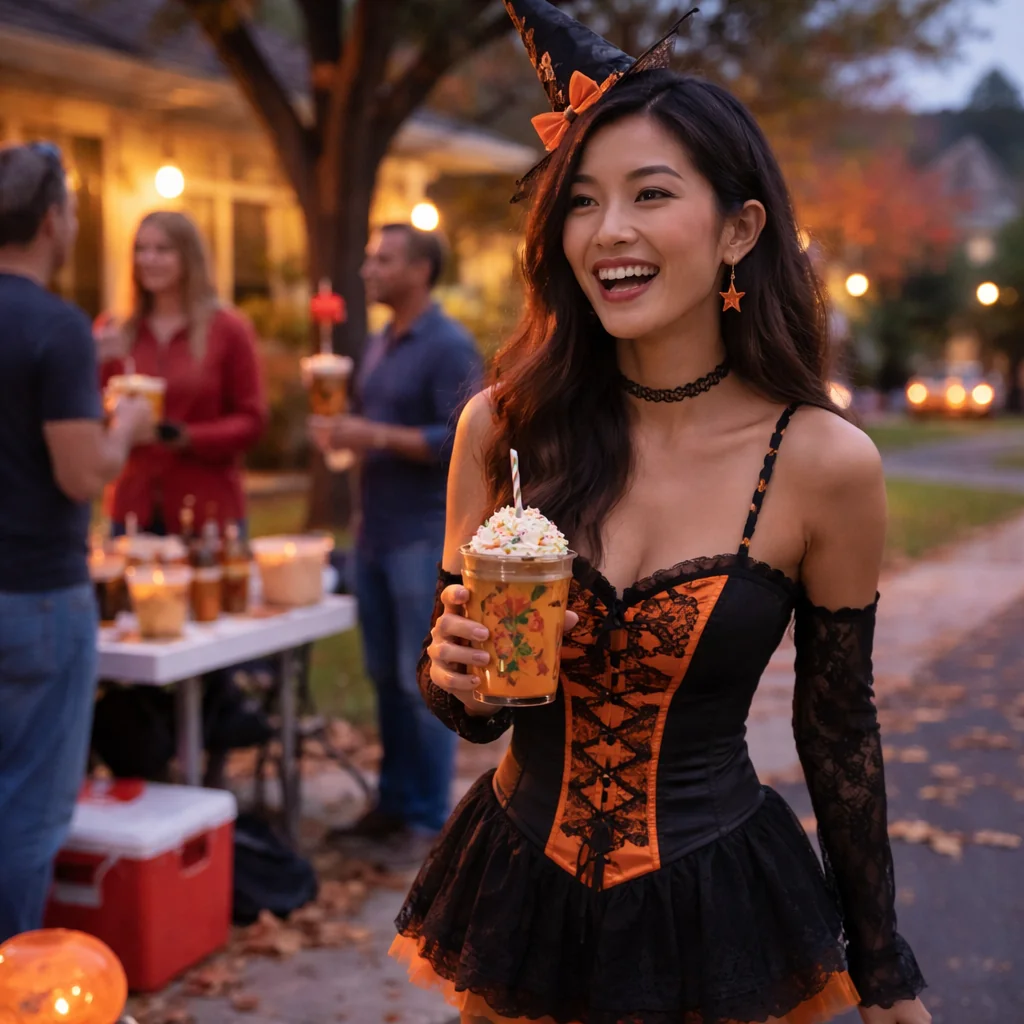
Halloween stopped being a kids' holiday a long time ago. For adults it is a full drinking occasion, and it happens to be the first of about nine in a row.
What You'll Discover:
• The four separate adult drinking occasions hidden inside one Halloween night.
• Why October 31 is the starting line for a nine-week stretch, not a one-off.
• What 42 years of crash data actually says about Halloween.
• A plan for the night that does not require skipping the party.
• How to use one low-stakes night as a test run for the rest of the year.
Halloween used to end when the candy got sorted. Now that is roughly when it starts.
Adult Halloween is costume parties that run to two in the morning, driveway coolers up and down the block, wine in an insulated tumbler while the kids sprint ahead, and a bowl of fun-size candy next to a drink at eleven at night.
None of that feels like a drinking occasion while it is happening. It feels like a Friday with better lighting.
That is exactly the problem, and exactly why a plan works so well here.
There is also a second reason to bother. Halloween is not a standalone night. It is the front door to a stretch of calendar that does not let up until January.
Halloween Grew Up and Nobody Announced It
Most people plan for one Halloween drinking occasion. There are four, and they stack.
The Costume Party Is a Drinking Event With a Theme
Costume parties have no shape. There is no dinner to anchor them, no toast, no cake, no moment where the room collectively decides the night is over.
People show up at nine. The party just keeps going.
Costumes also make everyone slightly less like themselves, which is half the appeal and half the risk. It is easier to keep going when you are playing a character.
And the drinks are almost always punch, or something themed in a big dispenser, which means nobody knows the strength of what they are holding. Two cups of a stranger's punch can easily be four standard drinks.
If the social piece is what worries you, our guide on how to socialize without alcohol gets into the mechanics of actually being fun at a party without a drink doing the work.
The Neighborhood Crawl
In a lot of towns, trick-or-treating has quietly become a moving adult event. Neighbors set a table at the end of the driveway with a cooler on it, and you hit four of them over ninety minutes.
Every stop is a drink. Every drink is poured by a different person with a different idea of what a pour looks like.
Nobody counts, because counting requires sitting down.
The To-Go Cup on the Sidewalk
This is the most common adult Halloween drinking pattern in the country and almost nothing written about Halloween mentions it.
You are walking the block with your kids. It is cold and it is dark. Someone hands you hot cider with something in it, or you filled a tumbler before you left your own house.
It reads as festive, not as drinking. And the container does the rest of the work, because a large insulated cup holds about three glasses of wine and never once looks empty.
Candy and Cocktails at Home
The kids go up around nine. The candy comes out. The adults sit down and pour something.
That last window is completely unstructured, and it runs later than anyone plans when Halloween lands on a Friday or Saturday.
Four occasions, one date. Most people budget for the party and get surprised by the other three.
Halloween Is the Starting Line, Not a One-Off
Here is the framing that changes how people think about October 31.
Halloween to New Year's Day is about nine weeks.
Inside that window sit the office party, Friendsgiving, Thanksgiving, the in-law weekend, the neighborhood open house, the New Year's Eve countdown, and a dozen smaller things with a drink attached.
Researchers who study consumption patterns have found that national estimates actually undercount alcohol, because standard surveys ask about a typical week and holidays are not typical.
One survey built to measure drinking during feasting and fasting periods found that adding special occasions raised estimated consumption meaningfully.
The practical translation is short. The nine-week stretch is not a normal stretch, and treating it like one is how people arrive in January genuinely surprised by how the fall went.
We break the whole season down in our guide to holiday alcohol consumption, including what the week-by-week pattern usually looks like.
Halloween matters because it sets the tone. Whatever you do on October 31 tends to become the default setting for the eight weeks after it.
The Safety Part Nobody Puts on the Invitation
Halloween has a real, measured safety problem, and it is worth knowing even if you are walking everywhere.
Researchers went through 42 years of national fatal crash data and found that pedestrian deaths rise on Halloween compared with control evenings one week earlier and one week later.
The increase was 43 percent overall. For children between four and eight years old, the risk was ten times higher.
The causes stack the same way the drinking does. Celebrations start at dusk, masks cut peripheral vision in both directions, kids cross mid-block instead of at corners, and some of the drivers have been drinking.
That last one is the piece you control. Alcohol-impaired driving accounts for about a third of all traffic deaths in the United States, and CDC impaired driving data puts the 2022 count at 13,524.
None of this is meant to make Halloween scary. It is meant to move one decision earlier in the day. The ride home is much easier to sort out at four in the afternoon than at midnight in a costume.
The Default Halloween Night vs a Night With a Plan
The Plan for October 31
Nothing here involves skipping the party. It involves making four or five decisions early, while they are still easy to make.
Decide the Number Before the Costume Goes On
A number you picked in the afternoon is a completely different animal from a number you are trying to hold in your head at a loud party.
Pick it early and say it out loud to one person. Two, three, zero, whatever matches your goal. The out-loud part is what makes it stick, because now it exists outside your head.
For a reference point, the CDC counts four or more drinks for women and five or more for men in one sitting as binge drinking. Halloween clears that line without effort when the pours are unmeasured.
Eat First, Not After
Halloween food is candy and whatever is left on the party table at eleven. That is not a meal, and it does nothing to slow absorption.
Eat something real before you leave the house. It is the cheapest intervention on this entire list and the one people skip most.
Decide What You Are Holding
At a costume party the container matters far more than the contents, because nobody is inspecting anyone's cup.
Bring your own. Non-alcoholic beer, cider, sparkling water with lime, a soda in a real glass. All of it reads as a drink and all of it stops the offers before they start.
If you are hosting, you have even more control over the room, and our guide to hosting a party without alcohol walks through building a night where the drinks table is not the gravitational center.
Set the Exit Before You Need It
Costume parties do not end on their own. You have to bring the ending with you.
Book the ride for a specific time before you leave. Tell one person you are out at eleven. An exit that already exists on your phone is enormously easier to use than one you have to invent at midnight while someone is handing you a cup.
Handle the Refill
The refill is what quietly undoes most plans, because it does not come with a question. Somebody tops you up while you are mid-sentence.
So the fix is physical, not verbal. Keep the cup in your hand and keep it more than half full. A full cup is not a target.
When someone does ask outright, short and warm beats long and defensive every time. Our piece on how to say no to a drink has the specific wording, and the short version is that "I'm good with this one" ends about ninety percent of these exchanges.
If You Are Out With the Kids
The to-go cup deserves its own section, because it is genuinely different from a party.
You are supervising children on a dark street on the single highest-risk pedestrian night of the year. That is an actual job, and it is the job you came out to do.
So fill the tumbler with cider, coffee, or hot chocolate. You get the same warm hands, the same social prop, the same look on the sidewalk. Nobody out there is going to ask what is in it.
Save the drinking decision for after the kids are home and you are no longer the last line of defense at a crosswalk. That is not a sacrifice, it is just sequencing.
Using Halloween as the Test Run
Here is the genuinely useful thing about Halloween landing first. It is a low-stakes rehearsal for everything behind it.
The office party in December has career consequences attached. Thanksgiving comes with family history. New Year's Eve arrives pre-loaded with expectations.
Halloween has none of that. It is one night in a costume with people who will not remember what anybody drank.
That makes it the perfect night to find out whether your plan survives contact with a real room. Get through October 31 the way you intended and you walk into November with proof instead of hope.
And if the plan falls apart, you learn that in week one rather than week eight, with seven weeks left to adjust.
Where Naltrexone Fits Into a Halloween Plan
For a lot of people the plan is enough. Decide the number, hold something, book the ride, go home.
For other people the plan works perfectly until the second drink, and then the pull toward the third and fourth takes the wheel. That is not a willpower failure. It is a reward-system issue, and it responds to treatment.
Naltrexone is an oral medication, typically 50mg tablets, that blocks the opioid receptors alcohol acts on.
It dampens the endorphin surge that makes the next drink feel necessary, so the count gets easier to hold instead of harder as the night goes on.
Some people take it daily. Others take a targeted dose an hour or so before a known occasion like a costume party.
Which approach fits depends on your drinking pattern and health history, so it is a conversation with a prescribing physician.
Choose Your Horizon pairs naltrexone with coaching and physician-guided care rooted in clinical, neurological, and behavioral science, for people who want to cut back and for people who want to stop entirely.
One Night, Four Occasions, Nine Weeks
Halloween is not one drinking event. It is four small ones stacked into a single evening, and it opens a nine-week season of them.
The plan itself is short. Eat first. Pick a number and say it out loud. Decide what goes in your hand. Book the ride before you leave. Give yourself an exit you do not have to invent.
None of that requires announcing anything, explaining anything, or missing the party. It just requires making the decisions in daylight instead of at midnight.
Plenty of people find that one planned night changes how the rest of the season goes. And plenty of people find they want more support than a plan, which is a completely reasonable thing to want and a common reason to talk to a physician about it.
Frequently Asked Questions
Is Halloween really a big drinking holiday for adults?
Yes. Costume parties, neighborhood crawls, and at-home candy nights have turned October 31 into a full adult drinking occasion, on a night that already carries elevated pedestrian and impaired-driving risk.
What should I drink at a Halloween party instead?
Anything that looks like a drink and stays in your hand. Non-alcoholic beer, cider, sparkling water with lime, or a soda in a real glass all work, and at a costume party nobody is checking cups.
How do I turn down a drink without a whole conversation?
One short sentence, said once, warmly. "I'm good with this one" or "I'm driving tonight" ends almost every exchange. Repeating it calmly works better than explaining your reasoning.
Why does one Halloween night matter so much?
Because it opens roughly nine weeks of drinking occasions running through New Year's Day. Whatever you decide on Halloween tends to become the default for the weeks that follow it.
Can naltrexone help with a single occasion like Halloween?
Some people use a targeted dose before a known drinking event, and others take it daily for steady coverage. Which one makes sense depends on your pattern and health history, so it is a question for a prescribing physician.
What if I go over my number on Halloween?
One night over the line is information, not a verdict. Note what moved it, adjust the plan for the next occasion, and remember there are eight more weeks to get it right.
You do not have to guess your way through the next nine weeks. Take the online Alcohol Use Assessment to find out whether naltrexone could make the season easier.