A 2 minute assessment to get a personalized mental health or alcohol recovery plan.

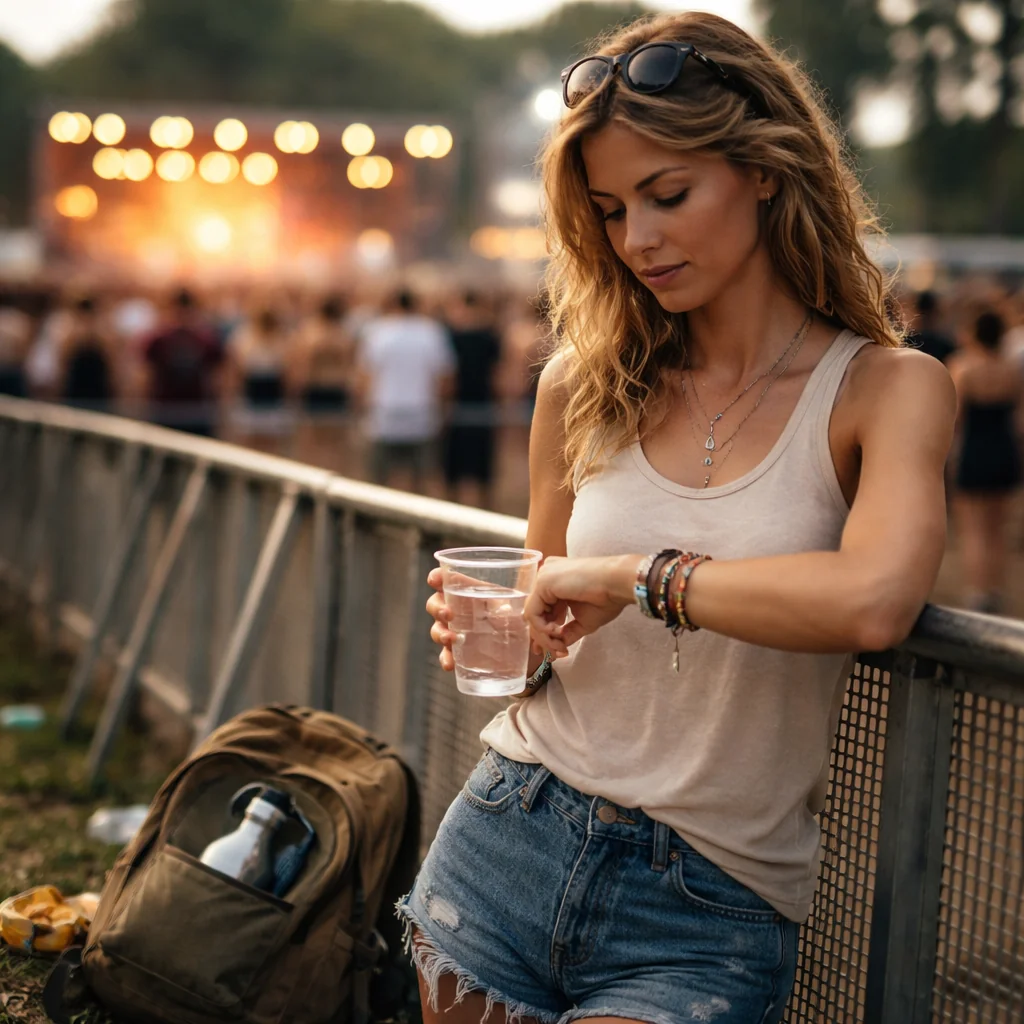
You paid a lot of money to be there. The goal is to still be there, mentally, when the band plays the song you came for.
What You'll Discover:
• Why concerts break pacing in a way that bars do not.
• What researchers actually measured at a major music festival.
• How heat, standing, and alcohol stack up against your body.
• A pre-show and between-sets plan that does not feel like restraint.
• Where a targeted naltrexone dose fits before a long show.
There is a specific kind of regret that only happens at concerts. You spent real money, you waited months, and the encore is a rumor somebody told you in the parking lot.
Nobody plans for that. The night goes sideways in small, reasonable steps.
Concerts are built to break pacing. Long duration, heat, standing, expensive drinks bought in twos, and hours of waiting between the doors opening and the headliner walking out.
So this is the practical version. Not "drink responsibly," which nobody has ever acted on. An actual plan for the pre-game, the venue, and the six hours in between.
Why Concerts Break Pacing in a Way Bars Do Not
The Pre-Game Starts Before You Leave the House
Almost nobody arrives at a show sober, and the reason is economic. Venue prices push drinking to the front of the night.
The pre-game is usually fast. It happens in an hour, standing in a kitchen, with people who are excited and running late.
That means you often walk through the doors already at three or four drinks, before the opener has even set up. The night has effectively started at hour zero with a full tank.
Fast early drinking is exactly the pattern that spikes blood alcohol. The National Institute on Alcohol Abuse and Alcoholism defines binge drinking as reaching 0.08%.
For most adults that is about five drinks for men or four for women in roughly two hours.
The pre-game hits that number on its own, and then you have five hours of show left.
Expensive Beer Makes People Drink More, Not Less
A sixteen dollar beer should slow you down. In practice it does the opposite, for two reasons.
The first is the line. Waiting fifteen minutes to reach the bar makes people buy two, because nobody wants to do that twice.
The second is sunk cost. Once you have decided the night is expensive, the marginal drink feels like it does not count. The night is already a splurge.
So the pricing that should act as a brake becomes a reason to buy in pairs and drink both before they get warm.
Nobody Plans for Six Hours
Doors at six thirty. Opener at seven forty five. Second act at nine. Headliner at ten thirty. Encore at midnight.
That is a five and a half hour occasion, and most people show up with a two-hour drinking plan in their head.
The gaps are the problem. Nothing is happening between sets, you are standing in a crowd, and the bar is right there with a shorter line than it will have in twenty minutes.
Festivals stretch this further. A day-long lineup can run eight hours in the sun, and a three-day festival is three of those in a row with no real recovery in between.
What Researchers Found at a Major Music Festival
This is not just vibes. Researchers went to one of the largest music festivals in Sweden and breath-tested attendees at the gates.
Among 1,410 participants, 81% were drinkers and the median blood alcohol concentration was 0.082%, which is right at the legal driving limit in the United States.
Thirty-one percent were above 0.10%. Sixty-three percent reported drinking habits the researchers classified as risky.
The important detail is that those numbers were measured at the entrances. That is the pre-game showing up in the data, before anyone had bought a single festival beer.
Which lines up with what most people experience. The night is usually decided before you walk in.
Heat, Standing, and What Your Body Is Actually Doing
Concerts are hot. Indoor arenas run warm with a full crowd, outdoor festivals run warm because it is July, and you are standing in a compressed mass of people either way.
Alcohol changes how your body handles that. A systematic scoping review of alcohol and heat stress found that alcohol lowers core temperature and increases skin blood flow, which is why you feel warm and flushed even as your body loses heat.
The review was honest about its limits. Classic dehydration markers were not consistent across studies, except at the highest alcohol doses, and the research base is small.
But fluid loss is well documented at binge-level drinking. In a controlled sleep lab study, a binge drinking evening produced 2.9 liters of urine versus 2.1 liters on a control night.
That is nearly an extra liter, on a night when you are also sweating in a crowd and have not had water since the parking lot.
Beer is the usual culprit at shows because the volume is high, and we get into the mechanics of that in our piece on whether beer dehydrates you.
The same study found that binge drinking cut REM sleep from about 20% of the night down to 15%. That is the part that decides how Sunday feels after a Saturday show.
The Default Concert Night vs a Night You Remember
Same show, same money, same friends. The only difference is a few decisions made before the doors open.
The Plan That Actually Works
Eat Before, Not Between
Venue food is expensive, slow, and usually terrible, which means most people skip it and drink instead.
Eat a real meal before you leave. Protein and fat, not a granola bar in the car. Food in your stomach slows how fast alcohol reaches your bloodstream and flattens the peak.
This one change does more than everything else on this list combined, because it changes the shape of the pre-game.
If you are at a festival, eat at the food trucks even though they are overpriced. A meal at 3pm is the difference between a good evening set and a bad one.
Set the Ratio Before You Go In
Pick a rule in advance and make it a ratio, not a number. Numbers are easy to lose track of in a crowd. Ratios are self-enforcing.
The one that works for most people is one drink per set, water in between. It attaches your drinking to the structure of the show rather than to how long the line is.
For a three-act night that lands you around three or four drinks across six hours, which is a completely different night than eight.
Fill your water bottle at the fountain every time you pass one. Most venues now have refill stations, and the line is always shorter than the bar.
Where You Stand Changes How Much You Drink
Proximity to the bar predicts consumption better than intention does. Standing near a bar means drinking at the speed of your own arm.
Pick a spot on the floor and commit to it. Being twelve rows deep in a crowd means a beer run costs you your spot, and that cost is usually enough to make you skip it.
The other version works too. Stand where you can see the stage well and the bar is behind you and out of your sightline.
At festivals, set a home base with your group away from the beer tents. Meeting points near bars are the reason festival days escalate.
What Venues Actually Stock Now
This has changed a lot in a short time. Non-alcoholic beer is now standard at most arenas and a growing number of festivals, and it is real beer that tastes like beer.
Many venues also carry canned sparkling water, and almost all of them will give you a cup of ice water for free at the bar.
That last one is worth knowing. You can walk up, ask for water, get it in the same cup everybody else is holding, and walk away in thirty seconds.
Nobody at a concert is auditing your cup. The social pressure that exists at a dinner table does not really exist in a dark room with loud music.
Still, some friend groups make it a thing. Our guide on how to say no to a drink has short lines that end it without a conversation.
Between-Set Rules
The gaps are where nights get decided. Twenty minutes of nothing, a crowd, and a bar with a manageable line.
Have something to do in the gaps. Go find your friends, go to the merch table, go outside, go refill water, go to the bathroom before the line triples.
Movement in the gaps beats standing still in the gaps. The people who drink most at shows are usually the ones who stayed in the same square meter for six hours.
Multi-Day Festivals Are a Different Sport
A one-night show is a sprint. A three-day festival is not, and treating it like three separate nights is why day three is usually a write-off.
Alcohol debt compounds. Shallow sleep on Friday plus heat and standing on Saturday means Sunday starts from a much worse baseline than Friday did.
The people who enjoy all three days usually run Friday deliberately light. It feels like leaving something on the table and it is the reason they are functional for the Sunday headliner.
Practical version: pick one night of the festival to be the big one and run the other two at half speed. Camping festivals make this harder because the drinking starts at the campsite in the morning.
Weddings have a similar problem of long duration and free drinks, and a lot of the same tactics carry over. We cover those in our guide on how to drink less at a wedding.
Where Naltrexone Fits Before a Long Show
Some people do everything above and still find that drink two makes drink five inevitable. That is a reward-loop problem, not a discipline problem.
Alcohol triggers an endorphin release that hits opioid receptors in the brain, which drives the dopamine surge that makes each drink want a successor. Naltrexone blocks those receptors.
With them blocked, the beer still tastes like a beer. It just stops functioning as an accelerant.
Naltrexone has been FDA-approved for alcohol use disorder since 1994. Most people take a 50mg tablet daily, and some take a targeted dose about an hour before a known drinking occasion.
A show with doors at six thirty is exactly that kind of occasion. Timing and dosing are decisions for a prescribing physician who knows your history.
The Point Is the Show
All of the above is logistics. The reason to bother is simpler than health.
You are there for a specific thing. A song you have listened to four hundred times, played in a room with ten thousand other people who also love it.
That experience requires you to be present for it. Alcohol at moderate levels does not take that away, and alcohol at high levels absolutely does.
The clearest test is the next morning. If you can describe the show to someone in detail, you were there. If you have to check the setlist online to find out what happened, you paid for a night you did not attend.
Being the person who stays clear at shows also gets easier socially than people expect, and our guide on how to socialize without alcohol covers the practical side of that.
Enjoy the Show You Paid For
Concerts break pacing because they are long, hot, expensive, and structured around waiting. None of that is a character flaw on your part.
The fixes are small and they happen before the music starts. Eat a real meal, cap the pre-game, set a ratio instead of a number, pick a spot away from the bar, and use the gaps to move rather than to drink.
Do those five things and most people find they drink roughly half as much without feeling like they missed anything.
And if the pull to keep drinking is stronger than any plan you make, that is worth looking at honestly rather than repeating for another festival season.
Choose Your Horizon works with people who want to drink less and people who want to stop entirely, pairing naltrexone with coaching and physician-guided care grounded in clinical, neurological, and behavioral science.
Frequently Asked Questions
How many drinks is reasonable at a concert?
There is no single answer, but a useful anchor is that about five drinks for men or four for women in two hours reaches 0.08% blood alcohol concentration. Spreading three or four drinks across a five-hour show keeps you well under that.
Does drinking water between drinks actually help?
It helps with fluid loss and it slows your pace, which is the bigger effect. It does not reduce how much alcohol your body has to process or speed up how fast you sober up.
Do concert venues sell non-alcoholic beer now?
Most major arenas and many festivals do, and the quality has improved a lot. Free cups of ice water are also available at almost every bar if you ask.
Why do concerts hit harder than a night at a bar?
Duration, heat, and standing. A five or six hour show in a warm crowd means a higher total volume and more fluid loss than a two-hour bar visit at the same pace.
Should I pre-game before a show?
Pre-gaming is where most concert nights are decided, and festival research found people arriving at the gates already near the legal driving limit. Keeping the pre-game to one drink with a real meal changes the entire night.
Can I take naltrexone just before shows and festivals?
Some people use it as a targeted dose about an hour before a known drinking occasion, and others take it daily. Which fits you depends on your drinking pattern and health history, so it is a conversation for a prescribing physician.
The best shows are the ones you remember. Take the online Alcohol Use Assessment to find out whether naltrexone could help you stay present for them.