A 2 minute assessment to get a personalized mental health or alcohol recovery plan.

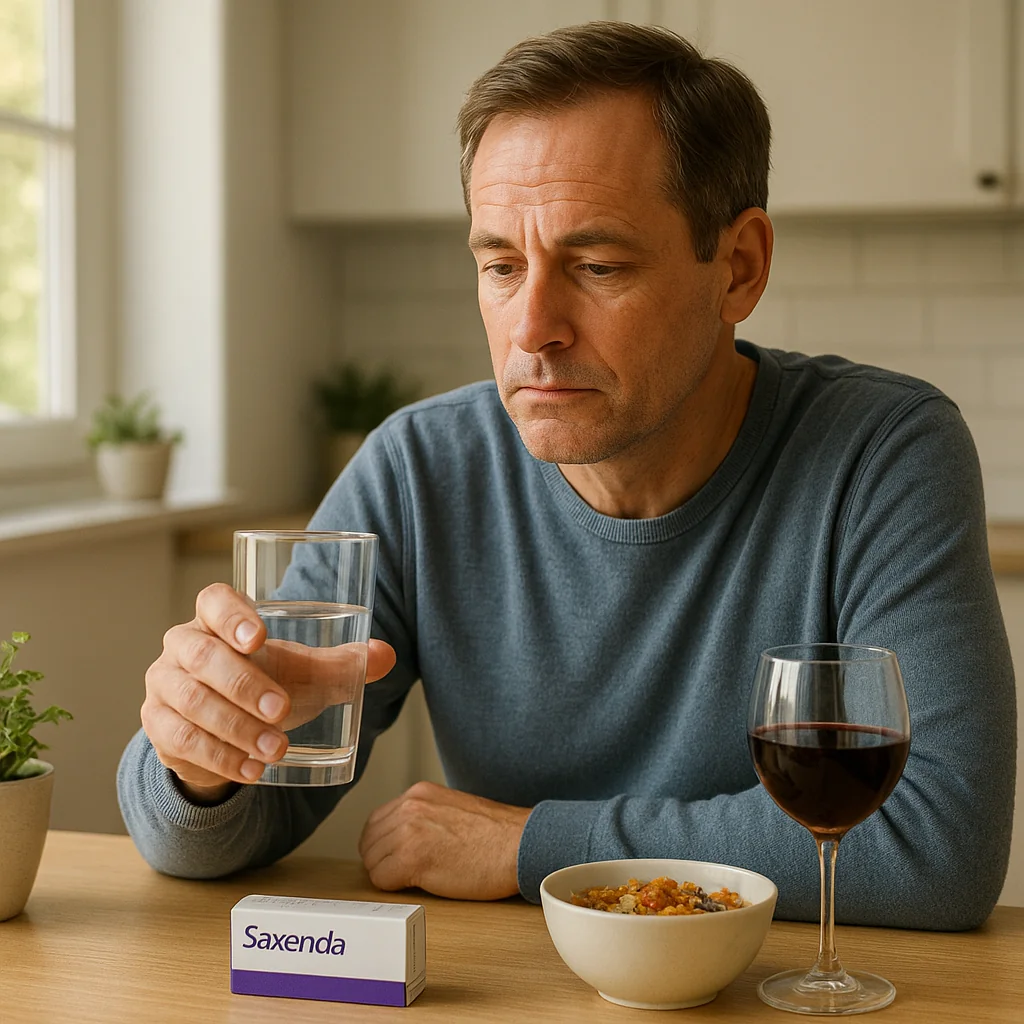
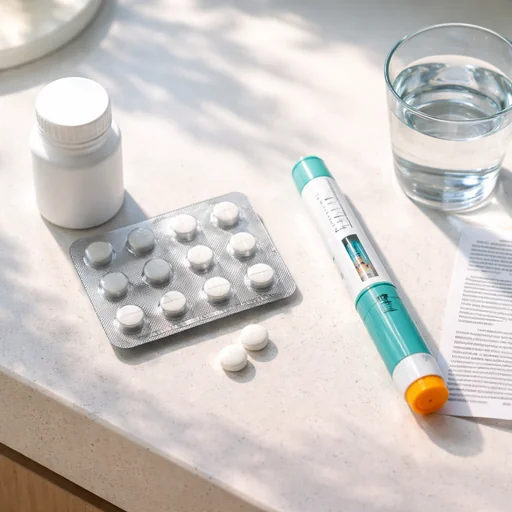
There's no hard ban on drinking while you take Saxenda, but alcohol and liraglutide overlap in ways worth understanding before you pour a glass.
What You'll Discover:
• Whether it's actually safe to drink alcohol on Saxenda.
• How the side effects of liraglutide and alcohol stack on top of each other.
• Why your blood sugar can swing more than usual when you drink.
• What the research says about GLP-1 medications and alcohol cravings.
• When the real question is your drinking, not your weight.
If you take Saxenda and you've been wondering whether you can have a drink, you're not doing anything wrong by asking. It's a smart question. The answer is reassuring, with a few caveats.
Saxenda is a brand of liraglutide, a daily GLP-1 injection used for weight management. No rule says you can never drink on it.
The catch is that alcohol and liraglutide hit some of the same systems. The two can amplify each other in ways that catch people off guard.
This guide walks through what actually happens when you drink on Saxenda, where the discomfort comes from, and how to make a calm decision about it. We'll keep it plain and judgment-free.
What Saxenda Actually Does to Your Body
Liraglutide copies a gut hormone called GLP-1 (glucagon-like peptide-1). Your body releases this hormone after you eat, and it does a few key jobs that matter here.
It slows how fast your stomach empties, which is part of why you feel full longer. It signals your brain to dial back appetite. And it helps your pancreas release insulin in response to food, which steadies blood sugar.
Those same three effects are exactly where alcohol shows up. Alcohol irritates the stomach, affects appetite and reward signaling, and shifts blood sugar.
So when you drink on Saxenda, you're adding alcohol on top of a body that's already running a little differently. That's the whole story in one sentence. The rest is detail.
It also helps to remember that Saxenda builds up gradually. Doses usually step up over several weeks, and side effects tend to be strongest right after each increase.
Is It Safe to Drink Alcohol on Saxenda?
For most people, an occasional drink while taking Saxenda is not dangerous. Liraglutide does not have a hard chemical clash with alcohol the way some medications do.
There's no warning that one drink will cause an emergency. You will not have a sudden reaction the moment alcohol and liraglutide meet in your system.
That said, "no hard ban" is not the same as "no effect." The discomfort people report comes from overlap, not one dramatic reaction.
Nausea gets worse. Blood sugar gets less predictable. A hangover can hit harder than you remember. These are nuisances for most people, not dangers.
Heavy or binge drinking is a different story. That raises the risk of low blood sugar, dehydration, and stomach upset, and it can strain the pancreas.
If you drink heavily and regularly, talk with your prescriber before your next dose. The same goes if you have ever had pancreatitis or gallbladder problems.
Where Saxenda and Alcohol Overlap
The clearest way to think about this is to look at where the two collide. Both liraglutide and alcohol touch your gut, your blood sugar, and your appetite.
When they overlap, the everyday effect tends to be stronger than either one alone. That's why a glass of wine that felt fine before Saxenda might feel different now.
Nausea is the most common complaint. Liraglutide already causes nausea in a meaningful share of users, especially in the first weeks.
In studies of liraglutide for weight and diabetes, up to 40 percent of patients reported nausea or vomiting, usually during dose increases. Add alcohol, which irritates the stomach lining, and queasiness can spike.
Here's a quick look at the main overlap areas and what tends to happen when alcohol joins in.
None of these are reasons to panic. They're reasons to drink slowly, eat something, and pay attention to how you feel.
There's also a slower-burn effect worth naming. Because liraglutide slows digestion, alcohol can sit in your stomach longer, which sometimes makes a drink feel stronger or linger more.
Blood Sugar, Alcohol, and Saxenda
This is the overlap worth taking seriously. Alcohol can lower your blood sugar, and the effect is bigger if you drink without eating.
When your liver is busy processing alcohol, it does less of its other job. That job is releasing stored glucose to keep your blood sugar steady.
Research on alcohol and blood sugar in people with diabetes shows that drinking on an empty stomach can drop glucose meaningfully. The dip can show up hours later, even while you sleep.
Saxenda is built to smooth out blood sugar too. For most people using it for weight loss without diabetes, a serious low is unlikely.
But the combination can still leave you lightheaded, shaky, or unusually tired. Those are the same feelings as a mild low, and they're easy to mistake for being a little drunk.
If you have diabetes or take any glucose-lowering medication alongside Saxenda, the caution goes up. Eat when you drink, keep drinks moderate, and check your sugar if you can.
A practical habit: never let alcohol be the first thing in your stomach for the day. Food gives your liver a buffer and keeps the dip from getting steep.
Appetite, Cravings, and What the Research Says
One of the more interesting questions is whether GLP-1 medications change how much you want to drink in the first place. The honest answer is that the science is still developing.
It's promising, but not settled. People share stories of wanting alcohol less, and researchers are taking those stories seriously enough to study them.
A large register-based study on GLP-1 medications and alcohol-related events found lower rates of alcohol-related problems among some people taking these drugs. That's encouraging, though it doesn't prove cause and effect on its own.
Early research suggests GLP-1 medications may quiet the brain's reward response to alcohol. That's the same signaling that drives the pull to keep drinking.
We dig into this in our guide to whether GLP-1 medications reduce alcohol cravings, because the picture is more nuanced than the headlines suggest.
For now, it's fair to say some people notice they want alcohol less on a GLP-1 medication. It's also fair to say Saxenda is not approved or prescribed to treat drinking.
If less interest in alcohol shows up as a side benefit, that's worth noticing. It's not something to count on, and it's not a substitute for care aimed at drinking.
When the Real Question Is Your Drinking
Sometimes a search for "Saxenda and alcohol" is really about something deeper. People reach for weight-loss help, then realize that drinking is the habit they'd most like to change.
If that's you, there's no shame in it, and you don't have to wait until things feel out of control. You don't need a rock-bottom story to deserve support.
The medication built specifically for alcohol is naltrexone, an oral 50mg tablet. It has been FDA-approved for alcohol use disorder since 1994.
Naltrexone blocks the opioid receptors that release the dopamine surge alcohol creates. In plain terms, it takes the buzz and the pull out of drinking.
Over time, that broken link does something powerful. The brain stops expecting a reward from alcohol, so the craving loses its grip.
That's a different mechanism and a different goal than a weight-loss injection. To see how they compare, our article on naltrexone versus GLP-1 medications for alcohol use walks through it side by side.
Our overview of GLP-1 medication for alcohol use covers the emerging research in more depth if you want the full picture.
At Choose Your Horizon, you can take naltrexone daily or before situations where you expect to drink. Either way, the point is the same. Less craving, less euphoria, more control.
One more note that matters here. If you currently take any opioid medication, naltrexone is not safe to start, so this is a conversation to have with a clinician first.
Practical Tips If You Choose to Drink
If you're taking Saxenda and you decide to have a drink, a few simple habits make it easier on your body.
• Eat something first so alcohol doesn't hit an empty stomach.
• Go slow, since nausea and fullness can sneak up on you.
• Drink water between alcoholic drinks to stay hydrated.
• Watch for lightheadedness, which can signal low blood sugar.
• Skip drinking in the days right after a dose increase, when nausea peaks.
If alcohol consistently makes you feel sick on Saxenda, that's your body telling you something. It may simply not be worth the drink while your dose is climbing.
For a closer look at the day-to-day reality, our guide on drinking alcohol while on a GLP-1 goes deeper into what to expect from week to week.
What Moderate Actually Looks Like
It helps to anchor "moderate" to a number rather than a feeling. National guidance puts moderate drinking at up to one drink a day for women and up to two for men.
A standard drink is smaller than most people pour. It's 12 ounces of regular beer, 5 ounces of wine, or 1.5 ounces of distilled spirits.
On Saxenda, staying at or below those amounts gives your stomach and blood sugar the best chance of behaving. It also keeps the calories from quietly working against your weight goals.
If you find that one drink reliably turns into three or four, that pattern is worth paying attention to. It's often the signal that the drinking itself, not the medication, is the thing to look at.
A Word on Pacing Yourself
People sometimes assume the medication will do the moderating for them. Saxenda quiets appetite for food, but it isn't a brake on alcohol once you start drinking.
That means pacing is still on you. Set a number before you go out, alternate each drink with water, and decide in advance when you'll stop.
Slowing down also gives the slowed digestion time to work in your favor. When alcohol enters a stomach that's emptying gradually, sipping keeps the effect gentle instead of letting it pile up.
None of this requires perfection. Small, repeatable habits beat strict rules you can't keep, and they're easier on a body that's already adjusting to a new medication.
Conclusion
Drinking on Saxenda is not off-limits, but it's not effect-free either. Liraglutide and alcohol overlap in your stomach, your blood sugar, and your appetite.
The everyday result is usually more nausea and less predictable sugar, not a medical emergency. For most people, that means slowing down rather than stopping entirely.
Drink in moderation, eat first, stay hydrated, and pay attention to how you feel. If you drink heavily or have diabetes, talk with your prescriber before mixing the two.
And if the deeper question is really about your drinking, that's worth addressing on its own terms. Weight medication and alcohol care are different tools for different goals, and you deserve the one that actually fits.
Frequently Asked Questions
Can you drink alcohol while taking Saxenda?
Yes, there's no hard ban on occasional, moderate drinking with Saxenda. The main issues are stronger nausea and less stable blood sugar, so go slow and eat something first.
Does alcohol stop Saxenda from working?
Alcohol doesn't cancel out liraglutide's effect on appetite or blood sugar. It does add calories and lower your restraint, which can work against your weight goals over time.
Why does drinking make me more nauseous on Saxenda?
Both liraglutide and alcohol irritate the stomach and slow digestion. Combine them and queasiness can intensify, especially during the first weeks or after a dose increase.
Can Saxenda cause low blood sugar when I drink?
It can contribute, especially if you drink without eating. Alcohol limits your liver's ability to release stored glucose, which can leave you shaky or lightheaded.
Does Saxenda reduce alcohol cravings?
Some people notice less interest in alcohol on GLP-1 medications, and early research is promising. Saxenda is not approved to treat drinking, so it shouldn't be relied on for that.
What helps if my real concern is drinking too much?
A medication built for alcohol, like naltrexone, targets cravings directly. An online assessment can help you find out whether it's a good fit for your goals.
If your relationship with alcohol is the thing you most want to change, you don't have to figure it out alone. Take the online Alcohol Use Assessment to see if naltrexone could be a good fit for you.