A 2 minute assessment to get a personalized mental health or alcohol recovery plan.

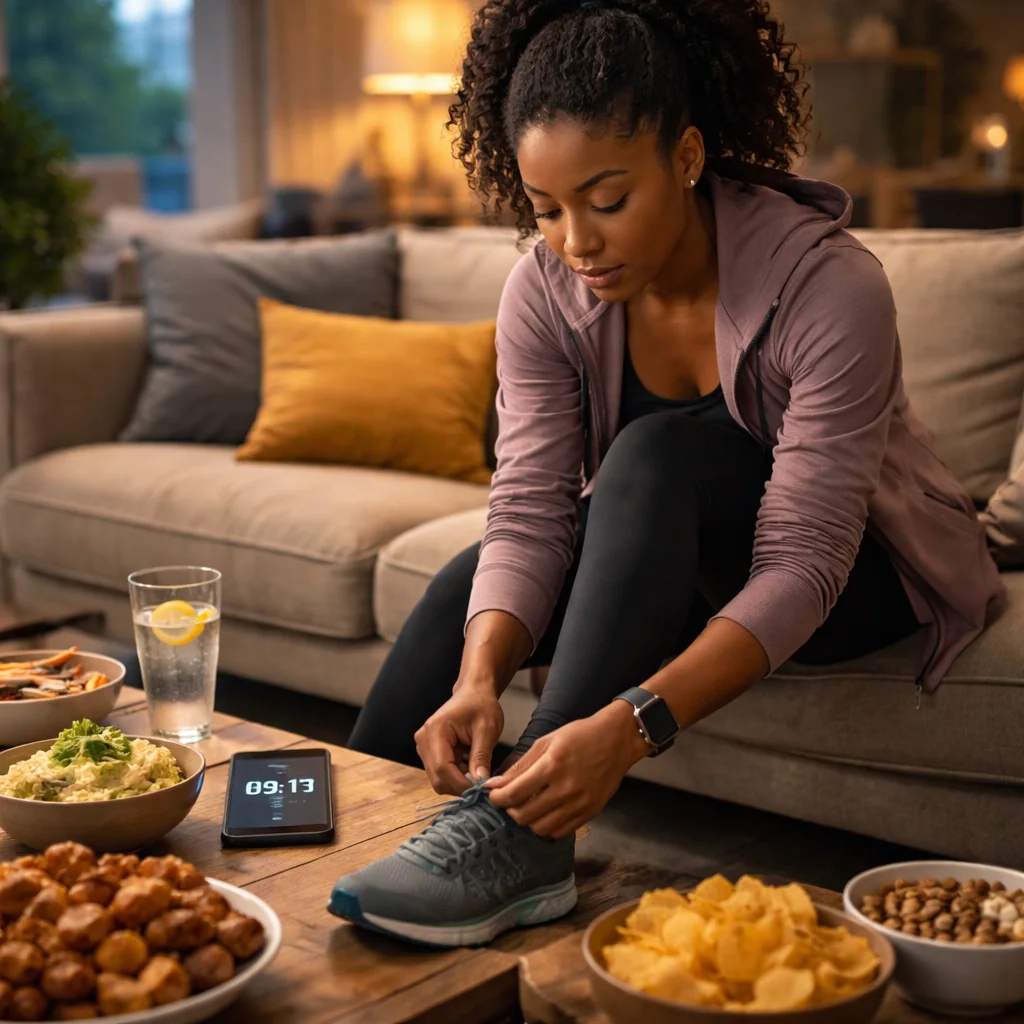
Super Bowl Sunday is not a three-hour football game. It is an eight-hour event with football in the middle, and that structure is what gets people.
What You'll Discover:
• Why the shape of the day matters more than anyone's willpower.
• What an all-day session actually costs in sleep, Monday, and calories.
• A quarter-by-quarter pacing plan that does not require sitting out.
• How to host a great party without putting a drink in everyone's hand.
• Where targeted naltrexone fits for an event you can see coming.
Kickoff is around 6:30pm Eastern. Plenty of people start drinking around noon.
That gap is the whole story. The football runs about three and a half hours with the halftime show included, and the day wrapped around it runs eight or nine.
Nobody sits down and plans an eight-hour session. It assembles itself out of pregame coverage, a squares pool, four separate rounds of food, and a host who keeps the cooler stocked.
So this is not a case for skipping the game. It is a case for still being in decent shape at 11pm, which most people would quietly prefer.
The Day Has a Shape, and the Shape Is the Problem
Super Bowl Sunday is the rare occasion that outlasts almost everyone's normal drinking window by roughly double.
Five Hours Is the Real Runtime
A regular season game at 1pm is over by 4pm. You eat dinner, the evening resets, and the day ends on its own.
The Super Bowl inverts that completely. Pregame coverage starts in the early afternoon, kickoff lands at dinnertime, and the game finishes close to 10pm Eastern.
Then comes postgame, the trophy, the commercials everyone rewatches, and a party where nobody wants to be the first one out the door.
Researchers have actually measured the effect. A study of 196 at-risk drinkers found that men drank more on Super Bowl Sunday than on comparison Saturdays in all three years examined.
The Broadcast Is Built on Beer
The commercials are not neutral background noise. An analysis of the 2017 broadcast found alcohol referenced in 13 of 103 unique commercials, and those spots leaned heavily on themes of partying and relaxation.
That works out to roughly one in eight, delivered during the most-watched broadcast of the American year, to a room that is already drinking.
Nobody is claiming an ad makes anyone open a beer. The point is that the cue density is unusually high for five straight hours, and cues are what drive a pace you did not consciously choose.
Squares, Props, and Every Other Small Occasion
The squares pool is a quiet little drinking engine. Every quarter produces a winner, and every winner produces a round.
Prop bets do the same thing at much higher frequency. Coin toss, first score, halftime, Gatorade color. Each one is a tiny occasion attached to a drink.
None of that is a problem on its own. Stacked across a five-hour window, it adds four or five drinks to a day that already had a starting point.
Halftime Is a Second Kickoff
Most events have one peak. This one has two, and the second is the one that does the damage.
By halftime a lot of people have been drinking for four or five hours and are starting to fade. Then the show starts, the room refills, and the energy resets to where it was at kickoff.
That reset is chemical as much as social. A slowing pace speeds back up, a new round gets poured, and the back half of the night starts from a much higher baseline than the front half did.
Anyone who has ever been fine at 8pm and not fine at 10pm has met this exact pattern.
Hosting Puts a Drink in Your Hand
Hosting is the single most underrated variable in the whole day. The host is standing, circulating, refilling, and holding something for the entire event.
The issue is not the host's discipline. The job physically involves a drink for five hours, and nobody, including the host, has any idea what happened to that drink.
Our guide to hosting a party without alcohol walks through how to run a genuinely good party where the drinks are not doing the heavy lifting.
What an All-Day Session Actually Costs
Most game-day advice stops at the driving warning. The driving matters enormously, and so do the other three things nobody mentions.
The Sleep
Alcohol is a sedative, which is exactly why a heavy night feels like it produced sleep. What it produced was closer to sedation followed by several hours of fragmentation.
Research on alcohol and the sleeping brain describes increased slow-wave sleep and suppressed REM in the first half of the night, then rebound and disrupted sleep in the second half.
In practical terms, you drop off fast at midnight and find yourself staring at the ceiling at 4am. That is the mechanism at work, not bad luck.
The Monday
The Monday after the Super Bowl is a known quantity in American workplaces. There is a reason people keep campaigning to make it a federal holiday.
Six or eight drinks on a Sunday does not clear by 8am. It shows up as slow processing, a short fuse, and a full day of low-value work.
The Calories
A five-hour session at game-day pace is close to a second day of eating stacked on top of the wings and the dip.
A standard drink runs roughly 100 to 150 calories, and craft beers and mixed drinks run well above that. Eight of them is a meal and a half that never registered as food.
For reference, NIAAA guidance on drinking patterns puts heavy drinking at five or more drinks in a day for men and four or more for women. A default Super Bowl Sunday clears that bar somewhere around halftime.
The Drive
The safety piece is not decoration on this particular day. The CDC reports that 37 people a day are killed in crashes involving an alcohol-impaired driver, which works out to one death every 39 minutes.
The hour after the game ends is the worst window of the night. Everyone leaves at the same moment, and everyone has been drinking on the same schedule since the early afternoon.
So settle the ride before the first quarter rather than during the fourth. The decision made at noon is a much better decision than the one made at 10:15pm.
The Default Super Bowl Sunday vs One With a Plan
Put side by side, the difference turns out to be sequencing rather than deprivation.
The right column is not a sober Super Bowl. It is the same party with the timing moved around a little.
The Plan, for People Who Actually Love the Game
Five things do almost all of the work here, and none of them require announcing anything to anyone.
Eat before the first snap. Not chips. Real food with protein and fat in it, an hour before you start, so you skip the empty-stomach opening rounds that set the pace for everything after.
Pace by quarter instead of by clock. The game hands you four built-in checkpoints. One drink per quarter is four across a five-hour event, which is an ordinary Sunday rather than a session.
Decide in advance what you are holding. Sparkling water in a can looks identical to everything else in the cooler and draws zero comment. Holding something is the entire social requirement.
Take halftime seriously. Fifteen minutes of food, water, and standing outside in the cold resets the pace better than any rule you made at noon.
Settle the ride early. Rideshare, designated driver, guest room, or walking. Any of them works. Deciding at noon is what makes it work.
If the hard part is the conversation rather than the drink itself, our piece on how to say no to a drink has the lines that actually hold up in a loud room.
Hosting Without Pushing Drinks on Anyone
Hosts set the pace of a room whether they intend to or not. A few small choices change the whole afternoon.
Put real non-alcoholic options in the same cooler, cold, in the same kind of container. A few good seltzers and a non-alcoholic beer cost almost nothing and give every guest a graceful option.
Serve food on a schedule rather than all at once. Something arriving each quarter keeps people eating across the entire event instead of front-loading at kickoff and then drinking on top of it.
Stop refilling glasses for people. Offering is hospitality. Topping up a glass someone set down quietly removes their ability to track anything at all.
None of this makes you the party police. Food and alcohol-free options slow absorption and lower peak blood alcohol across the room, which is the whole point of putting them out.
For the version of this that applies outside of game day, our guide to socializing without alcohol covers the rest of it.
Where Targeted Naltrexone Fits
For some people the plan holds right up until the second drink, at which point the plan stops being the thing making decisions.
Naltrexone is worth knowing about in that situation. It is an oral 50mg tablet, FDA-approved for alcohol use disorder since 1994, and it blocks the opioid receptors that alcohol activates.
In plain terms, it turns down the reward signal that makes the next drink feel necessary. The pull to keep going gets noticeably quieter.
Plenty of people take it daily. It also gets used in a targeted way, meaning a dose taken about an hour before a known event, and a date circled on the calendar months ahead is close to the ideal case for that.
It works for people who want to stop entirely and for people who just want four drinks to stay four. Both goals are legitimate, and neither requires calling yourself anything.
Most people notice a difference somewhere in the two to four week range, which is worth knowing if February is the date you have in mind. Starting the week of the game is later than ideal.
It also needs a prescribing clinician, because dosing depends on your medical history, your liver, and whatever else you are taking. That conversation is short and it happens online.
If the Plan Falls Apart in the Third Quarter
Sometimes it does. The game gets good, the room gets loud, and the count quietly stops happening around the two-minute warning.
That night is a data point rather than a verdict. One heavy Sunday in February is a normal thing that happens to normal people.
What actually matters is whether the same thing happened in October, November, December, and January. One Super Bowl is a party. A season of them is a pattern, and the pattern is the part worth looking at.
Our piece on football season drinking covers what that looks like stretched across five months instead of one afternoon.
The Bottom Line
Super Bowl Sunday is not difficult because people lack discipline. It is difficult because it is an eight-hour event with drinking cues every few minutes and no natural stopping point until the trophy gets handed out.
Change the structure and the day mostly handles itself. Eat first, use the quarters as pacing, hold something between rounds, and settle the ride before any of it starts.
That version still has the game, the food, the squares pool, and the argument about which commercial was best. It just comes with a functional Monday attached.
And if the pull turns out to be stronger than the plan, that is useful information rather than a character flaw. There are options that work on the pull directly.
Frequently Asked Questions
How much do people actually drink on Super Bowl Sunday?
Estimates vary wildly and several of the numbers that circulate every February have no real source behind them. What research does show is that at-risk drinkers, particularly men, consume more on Super Bowl Sunday than on comparable Saturdays.
Is Super Bowl Sunday really one of the biggest drinking days in the US?
It is consistently ranked among them, largely because of duration. A five-hour event holds a huge share of American adults at the same time, which almost no other single day does.
What is the best way to pace drinks during the game?
Use the quarters. One drink per quarter with water or seltzer in between keeps the total at an ordinary Sunday level without requiring you to count anything complicated.
How do I host a Super Bowl party without pressuring people to drink?
Stock cold non-alcoholic options right alongside everything else, serve food across the whole game rather than all at once, and let guests refill their own glasses.
Can naltrexone be taken just for one event?
Yes. Targeted dosing means taking it roughly an hour before a known drinking occasion instead of every day. Many people combine a daily dose with a targeted one, and a clinician can advise on which approach fits.
What is the safest way to get home after a Super Bowl party?
Decide before the game starts. The hour after the final whistle is the highest-risk window of the night, and it is the worst possible moment to be making that call.
If Super Bowl Sunday is one of several days a year where the plan stops working, that is worth a closer look. Take the online Alcohol Use Assessment to see whether naltrexone and Choose Your Horizon's integrated solution make sense for you.