A 2 minute assessment to get a personalized mental health or alcohol recovery plan.

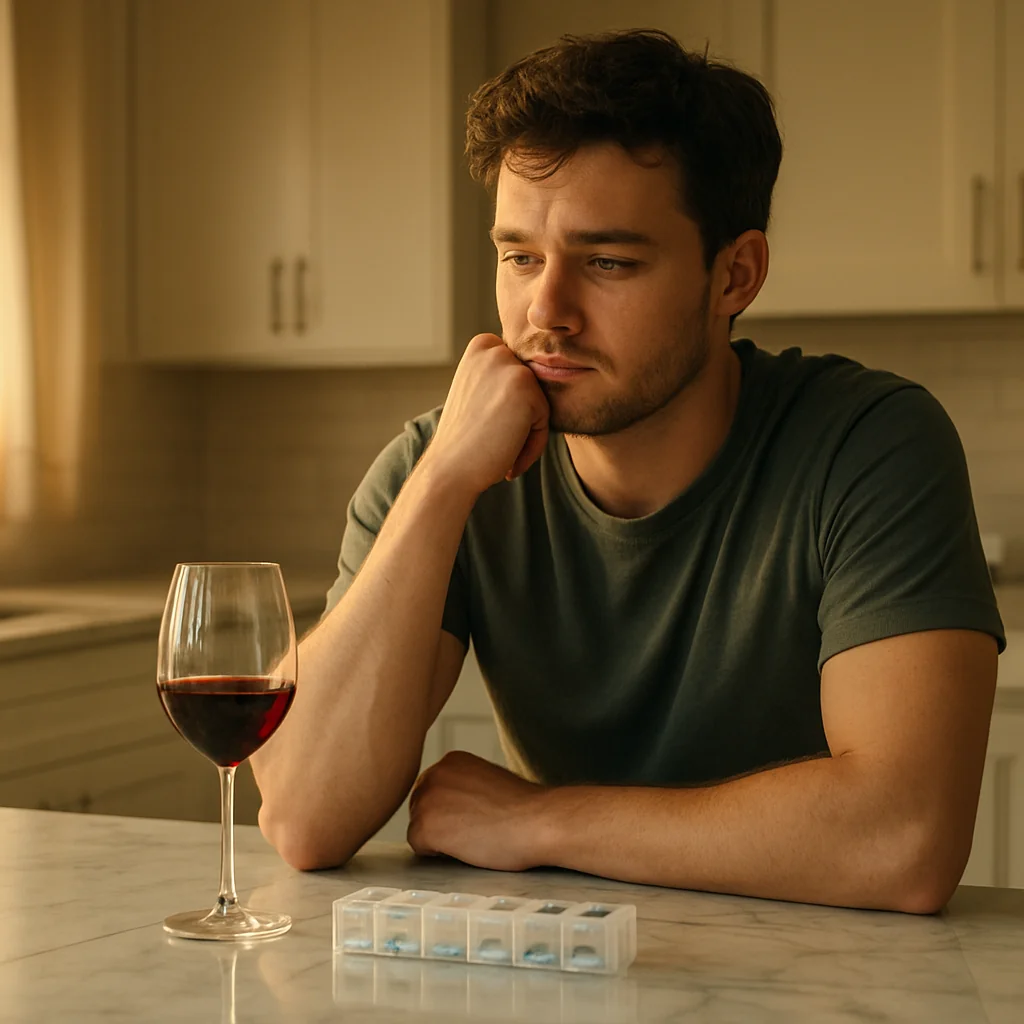
Zepbound does not forbid alcohol, but drinking adds calories you do not feel, slows fat loss, and stacks onto the medication's side effects, so it is rarely a neutral choice.
What You'll Discover:
• Whether it is safe to drink alcohol while taking Zepbound.
• How alcohol calories quietly work against your weight-loss goal.
• Why drinks hit harder and rougher once you are on tirzepatide.
• What the early research says about Zepbound and alcohol cravings.
• Why naltrexone, not Zepbound, is the established medication for drinking.
Zepbound is the weight-loss brand of tirzepatide, the same molecule sold as Mounjaro for diabetes. If you are on Zepbound to lose weight, the alcohol question usually comes with a second one attached.
That second question is the real one. Is that glass of wine quietly working against the goal you are paying for and working toward.
There is no rule that bans alcohol on Zepbound. The honest answer is that drinking can slow your progress and stack onto the side effects.
For some people, alcohol turns out to be the single biggest thing standing between them and their goal weight. So it is worth understanding exactly how it fits in.
Can You Drink Alcohol on Zepbound?
There is no listed interaction that makes alcohol off-limits with Zepbound. The two are not chemically at war the way some medications are with a drink.
Tirzepatide is a dual GIP and GLP-1 receptor agonist. It helps regulate blood sugar and slows how fast your stomach empties, as the tirzepatide drug overview describes.
Alcohol does not block the medication or trigger a dangerous chemical reaction. The concern is practical rather than chemical.
Alcohol affects your weight, your blood sugar, and your stomach. Zepbound is already working on two of those three, so a drink lands right in the middle of what the medication is doing.
For an occasional drink, most people on a steady dose do just fine. The friction shows up with regular drinking and with timing.
Drinking on an empty stomach or in the days right after your weekly shot is when things get rougher. That is when side effects peak.
Alcohol Calories Versus Your Weight-Loss Goals
This is the angle that matters most on Zepbound. Alcohol is calorie-dense, and those calories are easy to overlook because they do not fill you up.
A standard drink runs roughly 100 to 150 calories. That number climbs fast with sugary mixers, craft beers, or cocktails.
A couple of margaritas can quietly add 500 calories or more to a day. None of it registers as food, so it slips past the appetite control Zepbound gives you.
To put that in perspective, 500 calories is roughly a quarter of a typical day's intake on a weight-loss plan. Two drinks can erase a careful afternoon of eating.
And alcohol calories are what nutritionists call empty. They bring energy with almost no protein, fiber, or nutrients to show for it.
There is a second effect that hurts more than the calories alone. When alcohol is in your system, your body prioritizes burning it off first.
That means fat loss effectively pauses while you process the drinks. Your metabolism turns to the alcohol and parks everything else.
Zepbound works by reducing appetite so you eat less. Alcohol can undercut that by lowering your inhibitions around food.
That is how a few drinks turn into late-night snacking you did not plan on. The medication quiets the urge to eat, and alcohol turns it back up.
Here is how the main effects of alcohol line up against what you are trying to do on Zepbound.
None of this means one drink ruins your week. It means alcohol is rarely neutral on a weight-loss plan.
Being honest about that helps you make a deliberate choice instead of a surprised one.
If you have ever worried about weight and alcohol, our article on weight gain after quitting alcohol covers how the two interact in both directions.
Why Drinking Feels Different (and Rougher) on Zepbound
Many people notice that alcohol hits harder and sits worse once they start Zepbound. There are real reasons behind that, not just imagination.
The most common Zepbound side effects are gut-related. Think nausea, vomiting, diarrhea, and a full, queasy feeling.
A meta-analysis of tirzepatide's gastrointestinal effects found that nausea and vomiting climb at higher doses. The effect scales with how much medication you are on.
Because tirzepatide slows gastric emptying, food and drink sit in your stomach longer. Add alcohol, which already irritates the stomach lining, and the queasiness can come on fast.
You may also feel drunk faster than you expect. Eating less plus slowed digestion means alcohol can hit a near-empty stomach.
This catches a lot of people off guard at social events. The two drinks that used to be comfortable can leave you feeling well past your usual limit.
The result is that your old tolerance no longer applies. Two drinks might land more like four, so going slower than usual is the safe move.
Alcohol, Blood Sugar, and the Low You Do Not See Coming
Zepbound is prescribed for weight rather than diabetes, but it still affects blood sugar. So does alcohol, and the combination can produce a low that sneaks up on you.
When you drink, your liver pauses its release of stored glucose while it clears the alcohol. That stored glucose is one of your main defenses against a low.
The review on the consequences of alcohol use in people with diabetes explains that alcohol suppresses the liver's glucose production.
With that defense down, blood sugar can drift lower than expected, and it can do so quietly.
The tricky part is timing. A low can arrive hours after your last drink, long after you have stopped paying attention.
The early signs of shakiness, sweating, and confusion are easy to mistake for being tipsy. That overlap is what makes alcohol-related lows worth respecting.
Eating something when you drink helps steady things out. So does avoiding sugary mixers that spike and then crash your blood sugar.
We cover this overlap across the drug class in our guide on whether you can drink alcohol on a GLP-1.
Does Zepbound Curb Alcohol Cravings? What the Research Shows
Plenty of people on Zepbound say they simply want alcohol less. The early science is starting to back that up, and it is one of the more interesting findings from the GLP-1 wave.
An observational study followed people with obesity taking semaglutide or tirzepatide and tracked their drinking. On these medications, they reported lower alcohol intake than before.
They also reported fewer drinks per occasion and lower odds of binge drinking. The pattern showed up consistently across the group.
It is worth noting that the people most likely to cut back were often the heavier drinkers to begin with. The effect seems strongest where there is the most room to improve.
That said, none of this was a controlled trial designed to prove cause and effect. It is a signal worth following, not a settled conclusion.
The likely reason ties back to the brain's reward system. GLP-1 based drugs appear to turn down the dopamine signaling that makes alcohol feel rewarding.
Food and alcohol share that wiring. That is why a drug that quiets food cravings may quiet alcohol cravings too.
The caveat is important, though. This research is early, the studies are small, and Zepbound is not approved to treat alcohol use disorder.
Reduced drinking is a possible bonus, not a reason to start the medication. We go deeper in our piece on tirzepatide and alcohol cravings.
Our article on the benefits of GLP-1 medications for reducing alcohol use takes a wider look across the class.
Zepbound Is for Weight. Naltrexone Is for Drinking.
If your main struggle is alcohol rather than weight, there is a medication built for exactly that. It is naltrexone, and it has a long track record.
Naltrexone is an opioid antagonist taken as a 50mg tablet. The naltrexone clinical overview notes it was FDA-approved for alcohol dependence in 1994.
It works by blocking the mu-opioid receptors that release the rush you feel when you drink. That rush is a big part of what keeps the drinking loop going.
With it muted, the craving loop weakens. People often find they stop after one or two drinks instead of five or six.
The payoff that drove the next drink is simply no longer there. The drink remains, but the pull behind it goes quiet.
The difference from Zepbound is clear. Zepbound is a weight-loss drug where less drinking is a side effect still being studied.
Naltrexone is an alcohol-specific tool backed by more than 100 clinical trials and tens of thousands of participants. The evidence base is deep and decades old.
Our comparison of naltrexone versus GLP-1 medications for alcohol use disorder breaks down how the two approaches differ and who each tends to suit.
How Much Does Alcohol Slow Your Results?
There is no single number that fits everyone, but the direction is consistent. The more often you drink, the more it competes with the progress Zepbound is built to deliver.
Think of it as three small drags pulling at once. Alcohol adds calories, it pauses fat burning, and it loosens the appetite control that keeps you from snacking.
A person who drinks twice a month will barely notice the effect. Someone drinking most nights may find the scale stalls even with the medication doing its part.
The fix is not always to quit cold. For many people, cutting from five nights a week to one or two is enough to get results moving again.
Smaller, steady changes also tend to last longer than dramatic ones. A drinking habit you can actually keep is worth more than a perfect month you cannot repeat.
That is the kind of change naltrexone is good at supporting. It makes drinking less feel less like a fight, which we will come back to shortly.
Does Alcohol Affect How Well Zepbound Works?
Alcohol does not stop tirzepatide from doing its core job on appetite and blood sugar. The medication keeps working in the background regardless of a drink.
What alcohol changes is the environment around it. Extra calories and disrupted eating can mask the results you would otherwise see on the scale.
Heavy drinking can also worsen the side effects enough that some people skip doses or want to quit the medication. That is the bigger risk to your results.
So the honest answer is that alcohol does not break Zepbound. It just makes the medication work uphill, and the more you drink, the steeper the hill.
Smarter Habits if You Drink While Losing Weight
If you choose to drink on Zepbound, a few habits protect both your progress and your comfort. This is general guidance, not medical advice, and your prescriber knows your situation best.
• Count alcohol in your calories, since it adds up faster than it feels.
• Eat something when you drink to steady your blood sugar.
• Pick lower-calorie options and skip sugary mixers.
• Go slower than usual, since your tolerance has likely dropped.
• Avoid drinking right after your weekly shot when side effects peak.
These steps will not make heavy drinking helpful for weight loss. They simply take the edge off an occasional drink.
Watch how your body responds and adjust from there. Your own pattern will teach you more than any general rule.
What About Drinking on the Days You Inject?
Timing matters more than people expect. The day of your shot and the day after are usually when gut side effects feel strongest.
Drinking during that window tends to backfire. Nausea is already higher, and alcohol piles onto a stomach that is moving slowly.
Many people find a drink sits better later in the week, once the dose has settled. If you are going to drink at all, that is generally the gentler time.
This is not a strict rule, since everyone responds a little differently. Pay attention across a few weeks and your own pattern will show itself.
When Drinking Is the Thing Holding You Back
You do not need to hit a low point to deserve help with alcohol. If drinking keeps undoing your weight progress, that is reason enough on its own.
The same is true if you are simply drinking more than you want to. The goal you set for your weight and the goal you have for your drinking are often the same goal.
A lot of people come to Zepbound focused on the scale and slowly realize alcohol is the harder habit underneath. There is no shame in that, and you are far from alone.
The good news is that drinking is one of the most treatable health habits there is. A daily tablet plus some support can move the needle faster than willpower alone.
You also do not have to quit entirely to benefit. Naltrexone works whether your goal is to stop drinking or simply to drink a lot less than you do now.
Frequently Asked Questions
Can you drink alcohol on Zepbound?
There is no rule that bans it. The honest answer is that drinking adds hidden calories, slows fat loss, and can make side effects worse.
Does alcohol stop Zepbound weight loss?
It does not break the medication, but it competes with it. Alcohol adds calories and pauses fat burning, so frequent drinking can stall the scale.
Why do I get drunk faster on Zepbound?
Eating less plus slowed digestion means alcohol can hit a near-empty stomach. Your old tolerance often no longer applies, so go slower than usual.
Does Zepbound reduce alcohol cravings?
Early research suggests some people drink less on tirzepatide. The studies are small, and Zepbound is not approved to treat alcohol use disorder.
How many calories are in a drink on a weight-loss plan?
A standard drink runs roughly 100 to 150 calories, more with sugary mixers. Two cocktails can quietly add 500 calories or more in a day.
Choose Your Horizon offers a discreet, fully online way to see if naltrexone could help you cut back or quit. Take an online Alcohol Use Assessment to find out if it is a good fit.