A 2 minute assessment to get a personalized mental health or alcohol recovery plan.

Alcohol reshapes your face in predictable ways. The reversal when you stop can be dramatic, sometimes within just a few days.
What You'll Learn:
• The science behind puffiness, redness, dull skin, and dark circles from alcohol
• A detailed timeline of facial recovery from 72 hours to 3 months and beyond
• Which changes are fully reversible and which take longer
• How to accelerate your facial recovery
• Support options that make the change easier
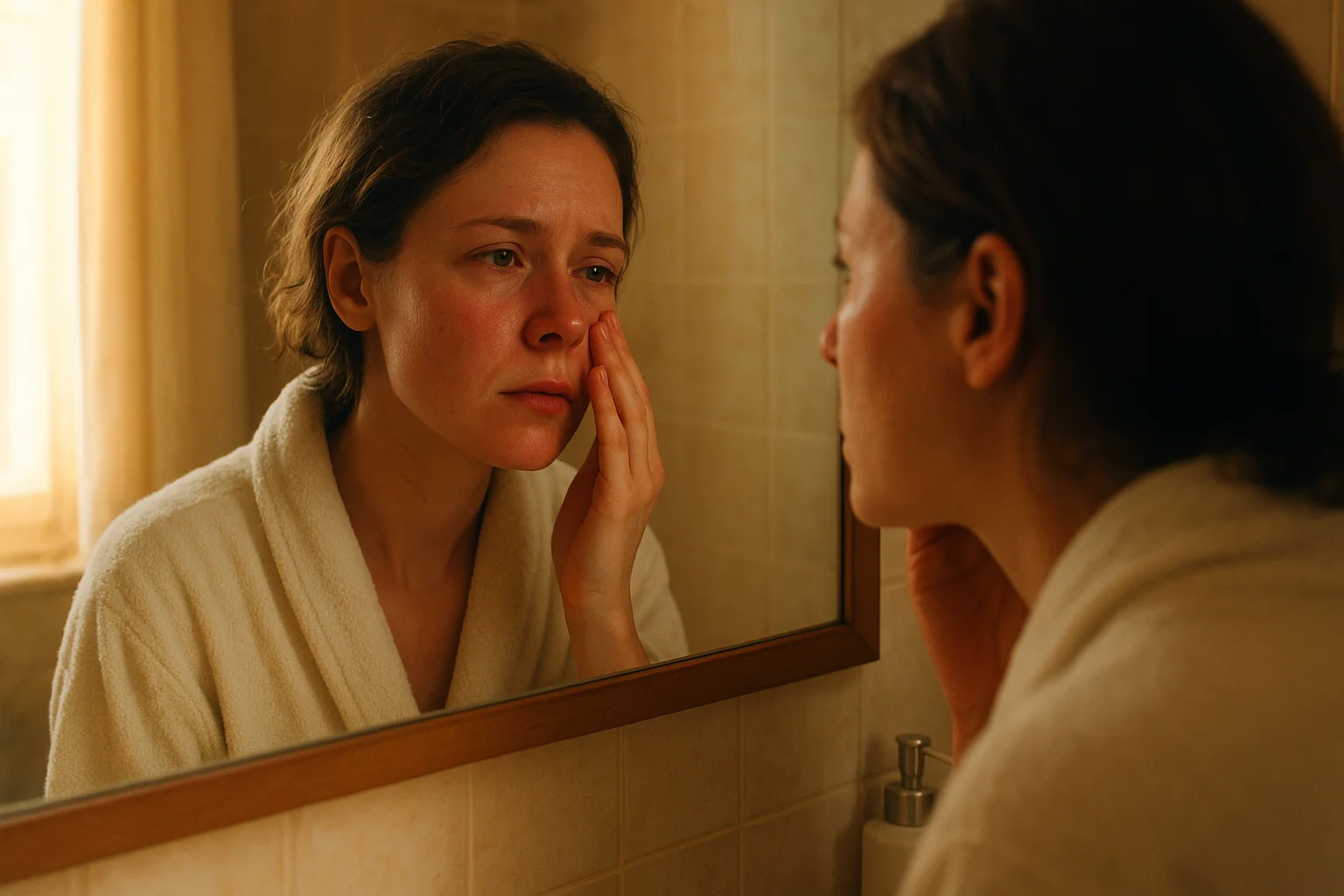
There is a moment that many people who drink regularly know well. You catch a glimpse of yourself in the bathroom mirror on a rough morning and something looks off. Your face is puffy, your skin looks dull, and your eyes are red-rimmed and tired.
You might not connect it to alcohol right away. Or you might have been quietly wondering for a while whether drinking is changing the way you look.
If you have ever searched for "alcohol face before and after," you are probably looking for evidence that those changes can reverse. The good news is that the answer, for most people, is a lot. Alcohol reshapes the face in predictable, well-understood ways. The transformation that happens when you stop can be striking, sometimes within just a few days.
This article walks through exactly what alcohol does to your face, the science behind each change, a realistic timeline for recovery, and what you can do to support the process.
This is educational content and not a substitute for medical advice. If you have concerns about your drinking or your health, please talk to a healthcare provider.
What Alcohol Does to Your Face: The Science Behind the Changes
To understand the "after," it helps to understand the "before." Alcohol affects your face through several overlapping biological pathways.
None of these changes happen overnight from a single drink. But with regular or heavy consumption, they accumulate into what dermatologists sometimes informally call "alcohol face": a recognizable pattern of puffiness, redness, dullness, and premature aging.
Puffiness and Bloating
Facial bloating is one of the most visible and immediate effects of regular drinking. It happens through two connected mechanisms.
First, alcohol is a diuretic. It suppresses a hormone called vasopressin (also known as antidiuretic hormone, or ADH), which normally tells your kidneys to retain water. When vasopressin is suppressed, you lose more fluid than you take in.
Your body responds to this dehydration by going into water-retention mode, holding onto fluid in soft tissues, particularly in the face, around the eyes, and along the jawline.
Second, alcohol triggers systemic inflammation. It stimulates the release of pro-inflammatory cytokines and disrupts the gut lining, allowing bacterial byproducts to enter the bloodstream and amplify the inflammatory response.
According to the National Institute on Alcohol Abuse and Alcoholism, this inflammation affects virtually every organ system. The face, with its thin skin and dense network of blood vessels, shows the effects quickly.
Over time, chronic inflammation leads to persistent facial puffiness that does not fully resolve between drinking sessions. For a deeper look at this specific change, our guide to alcohol face bloat covers the mechanisms and recovery in detail.
Redness and Broken Capillaries
That flushed, ruddy look after drinking is caused by vasodilation, the widening of blood vessels. Alcohol relaxes the smooth muscle in blood vessel walls, causing them to expand. In the face, where blood vessels sit close to the skin surface, this creates visible redness, particularly across the cheeks, nose, and forehead.
With occasional drinking, the redness fades as alcohol leaves your system. But with regular, heavy use, repeated vasodilation can damage the tiny capillaries in the face.
They lose their ability to constrict back to their original size, resulting in permanently visible spider veins or a persistent reddish undertone. Acetaldehyde, the toxic first byproduct of alcohol metabolism, further damages blood vessel walls and contributes to this process.
This is one reason why heavy drinkers sometimes develop a flushed, reddened appearance across the nose and cheeks that persists even when they have not been drinking recently. Research published in the Journal of the American Academy of Dermatology has documented the relationship between alcohol consumption and worsening of vascular skin conditions, including rosacea.
Dull, Dry Skin and Premature Aging
Alcohol ages your skin faster than almost any other lifestyle factor besides sun exposure. This happens through several pathways.
Dehydration is the most immediate. When your skin is chronically underhydrated, it loses its plumpness and elasticity, making fine lines and wrinkles more visible.
But the damage goes deeper than surface dryness. Alcohol interferes with the body's ability to absorb and use key nutrients that are essential for skin health, including vitamin A (critical for cell turnover), vitamin C (necessary for collagen production), and zinc (involved in skin repair and immune function).
Collagen, the protein that gives skin its structure and firmness, is particularly vulnerable. Alcohol generates oxidative stress and increases levels of matrix metalloproteinases, enzymes that break down collagen faster than your body can rebuild it.
Over months and years of regular drinking, this collagen degradation leads to sagging skin, deeper wrinkles, and a loss of the firm, smooth texture that characterizes healthy skin. Research published through the National Institutes of Health has linked chronic alcohol consumption to accelerated skin aging and impaired wound healing.
We explore this connection further in our article on alcohol's effects on skin.
Dark Circles and Tired Eyes
The dark, sunken circles that develop under the eyes during periods of heavy drinking are caused by a combination of factors. Poor sleep quality is a major contributor. Alcohol fragments sleep architecture, reducing restorative REM sleep even when total sleep time appears adequate. The result is that the thin skin under the eyes develops a bruised, shadowed look.
Dehydration plays a role here too. When the body is underhydrated, blood vessels beneath the under-eye skin become more visible, creating a dark, bluish-purple appearance. Combine this with the puffiness described above, and the overall effect is eyes that look exhausted, aged, and unhealthy.
Loss of Facial Definition
Over time, the combination of chronic bloating, inflammation, and alcohol-related weight gain can erode the natural contours of the face. The jawline becomes less defined.
The area between the chin and neck thickens. Cheeks may appear rounded or swollen rather than sculpted.
This is not just about water retention. Alcohol is calorie-dense (roughly 7 calories per gram, nearly as much as fat), and those extra calories tend to be stored in the face and midsection.
For many people, this gradual loss of facial definition is the change they notice last but the one that bothers them most, because it makes them look fundamentally different from the way they remember.
Alcohol Face Before and After: A Transformation Timeline
One of the most motivating aspects of cutting back or quitting alcohol is how quickly the face begins to change. The timeline below is based on general patterns.
Individual results depend on factors like how much and how long you have been drinking, your age, genetics, and overall health. But the direction of change is remarkably consistent.
The First 72 Hours
The earliest changes happen faster than most people expect. Within 24 to 72 hours of your last drink, your body begins to rebalance its fluid levels. Vasopressin production normalizes, the dehydration-retention cycle starts to break, and facial bloating begins to decrease.
Many people notice a visible reduction in puffiness around the eyes and along the jawline within the first two to three days. The face starts to look less swollen and more like its natural shape. Redness also begins to fade as blood vessels constrict back toward their normal state.
Sleep quality may still be disrupted during this window, so dark circles and under-eye shadows may persist or even temporarily worsen. This is normal and typically resolves in the coming days.
One to Two Weeks
By the end of the first week and into the second, the improvements become more noticeable and more consistent. The puffiness that initially decreased continues to resolve. Your face begins to look more sculpted, and friends or coworkers may start commenting that you look "well-rested" or "different somehow" without being able to pinpoint why.
Skin hydration improves as your body's water balance stabilizes. The dry, flaky quality that alcohol causes gives way to skin that looks more supple and has a healthier sheen.
Early improvements in skin tone emerge as inflammation levels drop. The general redness and blotchiness that had become your baseline starts to fade, revealing more even-toned skin underneath.
Sleep quality improves meaningfully during this period, and with it, the dark circles under the eyes begin to lighten. Your eyes look brighter, more alert, and more open. For a comprehensive look at the full range of facial changes during this period, our article on how your face changes when you stop drinking covers each one in depth.
One to Three Months
This is the window where the transformation tends to become truly striking. The cumulative effect of weeks of reduced inflammation, improved hydration, better sleep, and restored nutrient absorption creates visible, sometimes dramatic results.
Facial definition returns as chronic bloating fully resolves. The jawline sharpens.
The area around the cheekbones becomes more defined. The overall shape of your face starts to resemble what it looked like before heavy drinking reshaped it.
Skin texture and clarity improve significantly during this period. Collagen production, while still recovering, begins to outpace the accelerated degradation that alcohol was causing. Fine lines may soften.
Skin looks firmer and more resilient. The sallow, grayish undertone that heavy drinkers often develop is replaced by warmer, healthier color.
Redness continues to fade, though if drinking was heavy and prolonged, some broken capillaries may remain visible. These spider veins do not typically resolve on their own but can be treated by a dermatologist if they bother you.
According to research published in the National Library of Medicine, the liver's regenerative capacity during this period supports improvement across the entire body, including the skin and face, as the liver resumes its critical role in processing toxins, producing proteins, and regulating hormones.
Three Months and Beyond
By the three-month mark and beyond, many of the facial changes have reached their new baseline. The face you see in the mirror is closer to your natural appearance, unburdened by the chronic inflammation, dehydration, and nutritional depletion that alcohol was causing.
People who maintain reduced drinking or sobriety past the 90-day mark often report that their skin continues to improve gradually: finer texture, fewer breakouts, better elasticity. The premature aging that alcohol accelerates slows to match your actual biological clock. The improvements in facial definition, eye brightness, and skin tone tend to stabilize and feel permanent as long as drinking levels remain low.
For some people, the three-month mark is also when they realize that the changes in their face were not just cosmetic. They were outward signals of deep internal healing: better liver function, reduced systemic inflammation, improved sleep architecture, and stronger nutrient absorption.
Which Changes Are Reversible, and Which Take Longer
Most alcohol-related facial changes are fully reversible, especially with sustained reduction or cessation of drinking. Puffiness, general redness, dull skin, dark circles, and loss of facial definition all tend to resolve within weeks to months.
A few changes may require more time or intervention.
Broken capillaries and spider veins on the nose and cheeks may not reverse on their own once the vessel walls have been permanently stretched. These can be treated effectively with laser or light-based procedures by a dermatologist, but they are unlikely to disappear simply from stopping drinking.
Deep wrinkles and significant collagen loss from years of heavy drinking will improve but may not fully reverse. The skin will look better, firmer, and more hydrated, but some of the structural damage from prolonged collagen degradation is difficult to undo entirely. Starting to address your drinking sooner gives your skin the best chance at full recovery.
Persistent skin redness or worsening rosacea should be evaluated by a healthcare provider. While alcohol is a known trigger for rosacea, the condition can have other contributing factors that benefit from targeted treatment.
As noted by the Centers for Disease Control and Prevention, the health effects of alcohol are wide-ranging. A physician can help distinguish between changes that will resolve on their own and those that need additional care.
How to Accelerate Your Facial Recovery
Cutting back on alcohol is the single most impactful step. But a few additional strategies can help speed the visible improvements.
Hydration matters more than you think. Consistent water intake throughout the day supports your skin's recovery from chronic dehydration. Aim for steady sipping rather than drinking large amounts at once.
Adding water-rich foods like cucumbers, watermelon, and leafy greens supports hydration from the inside.
Prioritize sleep. Your skin does much of its repair work during deep sleep. Establishing a consistent sleep schedule and creating a dark, cool sleeping environment gives your body the best chance to rebuild.
Rebuild your nutrient stores. Focus on foods rich in vitamin A (sweet potatoes, carrots, spinach), vitamin C (citrus, bell peppers, berries), omega-3 fatty acids (salmon, walnuts, flaxseed), and zinc (legumes, seeds, whole grains). These are the nutrients most depleted by alcohol and most important for skin health.
Protect your skin from the sun. Alcohol-damaged skin is more vulnerable to UV damage. Using a daily sunscreen helps prevent further collagen breakdown while your skin recovers.
These are helpful supporting strategies, but they work best when paired with the most important change: addressing your relationship with alcohol directly.
Support That Makes the Change Easier
If you are looking at the timeline above and feeling motivated but also uncertain about whether you can actually do it, that is a completely normal reaction. Changing a drinking pattern, especially one that has become habitual, is genuinely difficult. Willpower alone is not always enough, and it does not have to be.
Naltrexone is an FDA-approved medication that works by reducing the rewarding effects of alcohol in the brain. It blocks the endorphin surge that normally accompanies drinking, which helps quiet cravings and makes it easier to drink less or stop.
It does not make you feel sick if you drink, and it does not require you to quit cold turkey. It simply reduces the pull.
Clinical research involving more than 20,000 participants has shown that naltrexone significantly reduces drinking frequency and supports sustained change over time.
The facial changes described in this article are not just cosmetic victories. They are outward evidence that your body is healing.
For many people, seeing those changes in the mirror becomes one of the most powerful motivators to keep going. Our article on physical changes when you stop drinking covers the full spectrum of what you can expect beyond just the face.
Your Face Is Waiting
Alcohol changes your face in ways that are visible, well-understood, and, for the most part, reversible. The puffiness, the redness, the dull skin, the tired eyes, the softened jawline: these are not permanent features.
They are the physical expression of what alcohol does to your body. They begin to reverse remarkably quickly once you make a change.
Within days, the bloating starts to go down. Within weeks, your skin looks clearer and more alive. Within a few months, the person looking back at you in the mirror may look years younger and genuinely healthier.
These are not exaggerations. They are the consistent, well-documented experience of people who reduce or eliminate alcohol from their lives.
If you have been noticing changes in your face and wondering whether it is time to do something about it, that instinct is worth listening to. You do not need to be in crisis. You do not need to label yourself.
You just need to be honest about what you are seeing and curious about what is possible.
You can take an online Alcohol Use Assessment to explore whether naltrexone could help you change your relationship with alcohol. It is quick, private, and there is no obligation.
This article is for educational purposes only and is not a substitute for professional medical advice, diagnosis, or treatment. If you are experiencing severe withdrawal symptoms or health concerns related to alcohol use, please consult a healthcare provider.