A 2 minute assessment to get a personalized mental health or alcohol recovery plan.

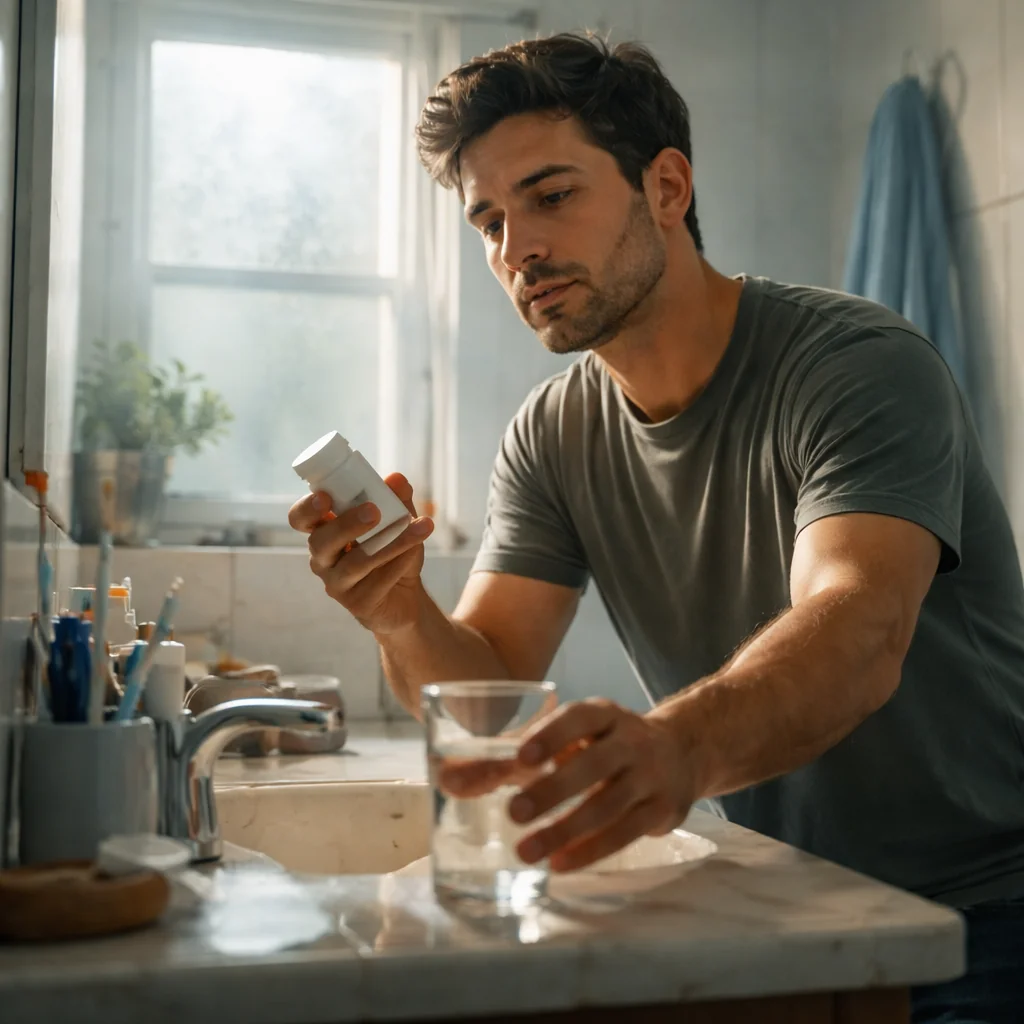
Naltrexone does not change how your body absorbs or breaks down alcohol, so it cannot prevent a hangover directly. What it changes is how much you drink, and that is the only thing that reliably works.
What You'll Discover:
• Whether naltrexone can prevent or cure a hangover.
• What actually causes hangover symptoms in the first place.
• The one indirect route by which naltrexone leads to better mornings.
• Why naltrexone nausea gets mistaken for a hangover.
• What genuinely helps once a hangover has already started.
Somewhere along the way naltrexone picked up a reputation as a hangover pill. It is not one.
The medication does not touch alcohol absorption, alcohol metabolism, or your blood alcohol level. Those are the exact systems that produce a hangover.
What naltrexone does instead turns out to matter more for your Sunday mornings, just not in the way most people expect.
The Direct Answer
Naltrexone does not prevent or cure a hangover. Taking it before you drink will not buy you a clean morning after a heavy night.
It also does not make hangovers worse in any pharmacological sense. It adds nothing toxic and it does not slow how fast alcohol leaves your system.
The connection between naltrexone and better mornings is entirely indirect, and it runs through how many drinks you actually end up having.
What Actually Causes a Hangover
A hangover is not one thing going wrong. It is five or six things stacking on top of each other.
The National Institute on Alcohol Abuse and Alcoholism lays out the contributors in detail, and each one is worth knowing because each one explains why naltrexone cannot touch it.
Alcohol suppresses vasopressin, the hormone that tells your kidneys to hold onto fluid. You urinate more, you lose fluid, and the resulting mild dehydration drives thirst, fatigue, and headache.
Sleep gets fragmented. People fall asleep faster after drinking but wake earlier, which is where a lot of next-day exhaustion comes from.
Alcohol irritates the stomach lining directly and increases acid release. That produces the nausea and stomach discomfort.
Then there is acetaldehyde, the toxic short-lived byproduct your liver creates while metabolizing alcohol. It contributes to inflammation in the liver, pancreas, brain, and gut.
Alcohol raises inflammation generally, which produces the same run-down malaise you feel when you are getting sick.
And finally there is the mini-withdrawal. Your brain adjusts to alcohol's calming effect while you are drinking, so when the buzz wears off you feel more restless and anxious than you did before you started.
That last one has an everyday name, and we go deep on it in our article on hangxiety.
NIAAA also notes something useful about timing. Hangover symptoms peak when blood alcohol concentration returns to about zero, and they can last 24 hours or longer.
What Naltrexone Does, and What It Never Touches
Naltrexone is a mu-opioid receptor antagonist. The StatPearls clinical reference on naltrexone describes it as blocking the mu-opioid receptor, with weaker antagonism at the kappa and delta receptors.
That block sits between alcohol and your brain's reward circuitry. The drinking still happens, and the alcohol still enters your bloodstream at exactly the same rate it always did.
Naltrexone does not act on your stomach lining. It does not touch the alcohol dehydrogenase pathway in your liver. It does not reduce acetaldehyde production, and it does not affect vasopressin.
Your blood alcohol curve looks the same on naltrexone as it does off it, drink for drink.
Every major hangover driver runs through absorption, metabolism, or total volume consumed. A medication that touches none of those cannot prevent a hangover. That is the entire answer.
Hangover Cause by Cause, With and Without Naltrexone
That final row carries the whole story.
The Indirect Route That Does Work
Fewer drinks is the only reliable path to fewer hangovers, and fewer drinks is exactly what naltrexone is built to produce.
By blocking the reward signal that makes the second drink lead to the fourth, naltrexone tends to lower total consumption over time. Less alcohol in means a lower peak blood alcohol level.
Research on the pharmacodynamic determinants of hangover has looked directly at the relationship between blood ethanol concentration and hangover severity in non-dependent drinkers.
NIAAA states the same principle in plain terms. In general, the more alcohol a person drinks, the worse the hangover will be, and that holds regardless of whether it is beer, wine, spirits, or a combination.
So naltrexone does not fix Sunday morning. It changes Saturday night, and Sunday morning follows from that.
For a lot of people this is the first tangible sign anything is different. Not a dramatic shift in willpower, just a Sunday that does not hurt.
Why Some People Feel Different the Morning After
Plenty of people on naltrexone report that their mornings feel changed. That is not imagined, and there are a few real explanations behind it.
Fewer Drinks Means a Lower Peak
The most common explanation is also the least exciting. People on naltrexone often stop after one or two drinks where they used to have five or six.
A smaller total dose of alcohol produces a smaller hangover. That shows up as a genuinely better morning, and it has nothing to do with the medication acting on hangover physiology at all.
The Drop Feels Less Steep
Naltrexone changes the subjective experience of drinking itself, which we cover in detail in our piece on what drinking on naltrexone feels like.
When the euphoric peak is flatter, the fall afterward can feel less pronounced. Some people describe the mini-withdrawal piece, the restless anxious feeling, as noticeably milder.
Your Baseline Shifts Over Months
Hangovers are not equal across drinkers. A pilot study on the exacerbation of hangover symptomology in heavy and chronic drinkers found that hangover severity corresponds meaningfully with heavier and more chronic alcohol use.
As overall drinking comes down across months, the whole baseline moves. Mornings after a moderate night stop feeling the way they used to feel.
The Nausea Overlap Nobody Warns You About
This is the single most common source of confusion on this topic, and it deserves its own section.
Nausea is the most frequently reported side effect of naltrexone. StatPearls lists nausea, vomiting, abdominal pain and cramps, and headache among effects reported in more than 10% of patients in clinical studies.
Put that list next to a hangover symptom list. They overlap almost perfectly.
So someone starts naltrexone, drinks that weekend, wakes up queasy with a headache, and genuinely cannot tell which one caused it. Often it is the medication, particularly in the first couple of weeks.
How to Tell Them Apart
A few patterns usually sort it out.
• Naltrexone nausea shows up whether or not you drank the night before.
• It tends to appear early in treatment and fade as your body adjusts.
• It often follows your dose by an hour or two rather than tracking a night out.
• Hangover symptoms scale with how much you drank. Side effects do not.
If nausea is the main issue, it is usually manageable rather than a reason to stop. Our guide to minimizing and avoiding naltrexone nausea covers what actually helps, including taking the dose with food.
Persistent nausea is worth a message to your clinician rather than a decision you make alone in your kitchen.
What About the Drink Itself
Beverage choice gets blamed for a lot of hangovers, and there is a small kernel of truth in it.
NIAAA notes that congeners, compounds other than ethyl alcohol produced during fermentation, contribute to taste and smell. Darker spirits like bourbon tend to have higher levels and could worsen symptoms for some people.
Sulfites added to wine as preservatives can trigger headaches in people who are sensitive to them.
Naltrexone does nothing about either one. It does not filter congeners and it has no effect on sulfite sensitivity.
The volume of alcohol still dominates. Switching from bourbon to vodka while drinking the same amount is a much smaller change than drinking two instead of six.
How Long Before You Notice Better Mornings
This is not an overnight change, because the mechanism is behavioral rather than immediate.
Naltrexone starts blocking receptors within about an hour of the dose, but the reduction in drinking builds over weeks as the reward association weakens.
Most clinical descriptions put the window for noticeable change at somewhere around two to four weeks of consistent use.
What people tend to notice first is not a dramatic loss of desire. It is that the third drink stopped being automatic, and the next morning reflected that.
What Actually Helps a Hangover
NIAAA is blunt about this. No remedy has been scientifically proven effective, and only time helps.
Your body has to finish clearing the byproducts of alcohol metabolism, rehydrate, heal irritated tissue, and return brain and immune activity to normal. Coffee, a shower, and a morning drink do not speed any of that up.
There is also a real caution worth repeating. Combining alcohol with acetaminophen can be toxic to the liver, and aspirin or ibuprofen can increase acid release and irritate an already unhappy stomach lining.
Rest, fluids, and food are reasonable. Expecting a cure is not.
Electrolyte drinks and IV treatments get a lot of marketing attention. Research has not found a correlation between electrolyte disruption and hangover severity, and the body restores balance on its own once the alcohol clears.
The Hangover Risk People Underestimate
There is one part of the NIAAA guidance that rarely makes it into hangover articles, and it belongs here.
Hangovers are not just unpleasant. During a hangover, attention, decision-making, and muscle coordination can all be impaired.
That affects driving, operating machinery, and caring for other people, and it happens after the alcohol itself has cleared.
Naltrexone does not change that either. What it changes is how often you end up in that state in the first place, which is a meaningful safety difference over a year.
If you have been treating a hungover Monday as a personal failing, it is worth reframing. It is a physiological state with measurable effects on performance.
Is It Safe to Drink While Taking Naltrexone
Yes, and this is worth addressing directly because the worry is common.
Naltrexone is not a medication that makes you violently ill if you drink. That reaction belongs to a completely different class of medication and it is not how naltrexone works.
We cover this fully in our article on whether you can drink alcohol on naltrexone.
Naltrexone is designed to be in your system when you drink. That is precisely where the reward blockade does its work, and avoiding alcohol while taking it defeats much of the point.
Conclusion
Naltrexone is not a hangover pill and it never was. It does not change how you absorb alcohol, how you break it down, or how fast it leaves your body.
What it changes is how much you want the next drink. That turns out to be the only lever that reliably moves the morning after.
If you have felt queasy since starting naltrexone, separate the medication from the drinking before you draw conclusions. Those symptoms look alike and they have very different solutions.
Wanting fewer rough mornings is a perfectly good reason to take a look at your drinking. It does not require a label, a crisis, or anything resembling rock bottom.
The people who get the most out of naltrexone are usually the ones who went in with a specific, ordinary goal. Fewer bad Sundays counts.
Frequently Asked Questions
Does naltrexone cure a hangover?
No. Naltrexone has no effect on alcohol absorption, metabolism, or blood alcohol level, which are the systems that produce a hangover. It reduces how much people drink, and that is the indirect route to fewer hangovers.
Does naltrexone make hangovers worse?
Not pharmacologically. It does not slow alcohol clearance or add anything toxic. Nausea from the medication itself can feel like a worse hangover, especially in the first couple of weeks.
Can I take naltrexone the morning after drinking to feel better?
It will not help the hangover. Naltrexone works before and during drinking rather than afterward, so a morning-after dose does nothing for symptoms already underway.
Why do I feel nauseous after starting naltrexone?
Nausea is the most commonly reported side effect and it usually appears early, then fades. Taking your dose with food often helps, and persistent nausea is worth raising with your clinician.
Do people on naltrexone get fewer hangovers?
Many do, because they drink less. The improvement comes from lower total alcohol intake rather than from any effect on hangover physiology.
Is it dangerous to drink alcohol while taking naltrexone?
No. Naltrexone is meant to be in your system when you drink and it does not cause a violent reaction to alcohol. Discuss your own situation with a clinician before making any changes.
If rough mornings are the thing that finally made you look at your drinking, that is a reasonable place to start.
Take the online Alcohol Use Assessment to find out whether naltrexone could be a good fit for you.